
What You Need to Know About Data Center Decommissioning
Every data center has an expiration date. Businesses migrate to the cloud, hardware becomes outdated, and compliance requirements tighten. For business leaders, this moment presents significant risks and greater responsibilities: how do you shut down critical infrastructure without exposing sensitive data, violating regulations, or compromising your sustainability goals?
The stakes are real. According to IBM’s Cost of a Data Breach Report, the average cost of a data breach has increased to $4.44 million globally, and improperly decommissioned servers and storage devices continue to be a leading cause of exposure.
The U.S. Environmental Protection Agency (EPA) estimates that consumers and businesses discarded televisions, computers, cell phones, and hard-copy peripherals (including printers, scanners, and faxes) totaling 2.37 million tons, much of which comes from corporate IT equipment. Mishandling these assets can damage more than just the bottom line; it can harm your reputation and your ESG reporting as well.
That’s why data center decommissioning demands more than simply unplugging equipment. It requires a structured approach that safeguards data, ensures regulatory compliance, and handles e-waste responsibly. A clear data center decommissioning checklist not only reduces risks but also turns a costly obligation into an opportunity for efficiency, sustainability, and trust.
What Is Data Center Decommissioning?
At its core, data center decommissioning is a structured process of retiring and dismantling IT infrastructure that is no longer needed. That includes everything from servers, storage arrays, and networking gear to racks, cabling, and power systems. Unlike routine IT asset disposal, decommissioning covers the entire environment, ensuring that nothing is overlooked and every component is handled securely and responsibly.
For many organizations, this happens when they migrate workloads to the cloud, consolidate facilities, or modernize infrastructure. However, what makes decommissioning so critical is the sensitive data and compliance obligations associated with every asset. Even a single hard drive left unsecured can expose an organization to data breaches, lawsuits, or regulatory fines.
Data center decommissioning is more than just “shutting down a server room.” It’s a business-critical project that requires:
- Complete visibility into what assets exist and where they are located.
- Secure data handling, whether through certified erasure or physical destruction.
- Environmental responsibility in recycling and disposing of equipment.
- Documented compliance for audits, regulators, and stakeholders.
Done right, it reduces risk, supports sustainability goals, and clears the path for future technology investments. When done wrong, it can cost a business millions.
Common Challenges in Data Center Decommissioning
Decommissioning may seem like a simple shutdown process, but the reality is far more complex. Here are the challenges businesses often encounter that can derail even the most carefully planned projects:
Incomplete Asset Inventory
One of the most significant risks in decommissioning is the uncertainty of the existing assets. Many organizations have servers tucked into forgotten racks, networking gear hidden in closets, or storage devices that were never logged in the asset register. These “orphaned” assets often carry sensitive data but escape the decommissioning process. Without a comprehensive audit, companies may leave valuable or vulnerable equipment unmanaged, creating compliance gaps and security risks.
Data Destruction Errors
Not all data destruction is created equal. Simply deleting files or formatting drives does not ensure information is irretrievable. Certified erasure tools or physical destruction are required to meet industry standards. Yet businesses sometimes rely on in-house teams without the proper tools or training, leading to drives resurfacing in secondary markets. The result is a severe liability: confidential information landing in the wrong hands.
Chain-of-Custody Breakdowns
From the moment equipment leaves a data center until it reaches a recycler, every step must be documented. Without a strict chain of custody, organizations can’t prove that assets were handled securely. Gaps in documentation may cause failed audits, and worse, they can open the door to data leaks or theft during transport. Precise tracking, certified partners, and audit-ready reporting are essential to avoid these risks.
Vendor Practices and Greenwashing
Not all e-recycling companies or vendors handle decommissioning responsibly. Some claim to recycle equipment but instead ship e-waste overseas, creating environmental and reputational hazards for their clients. Partnering with vendors that hold recognized certifications (such as R2v3 or e-Stewards) ensures assets are processed responsibly and in compliance with environmental regulations. Choosing the wrong vendor can undo an organization’s sustainability efforts and harm its credibility with investors and stakeholders.
Time and Cost Overruns
Decommissioning a data center is rarely as quick or straightforward as it first appears. The project often requires coordination across multiple teams, vendors, and regulatory checkpoints. Delays in identifying assets, unexpected compliance documentation, or logistical setbacks during equipment removal can quickly push timelines off track.
When this happens, costs escalate, not only from the project itself but also from extended downtime, prolonged lease agreements, and additional pressure on already stretched IT staff. Without a structured plan and an experienced partner, what begins as a cost-saving initiative can turn into a drawn-out process that drains both budgets and resources.
Why Businesses Can’t Overlook Data Center Decommissioning
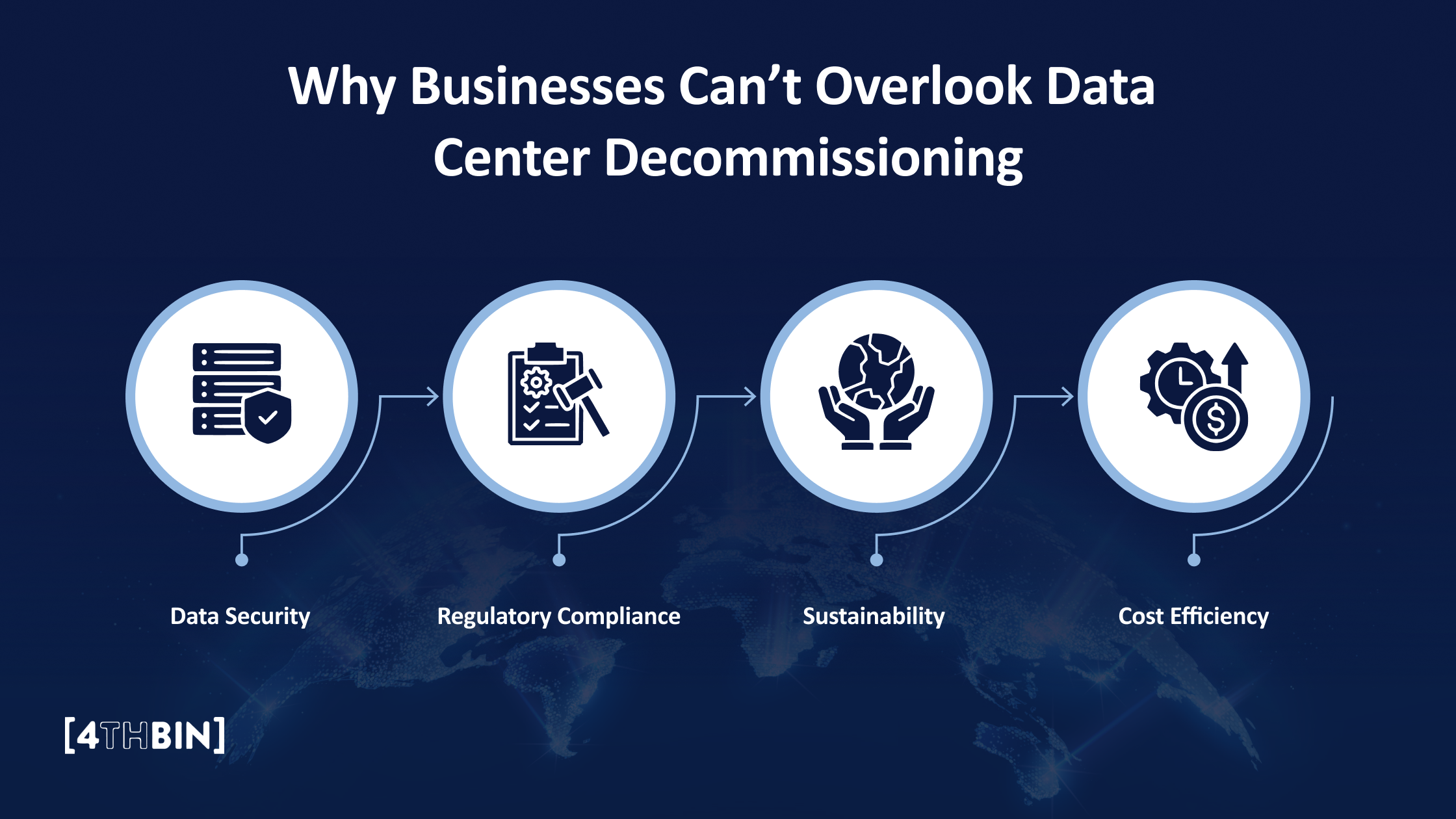
Decommissioning a data center is no longer just an IT responsibility; it has become a business imperative. The way an organization handles its retired infrastructure has direct consequences for security, compliance, finances, and brand reputation.
Data Security
Every retired server, storage device, or backup tape can hold years of business-critical and customer data. If that data isn’t securely wiped or physically destroyed, it creates a significant vulnerability. A report found that over 60% of breaches stem from mismanaged credentials or improperly disposed of assets. For organizations, this means the risk extends beyond IT; it directly impacts legal exposure, shareholder confidence, and brand trust. A single data mishap during decommissioning can erase years of reputational goodwill and trigger financial damages that reach into the millions.
Many organizations also align data sanitization processes with standards such as NIST SP 800-88, which provides guidelines for secure media sanitization and data destruction.
Regulatory Compliance
Healthcare, finance, legal, and other regulated industries face strict requirements for how data is stored, transferred, and ultimately destroyed. Regulations like HIPAA, GDPR, SOX, and PCI DSS don’t just require secure practices, they demand documented proof of compliance. During audits, regulators often request certificates of destruction or chain-of-custody reports tied to decommissioned assets. Without these, organizations risk penalties, failed certifications, or even losing the ability to operate in specific markets. In this sense, decommissioning isn’t a back-office IT project; it’s a compliance obligation with board-level visibility.
Sustainability
The environmental stakes are equally pressing. Data from the World Economic Forum indicates that over 53 million metric tons of e-waste are generated each year globally, yet less than 20% is recycled through certified channels. Data centers contribute significantly to that total through discarded servers, batteries, cabling, and power systems. Investors and stakeholders are increasingly expecting ESG reporting to cover IT lifecycle practices, including the handling of retired assets. Responsible decommissioning not only prevents hazardous waste from ending up in landfills but also demonstrates tangible action on corporate sustainability commitments.
Cost Efficiency
Decommissioning, when approached strategically, can deliver real financial benefits. Gartner estimates that organizations can reduce IT costs by up to 20% through effective IT asset disposition strategies. These savings come from multiple sources: recovering residual value through remarketing hardware, reducing ongoing storage and energy costs for idle systems, and consolidating physical space requirements through facility optimization. For large enterprises, this can translate into millions of dollars in avoided costs and recovered capital. Decommissioning becomes not just a compliance necessity but also a lever for operational efficiency and financial optimization.
The Essential Data Center Decommissioning Checklist

Every successful decommissioning project starts with a clear roadmap. A structured data center decommissioning checklist helps businesses reduce risks, stay compliant, and avoid unnecessary costs. Below are the essential steps organizations should include:
1. Assessment and Planning
Begin with a clear understanding of why the data center is being decommissioned—whether due to cloud migration, facility consolidation, or cost reduction. Establish project goals, define timelines, assign internal stakeholders, and identify compliance requirements that must be met. Early planning prevents scope creep and ensures everyone is aligned from the start.
2. Inventory and Audit
Create a comprehensive inventory of all assets, including servers, storage devices, networking gear, racks, and supporting infrastructure. Don’t overlook peripherals like cabling, UPS systems, and batteries. A detailed audit ensures no asset is left behind and provides the foundation for both data security and financial recovery.
In practice, organizations that skip detailed inventory audits often face compliance gaps later in the process, particularly during regulatory reviews or internal audits.
3. Data Security Measures
Data handling is the most critical step. All storage media must undergo secure erasure or physical destruction in accordance with industry standards. Certified data destruction services provide audit-ready certificates to prove compliance. This step protects businesses from the costly risk of sensitive information resurfacing after decommissioning.
4. Equipment Removal
Once data is secured, hardware can be safely disconnected, dismantled, and removed from the facility. Proper handling minimizes disruption to remaining infrastructure and reduces the risk of accidents or damage during extraction.
5. Transportation and Chain of Custody
Secure logistics are vital. Every asset should be tracked from the moment it leaves the facility to its final destination, with a documented chain of custody. This provides proof for auditors and peace of mind for executives that no assets were lost or tampered with in transit.
6. Sustainable Recycling and Disposal
Work only with certified e-waste recyclers (R2v3 or e-Stewards) to ensure equipment is processed responsibly. This prevents hazardous materials from ending up in landfills and aligns the project with ESG and sustainability reporting goals. Where possible, reuse and remarketing can also recover financial value from decommissioned assets.
7. Documentation and Reporting
Maintain complete records of every stage of the process, including destruction certificates, recycling reports, and inventory logs. This documentation satisfies compliance requirements, strengthens ESG reporting, and provides an audit-ready trail for regulators and internal stakeholders.
How to Choose the Right Decommissioning Partner
Even the most detailed checklist can fall apart without the right partner to execute it. Selecting the right vendor is one of the most critical decisions a business can make. Here are a few factors to consider:
1. Certifications and Standards
A credible partner should hold recognized certifications such as R2v3 or e-Stewards, which demonstrate adherence to global standards for secure, responsible recycling and disposal. These certifications ensure your IT assets are processed without shortcuts or harmful environmental practices. Look for vendors who can also provide certificates of data destruction for compliance purposes.
2. Compliance and Security Expertise
Regulatory requirements vary across industries, and your partner must understand them in detail. Whether it’s HIPAA in healthcare, GDPR for global operations, or PCI DSS for financial services, the provider should offer processes and documentation that align with the standards your business is subject to. Their chain-of-custody procedures, data sanitization methods, and reporting must stand up to audit scrutiny.
3. Transparent Processes and Reporting
Trust is built on transparency. A strong partner will provide visibility at every stage of the decommissioning process, from inventory and removal to transport, recycling, and final reporting. Detailed documentation, audit-ready certificates, and sustainability reports are non-negotiable. This transparency not only protects your business during audits but also strengthens stakeholder confidence.
4. Sustainability Commitment
Investors, customers, and employees increasingly expect companies to back their ESG goals with real action. A partner who prioritizes responsible e-waste recycling ensures that hazardous materials are diverted from landfills and valuable components are reused where possible. Beyond compliance, this demonstrates to stakeholders that your organization is serious about sustainability.
Simplify Your Decommissioning Journey with 4THBIN

Data center decommissioning is no longer a back-office IT project; it’s a critical business function that directly impacts security, compliance, and sustainability. At 4THBIN, we recognize that every server, storage device, and piece of networking equipment you retire still carries value, whether in the form of reusable hardware, recyclable materials, or the trust you maintain by safeguarding sensitive data.
With our certified data center decommissioning solutions, organizations can be confident their infrastructure is retired securely, compliantly, and with full environmental responsibility. For more than a decade, we’ve partnered with over 10,000 organizations, from Fortune 100 companies to small businesses, helping them transform decommissioning from a risk-filled obligation into an opportunity for leadership in security and sustainability.
Our certified data destruction services eliminate the risk of data recovery from decommissioned hardware, ensuring your business remains protected against breaches and regulatory penalties. From secure RemoteReturn mail-in options to convenient on-site collection, our customizable solutions allow you to choose the plan that best suits your organization’s needs.
Decommission your data center the right way.
Contact Us
Frequently Asked Questions
1. What is the biggest risk during data center decommissioning?
The biggest risk is data exposure from improperly handled or overlooked assets. Even a single hard drive, backup tape, or server left unsecured can contain sensitive business or customer data. Without certified data destruction and proper chain-of-custody tracking, organizations risk data breaches, regulatory penalties, and reputational damage. This is why secure data handling is considered the most critical step in any decommissioning project.
2. How do businesses ensure data is completely destroyed during decommissioning?
Businesses ensure complete data destruction by using certified data sanitization methods such as secure data wiping (aligned with standards like NIST SP 800-88) or physical destruction like shredding. Additionally, working with certified vendors ensures that Certificates of Data Destruction and audit-ready documentation are provided, proving that data cannot be recovered.
3. What compliance requirements apply to data center decommissioning?
Compliance requirements vary by industry but often include regulations such as HIPAA, GDPR, SOX, and PCI DSS, all of which require secure handling and documented destruction of sensitive data. Organizations must maintain audit trails, chain-of-custody records, and destruction certificates to demonstrate compliance during regulatory reviews.
4. Can businesses recover value from decommissioned IT equipment?
Yes, many organizations can recover value through IT asset remarketing and reuse programs. Functional hardware can be refurbished and resold, while recyclable components can be processed responsibly. A well-managed decommissioning strategy helps offset costs while still meeting compliance and sustainability goals.
5. Why is chain-of-custody important in data center decommissioning?
Chain-of-custody ensures that every asset is tracked from removal to final disposition, preventing loss, theft, or tampering during transit. It provides documented proof that equipment was handled securely, which is essential for passing audits, maintaining compliance, and protecting against liability in case of data breaches.