E-Waste and Data Security: What You Need to Know

Have you ever considered the secrets your organization’s old electronic devices might hold? Think of your old laptops, a retired system, or even an ancient copier; they may contain sensitive and confidential information, such as client details, financial records, and internal strategies.
For organizations, improper electronics disposal isn’t just about clearing out old devices; it comes with a high price, a costly data breach. These devices can become silent threats, jeopardizing their security, reputation, and the trust they’ve built with their stakeholders.
The risks are not theoretical. For example, on September 9, 2021, HealthReach Community Health Center notified 101,395 Maine residents of a massive potential healthcare breach caused by improperly disposed hard drives.
These drives, handled by a third-party storage facility, were neither wiped nor shredded, leaving sensitive patient data—including names, social security numbers, dates of birth, financial account details, lab results, insurance information, passwords, security codes, and PINs—vulnerable to exposure. Another 15,503 individuals from other states were also affected.
This example highlights the critical need for stringent e-waste disposal protocols. Improper disposal of electronics contributed to 16 HIPAA-reported incidents in 2020, potentially exposing close to 600,000 records.
In this blog, we explore the intersection of e-waste and data security, highlighting the hidden dangers and actionable steps you can take to protect your organization and personal information. If you think data breaches can only happen online, think again—your trash could be a hacker’s treasure.
How Improperly Discarded Devices Expose Sensitive Data
Electronic devices, from smartphones to laptops and hard drives, are treasure troves of sensitive information. Improperly discarding these devices without securely erasing the data can have devastating consequences. Here’s a detailed exploration of how this happens and why it's a significant risk:
Residual Data Remains Recoverable
The data often lingers on the storage media even after files are “deleted” or devices are factory reset. This is due to how data deletion typically works:
- File Deletion vs. Actual Erasure: When you delete a file, the operating system only marks the space available for new data, but doesn’t immediately overwrite it. Until overwritten, the original data can still be retrieved using recovery software.
- Factory Resets Aren’t Foolproof: While factory resets may remove data from accessible locations, they don’t permanently erase all data thoroughly, leaving it vulnerable to recovery.
- Hidden Partitions: Many devices have hidden partitions or backups that store sensitive information, which can be overlooked during standard erasure processes.
Devices Are Discarded with Intact Storage Media
One of the most common mistakes is disposing of electronics while their storage media remains intact. For example:
- Laptops and Desktops: Hard drives and SSDs often remain inside when computers are recycled or thrown away. These drives may contain years of personal or corporate data.
- Smartphones and Tablets: SIM cards, SD cards, and internal storage frequently store contact information, messages, financial apps, and personal photos.
- Printers and Copiers: Many people are unaware these devices have internal memory storing scanned or printed documents, including sensitive business files or personal information.
Devices Fall Into the Wrong Hands
Improperly discarded electronics can be intercepted in various ways, each posing a unique risk:
- E-Waste Pickers: In some regions, individuals or groups search for discarded electronics in landfills, dumpsters, or recycling centers. These devices are often resold or dismantled for data extraction.
- Unsecured Recycling Chains: Handing devices to uncertified recyclers increases the risk of data breaches. Unethical recyclers might resell these devices or recover and misuse the data for financial gain.
- Online Auctions and Second-Hand Markets: Businesses and individuals often sell old devices on platforms like eBay or Craigslist without securely erasing the data, providing a straightforward route for malicious actors to access sensitive information.
The Rise of Specialized Data Recovery Tools
Advancements in data recovery technology have made it easier than ever for criminals to retrieve data from discarded devices. Tools such as these are readily available:
- Free and Commercial Software: Programs like Recuva, EaseUS Data Recovery, or Forensic Toolkit (FTK) can quickly recover deleted files.
- Hardware-Based Recovery Techniques: Advanced forensic techniques can retrieve data by directly accessing the memory chips on devices with damaged storage.
- Encrypted Data Vulnerabilities: Even devices with encryption are not immune. Attackers can easily decrypt and access the data by recovering encryption keys stored locally.
Lack of Awareness About Data Sanitization
Many individuals and businesses lack awareness about the importance of data sanitization before disposing of devices:
- Overconfidence in Basic Deletion Methods: People assume that deleting files or reformatting drives is sufficient, unaware of how easily the data can be restored.
- Failure to Decommission Devices Properly: Businesses often overlook data-bearing equipment such as servers, external drives, and USBs during IT asset management processes.
- Trusting Unvetted Disposal Services: Handing over devices to uncertified recyclers or resellers can lead to mishandling and potential exploitation of stored data.
Data on Non-Obvious Devices
Beyond phones and computers, other types of electronic devices also store sensitive data that is often overlooked:
- IoT Devices: Smart home devices like cameras, thermostats, and voice assistants may store user preferences, passwords, or video/audio recordings.
- Wearables: Fitness trackers and smartwatches often sync with user accounts, holding personal health data and location history.
- Networking Equipment: Routers and modems store IP addresses, passwords, and network configurations, which can be exploited if not properly wiped.
Chain of Custody Breakdowns
For organizations, one of the most critical risks is a breakdown in the chain of custody for devices being decommissioned:
- Internal Mishandling: Employees may improperly store, lose, or sell devices without proper data sanitization.
- Third-Party Vulnerabilities: Outsourced IT vendors or recyclers may not follow secure protocols, exposing devices to risks during transit or disposal.
In practice, these risks often surface during large-scale IT refreshes, office relocations, or data center decommissioning projects, where hundreds or thousands of devices are moved, stored, or retired at once. Without structured tracking and secure handling, even a single missed device can lead to exposure.
In enterprise environments, maintaining a documented chain of custody ensures that every device is tracked from decommissioning to final disposition, reducing the risk of loss, theft, or unauthorized access.
Targeting Old Hardware for Cybercrime
Cybercriminals actively target discarded devices for several reasons:
- Data Mining for Financial Gain: Accessing banking credentials, passwords, or confidential business plans provides direct opportunities for fraud or theft.
- Identity Theft and Impersonation: Personal data retrieved from devices can be used to impersonate individuals or create fake identities for criminal activities.
- Corporate Espionage: For businesses, improperly discarded hardware can lead to competitors obtaining proprietary information or strategic plans.
Individuals and organizations can prioritize secure disposal by recognizing how improperly discarded devices can expose sensitive data. Proper data sanitization, physical destruction of storage media, and reliance on certified recycling partners are critical steps in preventing these risks.
Data Security Risks for Individuals and Businesses
The improper disposal of e-waste presents a multitude of risks for both individuals and businesses. In a world where sensitive information is often stored on electronic devices, failing to secure or erase this data adequately before disposal can have dire consequences.
Even devices that appear non-critical, such as printers, copiers, and network equipment, often retain cached data, credentials, or historical records that can be extracted if not properly sanitized.
Risks For Individuals
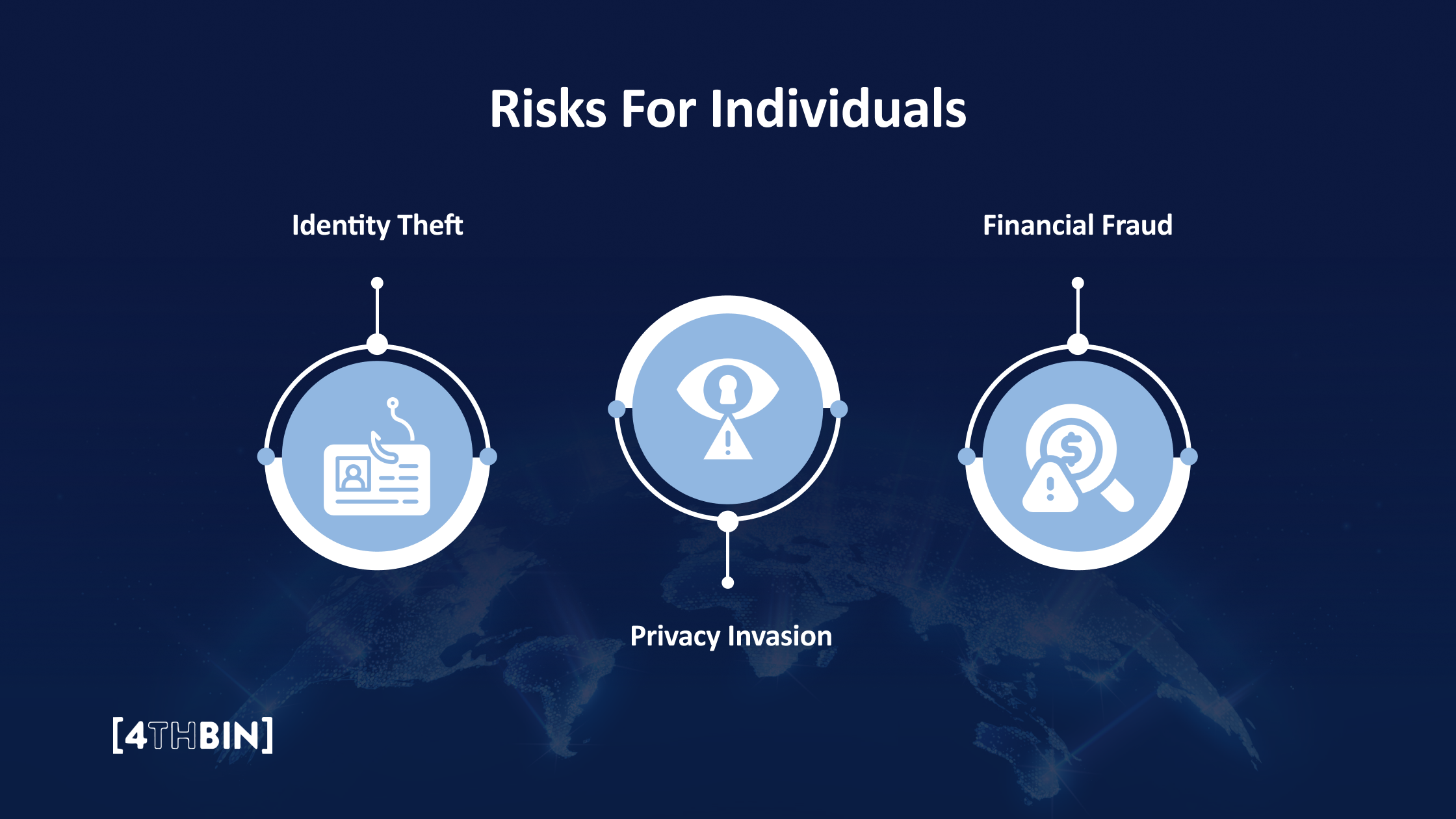
Here are a few risks of improper disposal of e-waste and how it can affect individuals:
Identity Theft
Old devices like smartphones, laptops, and tablets often store sensitive personal information like social security numbers, bank account details, email credentials, and addresses. If these devices are discarded without proper data erasure, malicious actors can recover this information and use it to steal identities.
Identity theft can lead to unauthorized financial transactions, fraudulent loan applications, and even criminal activities conducted in your name. The emotional and economic toll of reclaiming your identity can be overwhelming, often involving years of legal battles and credit restoration.
Privacy Invasion
Personal computers, external hard drives, and smartphones may contain private photos, videos, and correspondence. Improperly discarded devices can allow unauthorized individuals to access this data, leading to severe privacy breaches.
If private materials are shared or sold without consent, invasion of privacy can result in personal humiliation, extortion, or online harassment. This risk is particularly acute for public figures or individuals with sensitive personal histories.
Financial Fraud
Malicious actors can retrieve banking app details, credit card numbers, or saved passwords from improperly discarded devices. Stolen financial information can lead to unauthorized withdrawals, fraudulent purchases, or drained bank accounts, causing immediate financial strain.
Risks For Organizations
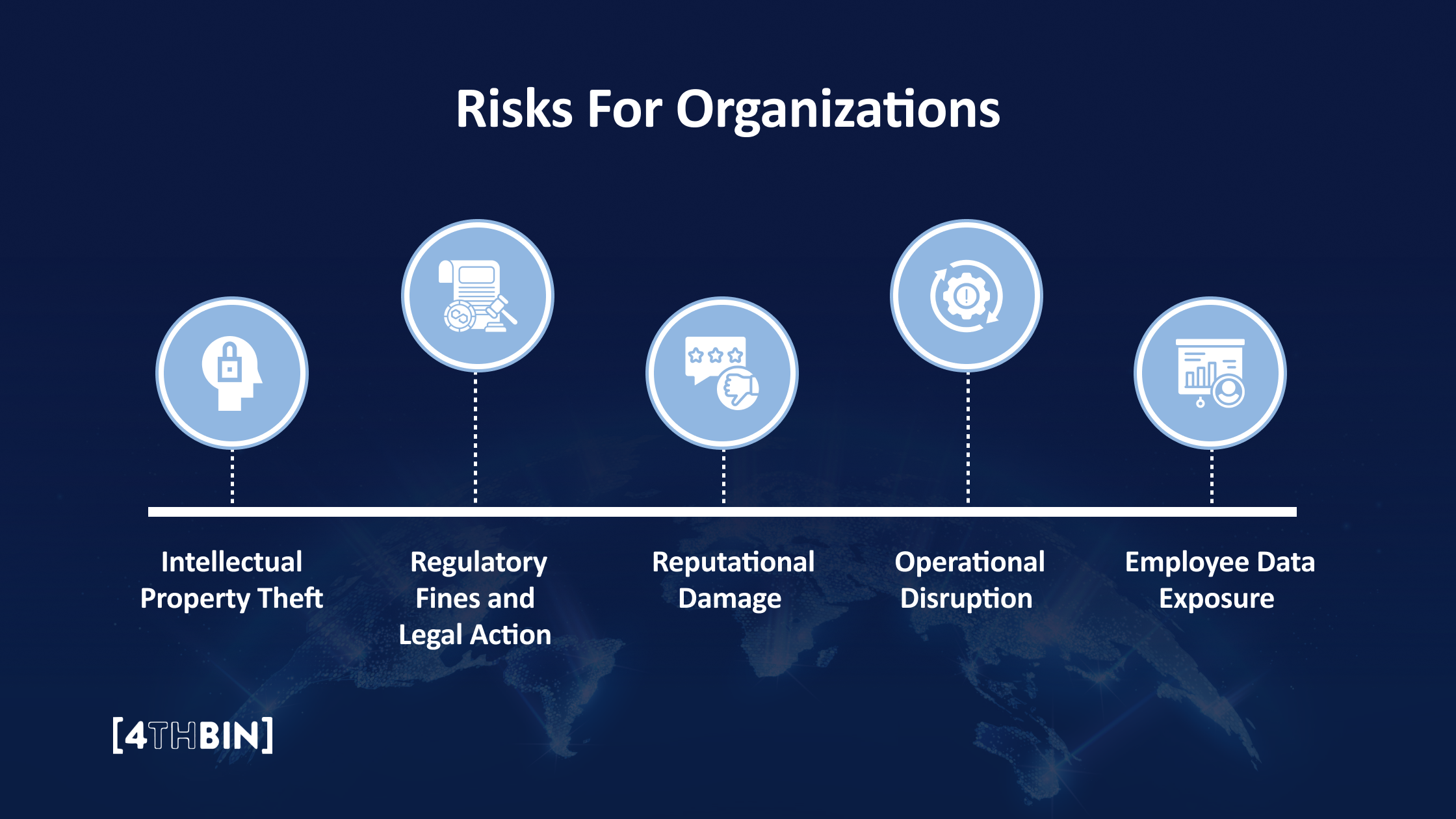
Here are a few risks of e-waste being disposed of improperly and how it can affect organizations:
Intellectual Property Theft
Discarded corporate devices like laptops, servers, or external drives often store proprietary data such as trade secrets, designs, contracts, and financial records. Cybercriminals or competitors can recover this data to gain an unfair advantage.
Stolen intellectual property can damage competitive positioning, compromise product launches, and result in significant financial losses. In extreme cases, it could lead to a complete loss of market share.
Regulatory Fines and Legal Action
Many industries are governed by data privacy laws like GDPR, HIPAA, or CCPA, which require organizations to always protect personal and sensitive data. Improper disposal of e-waste can result in data breaches, violating these regulations. Non-compliance can lead to hefty fines—running into millions of dollars—and costly lawsuits from affected customers, partners, or regulatory bodies.
Reputational Damage
News of a data breach caused by careless e-waste disposal can spread quickly, tarnishing the company’s reputation in the eyes of customers, investors, and the public. Loss of trust can lead to reduced customer loyalty, lower stock prices, and difficulties in acquiring new clients. This reputational hit can be catastrophic for small businesses and even lead to closure.
Operational Disruption
Recoverable data from improperly discarded devices may include passwords, access credentials, or sensitive operational details. Bad actors can use this data to infiltrate systems, install ransomware, or shut down operations. Operational downtime caused by such breaches can disrupt workflows, delay projects, and result in financial losses due to halted production or services.
Employee Data Exposure
Devices that manage HR functions may store employees’ details, such as salaries, social security numbers, and addresses. Improper disposal risks exposing this information, making employees victims of identity theft or fraud, eroding trust in the company, and leading to internal dissatisfaction or legal claims.
Best Practices for Protecting Data Before Disposing of E-Waste
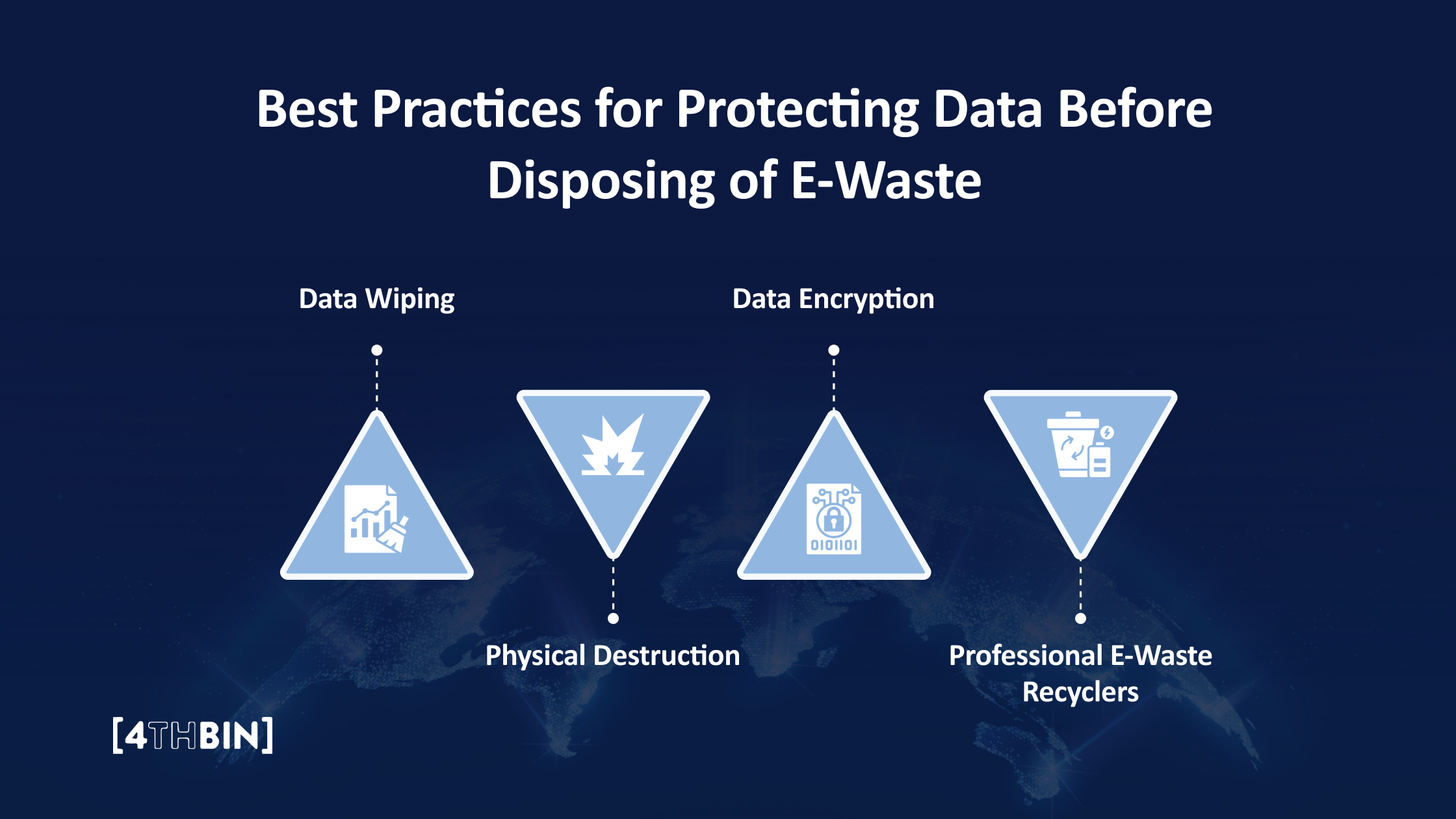
Disposing of electronic devices responsibly involves more than simply handing them off to a recycler or throwing them away. It’s essential to ensure that all sensitive data is thoroughly protected and irretrievable before disposal. Here are the most effective practices to safeguard your organizational information and minimize risks:
Data Wiping
Proper data wiping is a fundamental step to protect sensitive information stored on devices. Many people mistakenly believe that deleting files or performing a factory reset removes all data. However, these actions only make data less accessible, not unrecoverable. Certified data erasure software is the solution to ensure complete data removal. These programs repeatedly overwrite the storage media, rendering the original data irretrievable.
Data wiping tools not only remove data but also provide certificates of erasure, which are critical for businesses to demonstrate compliance with regulations like GDPR, HIPAA, or CCPA. By thoroughly erasing data, you reduce the risk of exposing sensitive information during the device’s following lifecycle.
Certified data erasure processes typically follow NIST 800-88 (National Institute of Standards and Technology) guidelines, which define industry standards for secure media sanitization across government and enterprise environments.
Physical Destruction
Physical destruction offers additional protection when dealing with devices containing highly sensitive or confidential data. Hard drive shredding is a standard method that breaks storage devices into small fragments, ensuring no data can be reconstructed. Specialized shredding machines are used for this process, and the resulting debris is often recycled.
Another effective method is degaussing, which uses powerful magnetic fields to disrupt the data stored on magnetic media like hard drives and tapes. Degaussing renders the storage medium entirely unusable, effectively destroying any stored information. While physical destruction is more resource-intensive, it is often the best choice for businesses handling sensitive customer or proprietary data.
Combining this method with secure recycling ensures data security and environmental responsibility.
Data Encryption
Encrypting data before disposal adds a layer of security. Encryption converts your data into a format that can only be read with a specific decryption key. Even if someone retrieves the encrypted data from a discarded device, it will only be readable with access to the key. Modern devices often have built-in encryption features, which should be enabled whenever possible.
Encryption is beneficial for businesses that manage sensitive information over the lifespan of their devices. Encrypting data from the start reduces the risk of exposure even if data-wiping or physical destruction measures fail. This step complements other practices and is essential for businesses under stringent regulatory requirements.
Professional E-Waste Recyclers
For organizations looking for a comprehensive solution, certified e-waste recyclers, such as 4THBIN, provide expert services to handle old devices securely. These recyclers are equipped to manage both data sanitization and the ethical recycling of electronics. Certifications like R2 (Responsible Recycling) and e-Stewards indicate that a recycler adheres to strict data security and environmental protection standards.
Partnering with certified recyclers, such as 4THBIN, ensures that devices are handled professionally from start to finish. Many recyclers offer services like secure transportation, data destruction verification, and certificates of disposal, which are invaluable for businesses managing large quantities of devices. Choosing a certified recycler protects your data and aligns with sustainability goals by ensuring that the materials in your devices are recycled responsibly.
By following these best practices, your organization can protect sensitive information and mitigate risks associated with e-waste disposal. Moreover, these measures are critical for maintaining data security in an increasingly digital world.
Protect Your Organization and the Planet with 4THBIN
Don’t let your organization’s e-waste pose a risk to your data security or the environment. Working with certified partners like 4THBIN ensures that organizations can implement these best practices at scale, with secure data destruction, documented processes, and environmentally responsible recycling.
With over a decade of expertise, 4THBIN has partnered with over 10,000 organizations across the United States, including Fortune 100 companies and startups, to transform e-waste into a valuable resource.
We prioritize data security and environmental impact, ensuring that sensitive information is completely safeguarded with our certified data destruction services. This eliminates the risks of data recovery associated with improper disposal.
Our customizable e-waste recycling solutions include secure RemoteReturn mail-in services and convenient on-site collection options, allowing you to choose a plan that best fits your organization’s needs.
Secure Organizational Data Today
Contact Us
Frequently Asked Questions
1. What happens to data on discarded electronics?
Data often remains recoverable on discarded electronics unless it is securely erased or destroyed. Deleting files or performing a factory reset does not remove the underlying data, which can still be accessed using recovery tools. Proper data sanitization is required to ensure sensitive information is permanently removed.
2. Why is e-waste a serious data security risk?
E-waste is a data security risk because old devices frequently retain sensitive information even after use. If not properly wiped or destroyed, this data can be recovered and misused, leading to breaches, financial loss, and regulatory violations for businesses.
3. What is the most secure way to destroy data on old devices?
The most secure way to destroy data is through certified data wiping (such as NIST 800-88 methods), physical destruction, such as hard drive shredding, or degaussing for magnetic media. These methods ensure data cannot be recovered under any circumstances.
4. Does a factory reset permanently erase all data?
No, a factory reset does not permanently erase all data. It removes access to files but does not overwrite the data itself, allowing recovery with specialized software. Secure data erasure tools or physical destruction are required for complete removal.
5. Why should companies use certified e-waste recyclers?
Companies should use certified e-waste recyclers because they follow verified processes for secure data destruction, environmental compliance, and chain-of-custody tracking. This reduces the risk of data breaches and ensures responsible handling of electronic waste.