How to Dispose of Electronics in New York City (NYC)?

If you’ve ever tried getting rid of an old laptop or TV in New York City, you already know it’s not as simple as leaving it on the curb.
Many residents assume electronics can go out with regular trash, only to find out later that NYC has strict disposal rules and potential fines. Add to that the confusion about what qualifies as e-waste, where to take it, and which options are actually convenient, and the whole process can feel more complicated than it should.
Here’s the reality: New York City generates 25,000 tons of electronic waste every year, and a significant portion still ends up improperly discarded. That’s a problem, because devices like laptops, TVs, and phones contain hazardous materials such as lead and mercury that don’t belong in landfills.
The good news is that recycling electronics in NYC is easier than you might think. In fact, New Yorkers are already making an impact. E-waste programs in NYC have diverted an average of 2.2 tons of electronics per day, out of which 24.4 tons of electronics and 0.1 tons of rechargeable batteries were recycled.
So, if you’ve got outdated electronics taking up space, it’s time to clear them out the right way. In this blog, we will explore what you can recycle, where to take it, and how to dispose of your electronics in NYC so that you can contribute to a cleaner, greener city.
Types of E-Waste That Can Be Recycled in NYC

Electronic waste, or e-waste, includes specific devices defined under the New York State Electronic Equipment Recycling and Reuse Act. These are typically items that plug in or contain circuitry.
In NYC, commonly accepted e-waste includes:
- Computers and Accessories: This includes desktops, laptops, tablets, monitors, keyboards, mice, external hard drives, and cables.
- Home Entertainment Equipment: TVs, DVD players, Blu-ray players, stereos, gaming consoles, and remote controls.
- Mobile Devices: Smartphones, cell phones, tablets, and their chargers.
- Printers and Imaging Equipment: Printers, scanners, fax machines, and copiers.
- Small Electronics: Digital cameras, MP3 players, GPS devices, and handheld gaming devices.
However, not every electronic item qualifies for standard recycling programs. Let’s explore electronics, which are exceptions and cannot be recycled as e-waste.
What You Cannot Recycle as E-Waste
While NYC offers comprehensive recycling programs, certain items are prohibited from recycling as standard e-waste due to safety or environmental regulations. According to the NYS Electronic Equipment Recycling and Reuse Act and NYC sanitation guidelines, the following items cannot be recycled through e-waste programs:
- Large Appliances: Refrigerators, ovens, dishwashers, air conditioners, washing machines, and dryers are classified as bulk items and must be disposed of through designated bulk collection services.
- Batteries: Lithium-ion, rechargeable, and lead-acid batteries are not accepted in regular e-waste recycling. They must be taken to designated battery recycling locations. Alkaline batteries can be disposed of with regular household trash.
- Light Bulbs: Fluorescent bulbs, compact fluorescent lamps (CFLs), and other mercury-containing bulbs require special disposal through hazardous waste programs.
- Smoke Detectors: Due to their radioactive components, smoke detectors must be returned to the manufacturer or disposed of according to specific safety guidelines.
- Medical Devices: Electronics such as pacemakers, hearing aids, and other medical equipment cannot be recycled through standard programs.
- Hazardous Electronics: Devices that contain hazardous chemicals or pressurized gases, such as aerosol products and propane tanks, are not accepted.
Even though these items are not classified as standard e-waste, they must still be disposed of through designated programs, not regular trash.
Can You Dispose of Your E-Waste with Regular Trash in NYC?
In New York City, it is illegal to throw electronics in the trash or curbside recycling. This rule exists because e-waste contains toxic materials that can contaminate soil, water, and air if not handled properly.
Throwing your old electronics in the trash might seem like the easiest option, but in New York City, it’s actually against the law. Under the Disposal Ban, residents are prohibited from disposing of electronics with regular household garbage or curbside recycling. This rule helps prevent harmful materials such as lead, mercury, and cadmium from entering landfills, where they can harm the environment and public health.
You could face a fine if you’re caught tossing electronics in the trash. The amount depends on the type and quantity of items, so it’s best to avoid the risk altogether.
For items that don’t fall under standard e-waste recycling, such as large appliances, batteries, and light bulbs, it is always better to refer to the NYC Department of Sanitation website for proper disposal methods. This ensures both legal compliance and environmentally responsible waste management.
How to Dispose of Electronics in NYC?
Fortunately, New York City offers several convenient ways to recycle electronics. Whether you prefer a drop-off location or a manufacturer takeback program, you have plenty of choices.
New York City offers several approved, accessible options for disposing of e-waste responsibly.
Manufacturer Takeback Programs
If you’d rather not step out, manufacturer programs are one of the easiest ways to recycle electronics.
Brands like Apple, Dell, and HP offer mail-back services that let you ship your old devices using a prepaid label. Some even offer trade-in credit if your device still has value.
This works especially well for:
- Laptops and desktops
- Smartphones and tablets
- Accessories like keyboards and chargers
Just keep in mind that shipping larger items like TVs can be inconvenient, and not all products qualify.
eCycleNYC Program
If you live in an apartment building with 10 or more units, you may be eligible for the eCycleNYC program. This partnership between the NYC Department of Sanitation and Electronic Recyclers International makes recycling electronics easy and convenient.
Residents can drop off unwanted electronics in designated collection bins within the building. Accepted items include computers, TVs, printers, and mobile phones. The NYC Department of Sanitation collects electronics and ensures they are recycled responsibly, in compliance with all state and local regulations.
The eCycleNYC program is available to buildings throughout the five boroughs. If your building isn’t enrolled, encourage your property manager to sign up. It’s a simple way to ensure that electronics are recycled properly without the hassle of transporting them yourself.
SAFE Disposal Events
If you’ve been putting off clearing out multiple devices, SAFE Disposal Events are your best bet.
These events are designed for quick drop-offs, but timing matters. Lines tend to get longer mid-morning, so arriving early or closer to closing time usually means a faster experience.
They accept:
- Electronics (computers, TVs, phones)
- Batteries and light bulbs
- Household hazardous waste
It’s one of the few places where you can get rid of everything in one trip without worrying about sorting across multiple programs.
Check the NYC Department of Sanitation website for upcoming SAFE Disposal Event dates and locations. These events are typically scheduled in the spring and fall. Before heading to the event, securely pack your electronics and hazardous waste, ensuring all items are intact and leak-free.
Once you’re ready, simply drive or walk to the designated drop-off site, where event staff will collect your items quickly and free of charge. Remember that these events are open only to NYC residents, so be sure to bring proof of residency, such as a driver’s license or a utility bill. It is also important to note that businesses are prohibited from using these events and must arrange for commercial recycling services instead.
Local Drop-Off Locations
If you prefer a year-round option, you can recycle electronics at local drop-off locations throughout the city. Many retailers participate in recycling programs, accepting a wide range of items regardless of where they were purchased.
When using a drop-off location, always check the store’s website or call ahead to confirm accepted items, fees, and drop-off procedures. Some locations may have seasonal restrictions or temporary suspensions due to space limitations.
Donate Electronics for Reuse
If your electronics are still in good working condition, donating them is a great way to reduce waste and help others. Many organizations accept used electronics and refurbish them for individuals, schools, and nonprofits that need affordable technology.
- Goodwill: Most locations accept computers, laptops, mobile phones, and small electronics. Donated items are resold in Goodwill stores or refurbished for community programs.
- The Salvation Army: The Salvation Army accepts electronics in working condition, including computers, TVs, and gaming consoles. Proceeds from sales support local social services.
- Local Schools and Community Centers: Many schools, libraries, and community centers welcome donations of computers and tablets for educational use. Contact local organizations directly to see what they need.
- Online Platforms: Websites like Freecycle, Craigslist, and Facebook Marketplace allow you to give away electronics to people in your area. This is a quick and easy way to pass along items that still have life left in them.
Before donating, wipe all personal data from devices using secure data-destruction software. This protects your privacy and ensures the recipient can use the device without issues. Also, check each organization’s website for accepted items and drop-off instructions, as policies vary.
How Can You Reduce E-Waste?
![How Can You Reduce E-Waste?]()
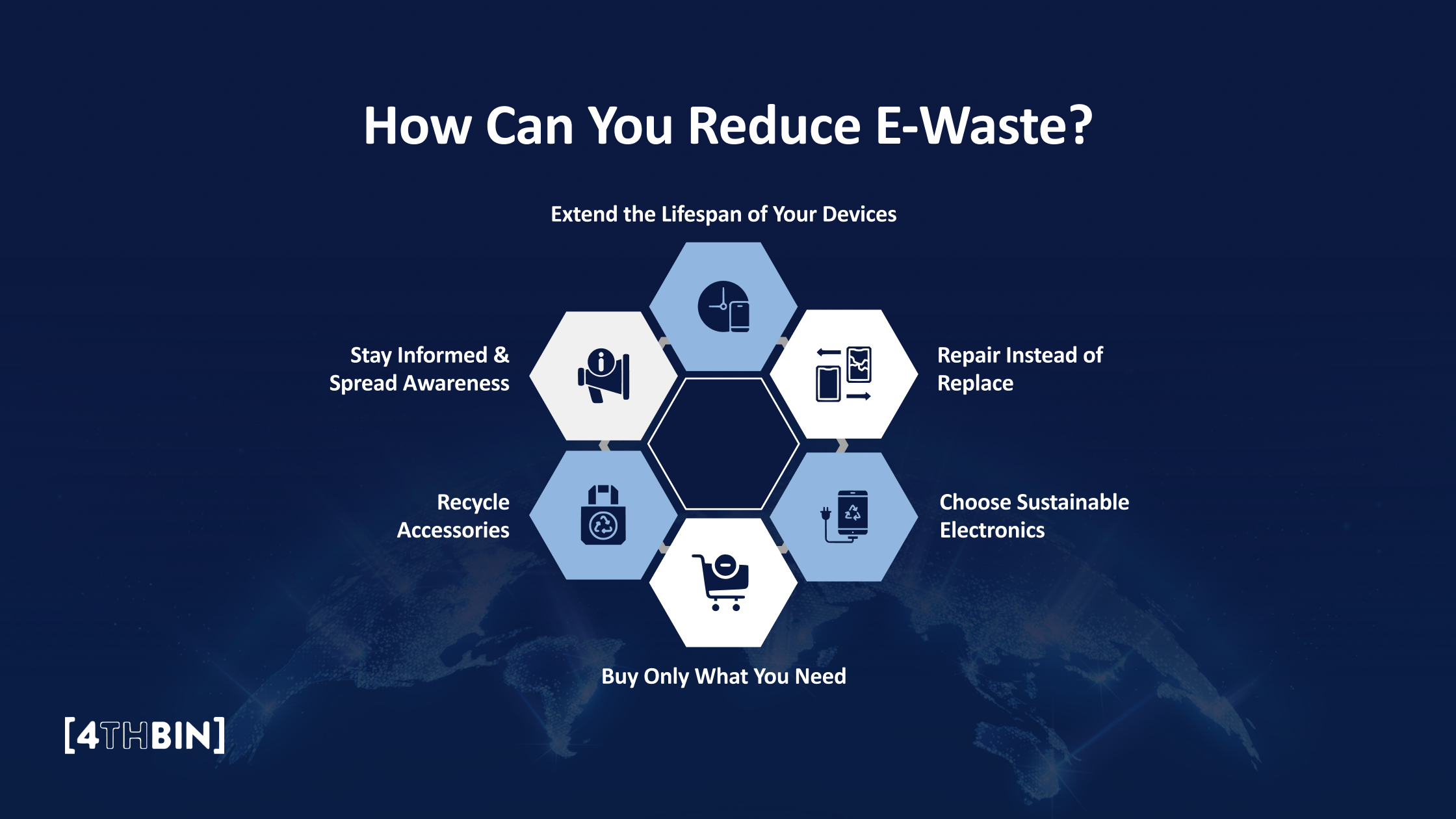
Reducing e-waste starts with making smarter choices about using, maintaining, and disposing of electronics. Here are some practical tips to help you reduce e-waste:
Extend the Lifespan of Your Devices
Protect your electronics with sturdy cases, screen protectors, and surge protectors to prevent damage. Avoid overcharging devices, as it can degrade battery life. Regular software updates and proper maintenance can also keep your devices running efficiently for longer.
Repair Instead of Replace
When a device breaks, consider repairing it instead of buying a new one. Many electronic devices can be repaired with affordable replacement parts, reducing waste and saving money. Check if the manufacturer or a local repair shop offers repair services.
Choose Sustainable Electronics
Opt for energy-efficient devices with longer lifespans. Look for products with certifications like ENERGY STAR, which indicate lower energy consumption. Support brands that offer repair services, recycling programs, and eco-friendly designs that are easy to upgrade and disassemble.
Buy Only What You Need
Avoid purchasing electronics you don’t truly need. Think carefully before upgrading to the latest model, as older devices work perfectly fine for everyday use. You can consider donating or reselling a device if you no longer need it. This extends the life of electronics, reduces demand for new products, and conserves resources.
Recycle Accessories
Don’t forget about chargers, cables, and accessories. Many recycling programs accept these items, preventing them from going to landfills. Some retailers, like Best Buy and Staples, have dedicated bins for small electronics and accessories.
Stay Informed & Spread Awareness
Educate yourself and others about the importance of reducing e-waste. Encourage friends, family, and colleagues to adopt sustainable electronics practices. Supporting legislation and companies prioritizing sustainability can also help drive more significant systemic change.
These habits can reduce e-waste, conserve resources, and create a more sustainable future.
How Businesses in NYC Should Handle E-Waste
Businesses in New York City face stricter requirements for e-waste disposal. While small businesses and nonprofits may qualify for free manufacturer takeback programs, larger organizations must work with certified e-waste recyclers.
To stay compliant and reduce risk, businesses should:
Establish an E-Waste Management Plan
Businesses should implement an internal e-waste management plan to ensure that electronic devices are disposed of responsibly. This plan should include guidelines for identifying obsolete equipment, securely storing e-waste until collection, and coordinating with certified recyclers for scheduled pickups. Assigning a designated employee or team to oversee e-waste management can help maintain compliance and streamline recycling.
Ensure Data Security Before Recycling
Before recycling electronics, businesses must erase all sensitive data to protect their clients, employees, and proprietary information. This process involves using secure data-wiping software that meets industry standards. For devices that cannot be wiped due to hardware malfunctions, physically destroying hard drives and other storage devices is recommended to prevent data recovery. Many certified recyclers offer on-site data destruction services, providing businesses with documentation and certificates of destruction for compliance purposes.
Maintain Records of E-Waste Disposal
Maintaining detailed records of e-waste disposal is essential for compliance and auditing. Businesses should retain documentation from recycling partners, including certificates of recycling and data destruction, to demonstrate that electronics were disposed of in accordance with regulations. These records can be valuable in the event of an inspection or audit.
Partner with Certified E-Waste Recyclers
Businesses must work with certified e-waste recycling companies that meet environmental and data security standards. Companies like 4THBIN specialize in collecting and recycling electronics from businesses of all sizes, including those undergoing large-scale IT upgrades or office relocations. Moreover, certified recyclers offer customized solutions, including bulk collection services, secure transportation, and asset disposition programs.
Choosing a recycler with R2v3 certification is crucial. This certification ensures that electronic devices are processed in an environmentally responsible manner, with strict protocols for handling hazardous materials and for safely recycling components. Additionally, R2v3 certification guarantees that recyclers follow best practices for data destruction, helping businesses comply with data privacy regulations.
By partnering with certified e-waste recyclers and following best practices for data security and environmental responsibility, businesses in NYC can ensure regulatory compliance, protect sensitive information, and contribute to a more sustainable future.
Simplify E-Waste Recycling in NYC with 4THBIN
For individuals, NYC offers several recycling options. But for businesses, especially those handling large volumes of electronics or sensitive data, the process becomes more complex.
That’s where working with a certified recycler makes a real difference.
4THBIN supports organizations across New York City with structured, compliant e-waste solutions. Instead of coordinating multiple drop-offs or relying on limited public programs, businesses can streamline the entire process, from collection to final disposal.
As an R2v3-certified recycler, 4THBIN follows strict standards for environmental responsibility and data security. This means electronics are not only recycled properly, but any sensitive information is securely destroyed, reducing the risk of data breaches.
Their services are designed for real operational needs:
- Secure data destruction with verifiable processes
- Commercial electronic recycling drop-off services
- RemoteReturn mail-in options for distributed teams
- IT asset disposition support during upgrades or relocations
With experience supporting over 10,000 organizations, including enterprise teams and growing businesses, 4THBIN helps turn what is often a logistical headache into a structured, low-risk process.
If your organization is dealing with outdated equipment, planning an office move, or simply looking to stay compliant without incurring internal overhead, working with a certified partner can save time and reduce risk.
Create a cleaner, more compliant way to manage e-waste.
Frequently Asked Questions
1) Is deleting files or formatting a hard drive enough to protect my data?
No. Deleting or formatting typically removes the file “index,” not the underlying data. In many cases, data can still be recovered using readily available tools. If the drive contained sensitive information, follow a recognized sanitization approach such as NIST SP 800-88 (media sanitization), which outlines when overwriting is appropriate and when physical destruction is the safer choice.
2) What’s the most secure way to destroy a hard drive?
For maximum certainty, physical destruction is the most reliable option, typically industrial shredding or crushing performed by a professional provider. Businesses and regulated environments often prefer methods that support the chain of custody and provide documentation (e.g., a Certificate of Destruction) for audit and compliance purposes.
3) Does degaussing work for both HDDs and SSDs?
No. Degaussing is designed for magnetic media (traditional HDD platters). It does not reliably sanitize SSDs, which store data on flash memory chips. For SSDs, the safer options are the manufacturer’s secure erase/PSID revert tool (when reuse is intended and risk is acceptable) or physical destruction for high-sensitivity data.
4) Why do DIY methods like drilling or hammering often fail?
DIY damage is often incomplete or unsafe. Punching holes or cracking a casing may not destroy the actual data-bearing components, especially for SSDs, where data is spread across multiple memory chips. DIY approaches can also create hazards (sharp fragments, dust, injury). If you need high assurance that data is unrecoverable, use professional destruction that reduces components to irrecoverable sizes.
5) What should I look for in a certified hard drive destruction provider?
Before handing over drives, confirm the provider can offer:
- Recognized certification (e.g., R2v3 or equivalent)
- A documented destruction process and a certificate of destruction, if needed
- Chain-of-custody controls (especially for businesses)
- Clear downstream handling for shredded materials (how e-waste is managed responsibly)
These checks strengthen both data security and environmental compliance.
Reference List
-
Natural Resources Defense Council. (2008, February). What you need to know about e-waste and New York City’s Intro. 104-A, the electronics collection, recycling, and reuse act [Legislative fact sheet]. https://www.nrdc.org/sites/default/files/ny104A.pdf
- New York City Department of Sanitation. (n.d.). ecycleNYC. Retrieved February 19, 2026, from https://www.nyc.gov/site/dsny/what-we-do/programs/ecyclenyc.page
- New York City Department of Sanitation. (n.d.). SAFE disposal events. Retrieved February 19, 2026, from https://www.nyc.gov/site/dsny/what-we-do/programs/safe-disposal-events.page
- New York City Department of Sanitation. (n.d.). New York City Department of Sanitation. Retrieved February 19, 2026, from https://www.nyc.gov/site/dsny/index.page
- New York State Department of Environmental Conservation. (2024, December 31). Recycling consumer electronic waste. https://dec.ny.gov/environmental-protection/recycling-composting/electronic-waste-recycling/recycling-consumer-electronic-waste
- NYC Business. (n.d.). Electronic equipment recycling and reuse act. Retrieved February 19, 2026, from https://nyc-business.nyc.gov/nycbusiness/description/electronic-equipment-recycling-and-reuse-act
-
RTS. (2022, August 23). NYC waste statistics – What you need to know. https://www.rts.com/blog/nyc-waste-statistics-what-you-need-to-know/