7 Recycling Myths About E-Waste You Should Stop Believing

You unplug your old devices, stack up old chargers, and set aside your broken electronics to recycle later. But what if the way you’re handling e-waste is doing more harm than good?
Recycling electronics isn’t as simple as tossing them in a bin or dropping them off at the nearest collection center. Unlike paper or plastic, e-waste contains a complex mix of valuable materials and hazardous components, and that means it needs to be handled with far more care.
Still, many of us assume we’re doing the right thing. We keep outdated laptops, tangled cords, and used batteries out of the trash, thinking we’ll recycle them someday. But when that someday comes, common myths can lead us to make choices that put our data, our environment, and even recycling systems at risk.
We’re breaking down 7 of the most widespread recycling myths related to e-waste so that you can recycle smarter, safer, and more responsibly. Let’s set the record straight once and for all.
7 Recycling Myths About E-Waste
Think you know how to recycle your old electronics? These common myths trip up even the most well-intentioned efforts. Let’s clear them up, one by one.
Myth #1: “It has a recycling symbol, so it’s recyclable.”
That little triangle of arrows might feel reassuring, but it doesn’t always mean what you think it does. The recycling symbol simply indicates the type of material used, not whether your local recycler can process it.
When it comes to electronics, this is exceptionally misleading. Many devices and components are stamped with recycling symbols even though they contain mixed materials, hazardous substances, or non-recyclable parts. Tossing them into the wrong bin can contaminate entire recycling batches, or worse, cause damage to machinery and pose safety risks.
For example, a wireless mouse may carry the recycling symbol, but it contains plastic, batteries, a circuit board, and possibly even lithium-ion cells. That’s not something your local curbside program is equipped to handle.
Myth #2: “All plastics in electronics are recyclable.”
It’s easy to assume that plastic is plastic, but when it comes to electronics, that’s far from true. Most electronic devices contain a mix of plastics, many of which are reinforced, blended with flame retardants, or bonded to metals and glass. These aren’t the same as the PET or HDPE plastics you toss in your curbside bin.
Even if a plastic part looks recyclable, it often isn’t. In fact, trying to recycle these mixed-material plastics the wrong way can contaminate other materials, damage recycling equipment, or end up being landfilled anyway.
And it’s not just about recyclability, it’s about safety, too. Some plastic components in e-waste can release toxic chemicals if incinerated or improperly processed.
Myth #3: “Recycling electronics uses more energy than it saves.”
This myth often comes up when people think about the transportation, dismantling, and processing involved in recycling electronics. It sounds logical, but it’s not accurate.
In reality, recycling electronics recovers valuable raw materials like copper, gold, aluminum, and rare earth metals. Extracting these from recycled devices uses significantly less energy than mining and refining virgin materials. For example, recycling aluminum saves up to 95% of the energy required to produce it from ore.
What’s more, responsible e-waste recycling helps avoid the environmental and health costs of improper disposal, like groundwater contamination from heavy metals or air pollution from burning toxic components.
Myth #4: “You have to clean electronics before recycling them.”
Unlike food containers or glass jars, electronics don’t need to be spotless to be recycled. You don’t have to wipe down your old keyboard or scrub dust off your router for it to be accepted. That kind of cleaning doesn’t affect the recycling process, and in most cases, it’s unnecessary.
But there is one type of “cleaning” that does matter: data removal. Personal devices like laptops, phones, or hard drives often contain sensitive information, and simply deleting files isn’t enough. If data isn’t properly wiped or destroyed before recycling, it could be accessed later, posing a risk to your privacy.
Myth #5: “When in doubt, toss it in the recycling bin.”
It feels harmless, maybe even helpful, to toss an old phone charger or broken headphones into your home recycling bin. After all, it’s better than sending them to the landfill, right? Not quite.
This habit, known as wish-cycling, is one of the most significant contributors to recycling contamination. It isn’t just unhelpful. In New York City, it’s actually illegal.
Under NYC law, electronic waste cannot be discarded in regular trash or recycling bins. Doing so can result in fines of up to $100 per item. This includes common items like computers, TVs, printers, tablets, cables, and even keyboards. The city considers improper disposal a serious offense because of the risks these materials pose to people, property, and the environment.
Beyond the legal consequences, wish-cycling contributes heavily to recycling contamination. Electronic components can leak toxic substances, contain lithium-ion batteries that spark fires, or damage recycling equipment—all of which can shut down operations and endanger workers.
Despite good intentions, tossing e-waste into the wrong bin can cause more harm than doing nothing at all.
Myth #6: “E-waste can go in the regular trash.”
In many places, including New York City, this isn’t just a bad idea; it’s illegal, and can result in fines of up to $100 per item.
Beyond the legal risks, tossing electronics in the trash has serious environmental consequences. Most devices contain heavy metals like lead, mercury, and cadmium, materials that can leach into soil and groundwater once buried in landfills. These toxins don’t break down; they accumulate in ecosystems and pose long-term risks to both wildlife and human health.
Lithium-ion batteries are even more dangerous. When compacted in garbage trucks or buried in landfills, they can overheat, catch fire, or explode, creating costly damage and putting sanitation workers at risk.
Even small items, like headphones, cables, or USB sticks, add up. In volume, improperly discarded electronics become a significant source of toxic waste.
Myth #7: “Recycling e-waste doesn’t make a difference.”
This is one of the most damaging myths because it encourages inaction.
Some people believe that their old devices are too small to matter, or that recycling is just a drop in the ocean. But e-waste is the fastest-growing waste stream in the world, and every device recycled properly helps reduce pollution, conserve resources, and prevent hazardous materials from entering the environment.
Recycling electronics allows valuable materials, like gold, copper, aluminium, and rare earth metals, to be recovered and reused. This reduces the demand for raw material mining, which is energy-intensive, environmentally destructive, and often tied to unethical labor practices.
What’s more, responsible e-waste recycling also includes secure data destruction, protecting your personal information from falling into the wrong hands.
Every device you recycle the right way is part of a much bigger impact, one that extends from environmental protection to global resource conservation.
How to Recycle Electronics the Right Way
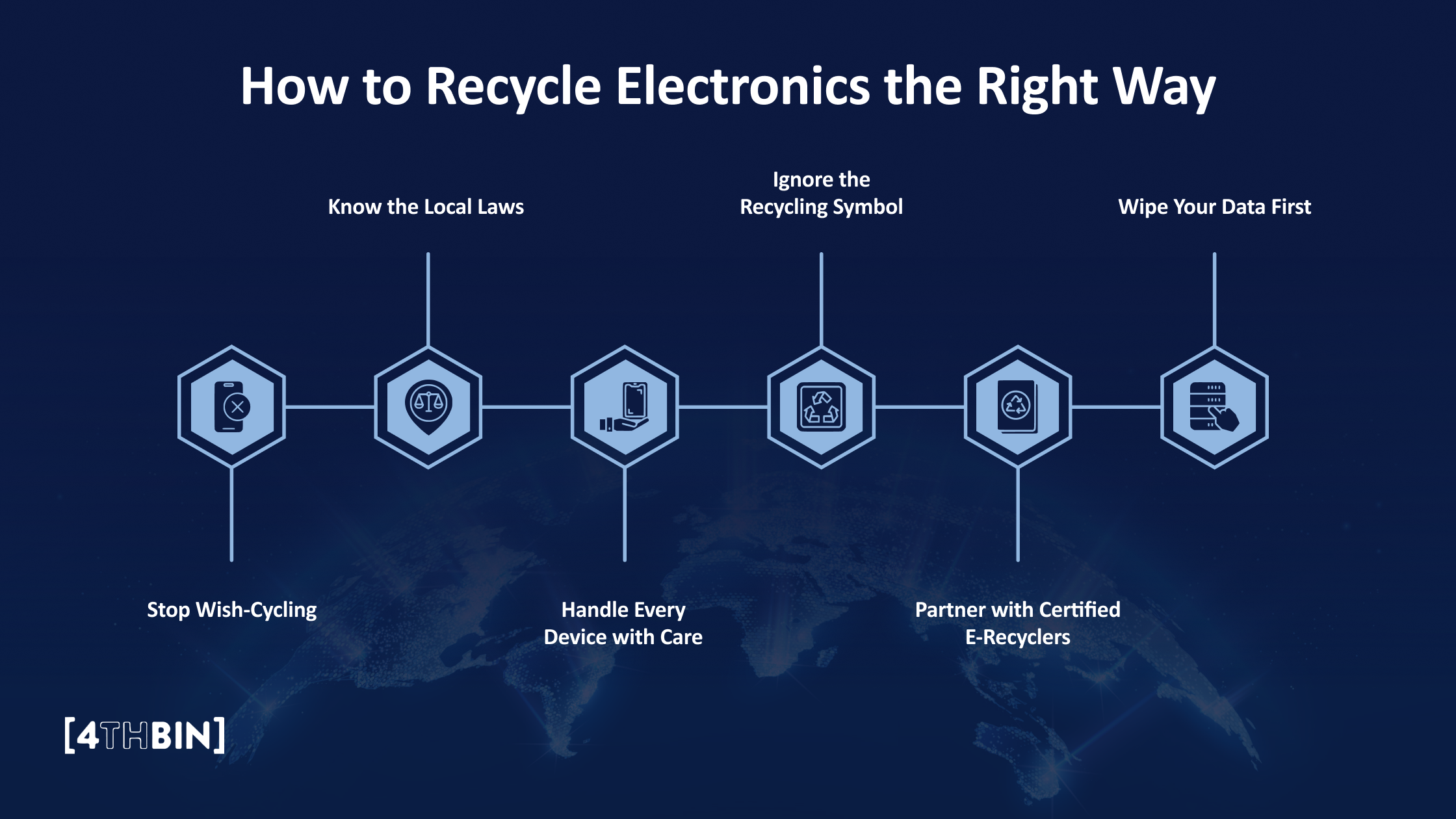
Now that you know what not to do, here’s what you can do instead. These simple steps can help you keep harmful waste out of landfills, protect your data, and ensure your devices are handled responsibly:
1. Stop Wish-Cycling
If you’re unsure whether an item is recyclable, don’t throw it in the bin “just in case.” Even if you’ve seen others do it, electronics should never go in your home recycling. Curbside programs aren’t designed to handle them. Batteries in devices can spark fires, and wires or small components can jam sorting machines.
Instead, take a moment to verify how and where your device should be recycled. Your local sanitation department or a certified recycler’s website can tell you precisely what’s accepted and how to prepare it.
2. Know the Local Laws
Take five minutes to check your local waste or sanitation department’s website. You’ll often find approved e-waste drop-off locations, pickup schedules, or recycling events. Knowing the rules helps you stay compliant and avoid penalties while doing the right thing.
In cities like New York, it’s illegal to dispose of e-waste in household trash or blue bins, and doing so can lead to fines of up to $100 per item. This includes everything from computers and printers to cables and keyboards.
3. Handle Every Device with Care
Don’t underestimate small items. Old phones, headphones, USB drives, and cables often get overlooked, but they still contain toxic materials or valuable components. In bulk, they contribute significantly to environmental waste.
Even if it feels too minor to matter, treat every cord, cable, and accessory like e-waste. Most certified recyclers accept small electronics, and some even offer collection boxes for homes or offices. It’s an easy way to keep these items out of landfills.
4. Ignore the Recycling Symbol
It’s easy to assume that a recycling symbol means something is safe to recycle, but that’s not always the case, especially with electronics. The symbol might indicate the material type, but it says nothing about whether your local program can process it.
Electronics are made of complex components, and many can’t be adequately separated in regular recycling streams. It’s always better to double-check with a trusted recycler than to assume it’s okay to toss something in.
Always check with your local recycler or e-waste program before assuming. Relying on the symbol alone can lead to improper disposal and system contamination.
5. Partner with Certified E-Recyclers
E-waste contains valuable materials, but it also includes toxic substances that need careful handling. Certified recyclers follow strict standards to safely dismantle devices, protect the environment, and ensure nothing ends up in the wrong place.
Look for recyclers certified under programs like R2v3 or e-Stewards, such as 4THBIN. These standards make sure the recycling process is secure, ethical, and environmentally sound. Some certified recyclers also offer pickup services for added convenience.
6. Wipe Your Data First
Before recycling phones, laptops, hard drives, or tablets, make sure you’ve securely removed any personal or sensitive data. A simple “delete” isn’t or a factory reset isn’t enough; your information can still be recovered unless properly wiped or destroyed.
If you’re unsure how to wipe your device, ask the recycling provider if they offer secure data destruction. Many do. It’s a small step that goes a long way in protecting your privacy.
Make the Right Move for Your Old Electronics with 4THBIN
The myths around recycling, especially when it comes to electronics, can lead to costly mistakes, legal risks, and environmental damage. The good news is, there’s a better way.
With 4THBIN ’s e-recycling solutions, organizations and individuals can rest assured of secure, compliant, and environmentally responsible electronic waste disposal.
With over a decade of experience, we have partnered with more than 10,000 organizations, including Fortune 100 companies and small businesses, to transform e-waste challenges into opportunities. We make the process seamless, offering businesses a way to turn a potential liability into an opportunity for leadership in sustainability and responsibility.
Our certified data destruction services ensure that sensitive information is completely safeguarded, eliminating the risks of data recovery associated with improper disposal. From secure RemoteReturn mail-in options to convenient on-site collection, our customizable solutions allow you to choose the plan that best suits your organization’s needs.
Let’s make sure your electronics go to the right place.
Contact Us