How Corporate Electronic Asset Recycling Protects Your Business
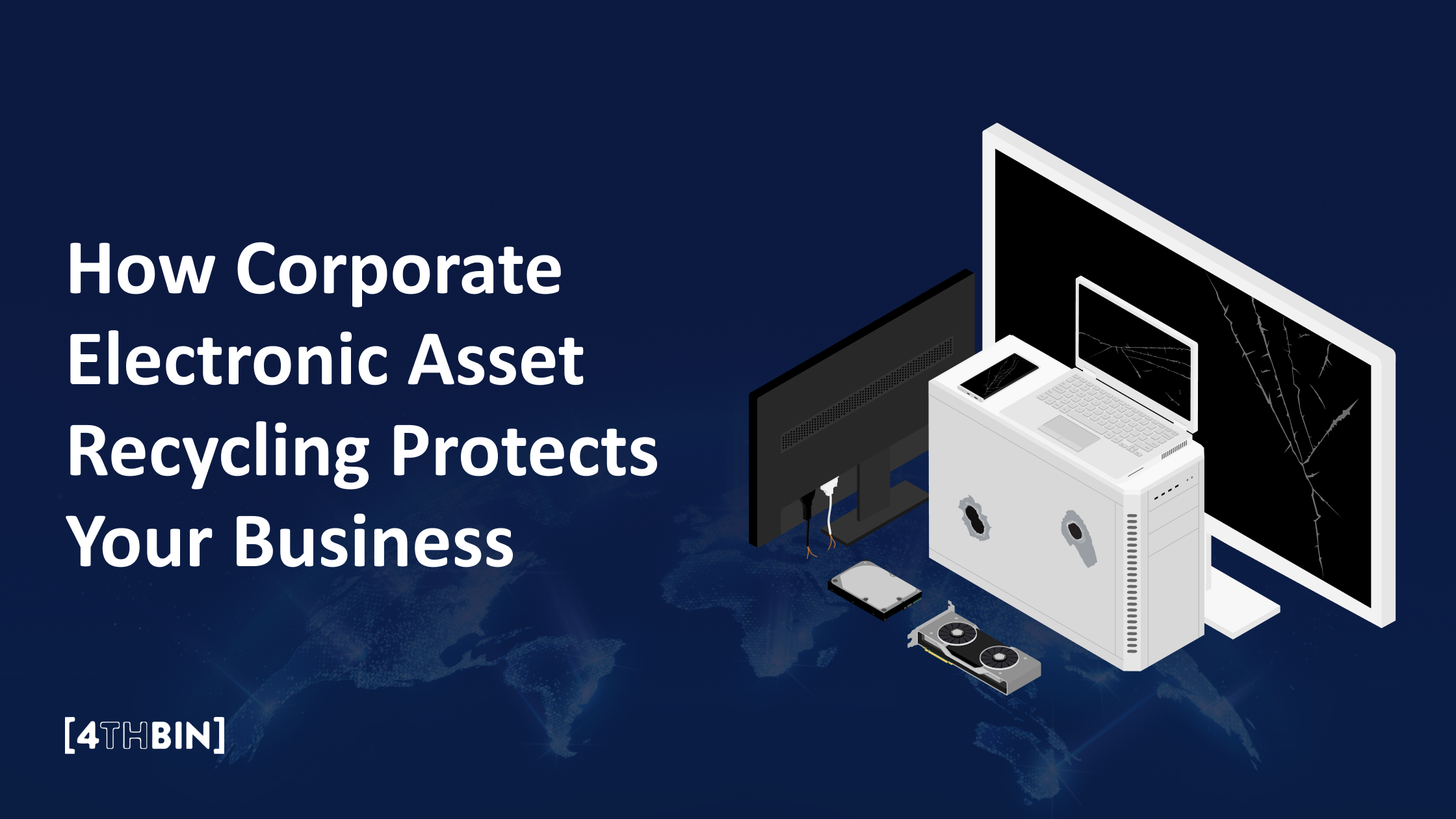
Think about how quickly technology cycles through your workplace. The laptops you issued three years ago are slowing down, servers need upgrading, and phones are constantly being replaced. Before long, you’re left with a storeroom, or worse, a warehouse, full of outdated equipment.
At first, those devices may seem harmless, just boxes gathering dust. But the truth is, retired electronics carry risks long after they’ve been taken out of service. Hard drives, servers, and even office printers often contain sensitive information that doesn’t disappear when the power is switched off. Left unmanaged, that data can become a liability if it’s exposed.
There are also compliance issues to consider. Regulators expect businesses to adhere to strict rules when disposing of electronic equipment, and failure to do so can result in fines or legal repercussions. Add to that the environmental cost—materials like mercury, cadmium, and lead leaching into soil and water when devices are dumped—and the problem quickly grows beyond just clutter.
This is where corporate electronic asset recycling makes a difference. Instead of treating outdated equipment as waste, it creates a structured, secure, and environmentally responsible way to retire technology. By approaching recycling correctly, companies can protect their data, meet compliance obligations, and reduce their environmental footprint, all while maintaining the trust of clients, employees, and stakeholders.
What Is Corporate Electronic Asset Recycling?
When most people think of recycling electronics, they picture dropping off old laptops or phones at a collection point. But for businesses, the process is more complex. Corporate electronic asset recycling extends beyond simply disposing of unwanted devices; it’s about managing them responsibly from the moment they’re retired to their final disposition.
This process combines several critical steps. First, it ensures all data stored on devices is securely erased or destroyed so there’s no chance of recovery. Second, it ensures that the equipment is handled by certified professionals who know how to recover valuable materials, such as metals and plastics, while safely managing hazardous components. Finally, it provides documentation that proves the company followed proper procedures, something auditors, regulators, and stakeholders increasingly expect to see.
In short, corporate electronic asset recycling isn’t just waste disposal. It’s a structured approach that protects information, meets compliance requirements, and reduces environmental impact, all while demonstrating accountability to clients, employees, and the wider community.
Risks of Mishandling Corporate Electronics
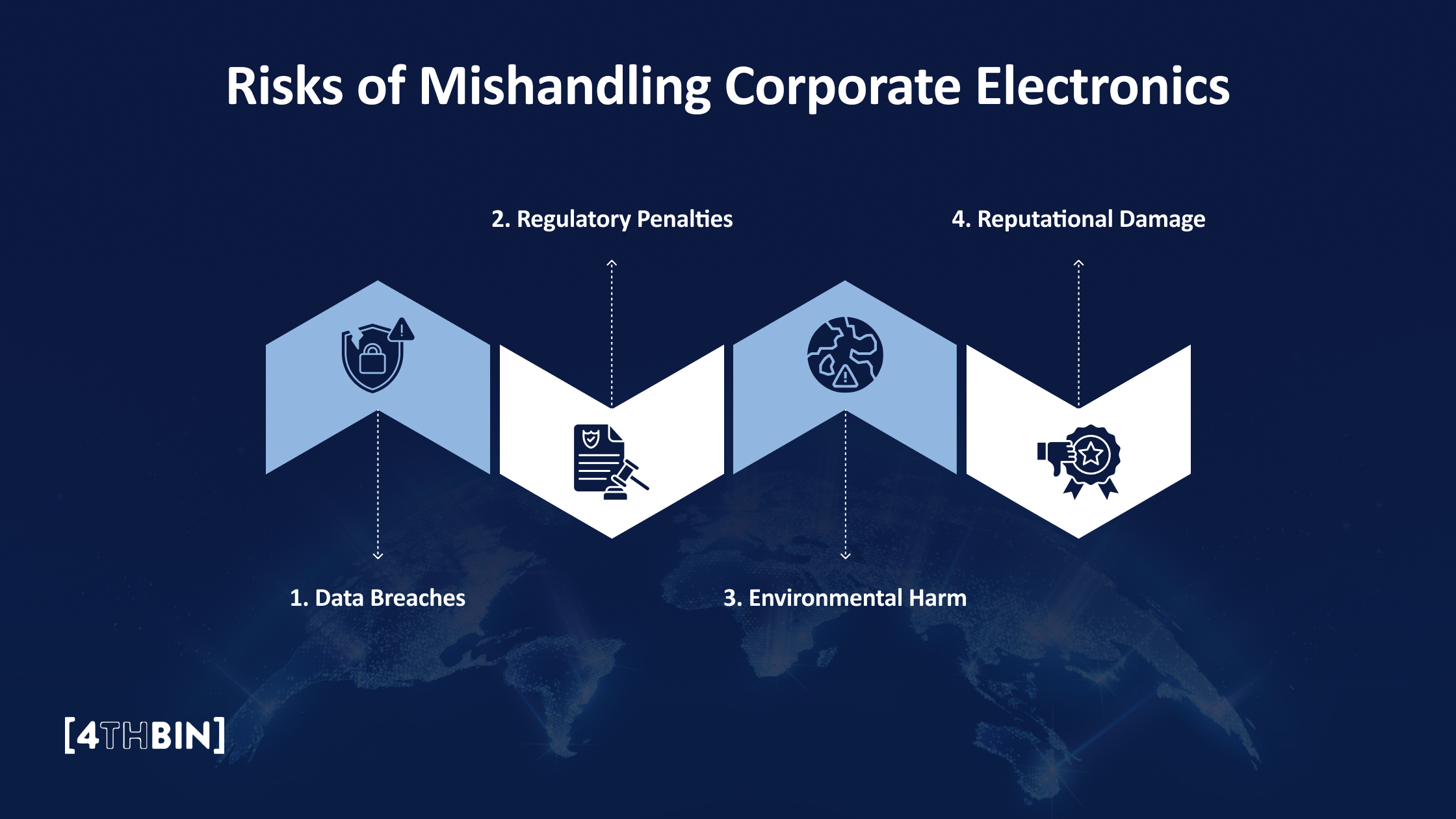
When outdated technology is pushed aside or disposed of casually, the impact goes far deeper than a storage issue. Here are the risks of mishandling electronic assets:
1. Data Breaches
Devices don’t stop storing information just because they’ve been retired. Hard drives, servers, and even office printers can retain confidential records, financial data, or customer details. If those assets aren’t sanitized or appropriately destroyed, the information can be retrieved by anyone who gains access. Breaches of this kind often result in regulatory investigations, lawsuits, and costly remediation efforts. More importantly, they compromise the trust that clients and employees place in the organization.
2. Regulatory Penalties
Governments and regulatory bodies have established strict requirements for how businesses dispose of electronic assets. Regulations such as HIPAA in healthcare, GDPR in Europe, or state-level e-waste laws in the U.S. don’t just recommend secure disposal—they mandate it. Failure to demonstrate compliance can result in substantial fines, legal liability, and reputational damage. For publicly traded companies, it can also raise red flags with auditors and shareholders.
3. Environmental Harm
Electronic waste contains toxic materials like mercury, cadmium, and lead. When devices are dumped in landfills or shipped overseas to unregulated recyclers, these materials contaminate soil, waterways, and ecosystems. Businesses that ignore these risks not only contribute to long-term environmental harm but also undermine their own sustainability goals and corporate responsibility commitments, issues that customers, partners, and investors increasingly factor into decision-making.
4. Reputational Damage
Clients, employees, and investors expect companies to act responsibly with the technology they manage. Mishandled assets, whether through a data leak, environmental violation, or regulatory fine, can quickly erode that confidence. Unlike financial penalties, reputational damage doesn’t have a fixed cost or timeline; it can take years to rebuild lost trust. In competitive markets, that loss of confidence can make the difference between winning and losing key business opportunities.
Benefits of Proper Corporate Electronic Asset Recycling
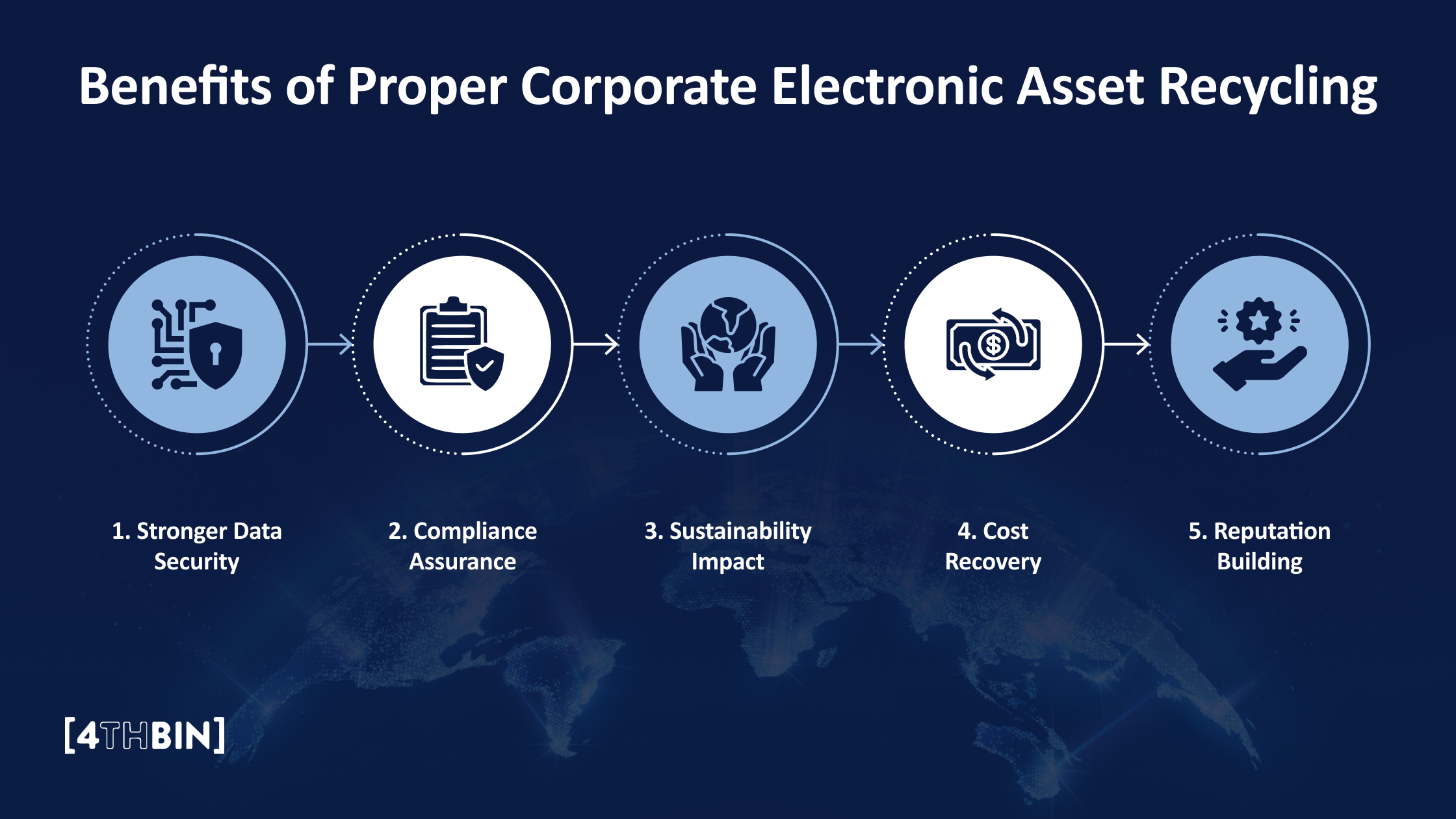
Addressing outdated technology the right way doesn’t just help businesses avoid problems, it creates tangible benefits that strengthen operations, compliance, and reputation. Here are a few benefits of corporate electronic asset recycling:
1. Stronger Data Security
Data doesn’t vanish when a device is switched off. Hard drives, servers, and even multifunction printers can hold years of sensitive information. Through certified recycling, that data is securely wiped or physically destroyed, eliminating the possibility of recovery. This isn’t just a technical safeguard; it’s a direct way to protect clients, employees, and the business itself from the financial and reputational fallout of a breach.
2. Compliance Assurance
Laws governing electronic waste and data privacy continue to expand, and auditors now expect proof that proper procedures are being followed. Certified recyclers provide detailed documentation, from certificates of data destruction to environmental processing reports, that withstands regulatory and legal scrutiny. For businesses in healthcare, finance, and other highly regulated sectors, these records are critical to avoiding fines and demonstrating accountability to boards, shareholders, and regulators.
3. Sustainability Impact
Every device contains materials that are valuable when recovered and hazardous when discarded. Proper recycling extracts metals, plastics, and rare earth elements for reuse, reducing the demand for new mining and manufacturing. Hazardous materials, such as mercury, cadmium, and lead, are neutralized or safely processed, thereby preventing long-term environmental damage. Companies can incorporate these outcomes into ESG reports and sustainability initiatives, making recycling a visible part of their corporate responsibility strategy.
4. Cost Recovery
Not all retired assets are without value. Some devices can be refurbished and resold, while recovered materials, such as copper and aluminum, help offset recycling costs. This creates a secondary stream of value from technology that would otherwise sit idle or become a liability. Companies gain both financial relief and proof that they are maximizing the lifecycle of their investments.
5. Reputation Building
How a company handles its retired technology reflects its broader values. Mishandling can damage credibility overnight, but a transparent, responsible process demonstrates professionalism and foresight. Clients and investors want to work with businesses they can trust to safeguard information and protect the environment. Internally, employees also take pride in knowing their organization is taking responsible action. Over time, this strengthens loyalty, reputation, and market competitiveness.
The Correct Way to Recycle Corporate Tech
Recycling corporate technology isn’t a one-time task; it’s a structured process that protects data, ensures compliance, and minimizes environmental impact. Businesses that follow a clear framework avoid costly mistakes and transform asset retirement into a reliable and accountable practice.
1. Conduct a Complete Asset Inventory
The first step is knowing exactly what you have. Laptops, desktops, servers, networking gear, mobile devices, and even printers all qualify as electronic assets. Creating a thorough inventory ensures nothing slips through the cracks. It also helps categorize assets by age, condition, and whether they need secure destruction, refurbishment, or recycling. Without this step, companies risk overlooking devices that may still contain sensitive data.
2. Secure Data Wiping or Destruction
Before any device leaves company control, all data must be rendered unrecoverable. This can be done through certified software-based wiping, degaussing, or physical destruction of drives. The chosen method should align with industry regulations, such as HIPAA or GDPR. Partnering with a certified recycler ensures that every device receives the proper level of sanitization and that the company receives documented proof of destruction.
3. Work with Certified Recycling Partners
Not all recyclers operate at the same standard. Businesses should only work with vendors certified under programs such as R2v3 or e-Stewards. These certifications demonstrate that the recycler meets stringent environmental, safety, and data security standards. Using uncertified vendors may appear cheaper, but it often exposes companies to compliance gaps and ecological risks.
4. Recover Materials Responsibly
Proper recycling doesn’t just break down devices; it extracts valuable materials like aluminum, copper, gold, and rare earth elements for reuse in new products. Hazardous materials, including mercury and lead, are safely managed to prevent environmental harm. This responsible recovery reduces reliance on new raw materials and aligns with corporate sustainability commitments.
5. Obtain Documentation & Reporting
Every step of the recycling process should be backed by clear documentation, including certificates of data destruction and environmental compliance reports. These records are critical for audits, ESG reporting, and stakeholder communication. They also provide the business with verifiable proof that assets were handled securely and sustainably, offering protection against liability and reputational risk.
How to Choose the Right Corporate Recycling Partner
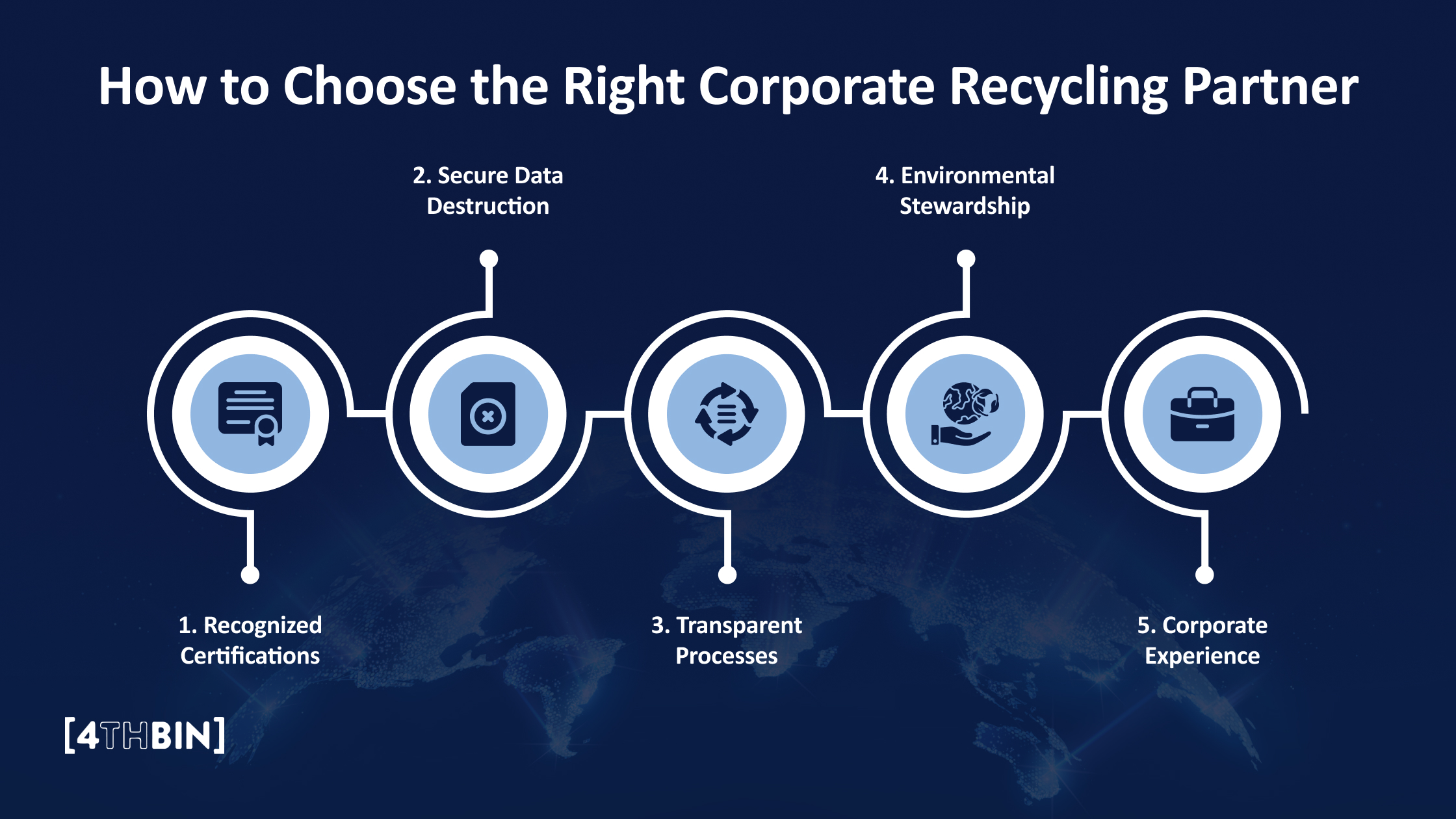
The success of a corporate electronic asset recycling program depends on the partner you trust with your retired technology. The right recycler not only protects your data but also ensures compliance, safeguards the environment, and provides transparency throughout the process. Here’s what businesses should demand when selecting a partner:
1. Recognized Certifications
Industry certifications such as R2v3 and e-Stewards aren’t just logos on a website; they represent rigorous standards for data security, environmental responsibility, and workplace safety. Choosing a certified partner guarantees that your equipment is handled according to the highest industry benchmarks. Without these certifications, companies risk working with vendors who may cut corners, mishandle hazardous materials, or offload devices to unregulated facilities overseas.
2. Secure Data Destruction
A reliable partner should treat data security as non-negotiable. This means offering certified methods such as digital wiping, degaussing, or physical shredding, depending on the type of asset. More importantly, they should provide certificates of destruction for every device processed. These certificates are not just paperwork—they’re proof that your business has met regulatory obligations and closed the door on potential data breaches.
3. Transparent Processes
Trustworthy recyclers maintain a transparent chain of custody from pickup to final processing. They should give you visibility into where assets are, how they’re being handled, and what happens at each stage. Comprehensive reporting, including inventory logs, material recovery reports, and compliance documentation, ensures your business can respond confidently to audits or stakeholder inquiries.
4. Environmental Stewardship
The right partner doesn’t view electronics as waste to discard but as resources to recover. Hazardous materials, such as lead and mercury, should be neutralized safely, while valuable metals and plastics are extracted and reintroduced into the manufacturing supply chain. This not only reduces environmental harm but also supports your organization’s sustainability commitments and ESG goals.
5. Corporate Experience
Managing corporate technology requires a different level of expertise than consumer recycling programs. A qualified partner should demonstrate a proven track record of working with businesses, understanding regulatory demands, and processing large volumes of equipment without compromising security or compliance. Their experience ensures that your company’s reputation, clients, and stakeholders are protected throughout the process.
Recycle Your Corporate Tech the Right Way with 4THBIN
Recycling retired corporate equipment isn’t just about freeing up storage space; it’s about safeguarding sensitive data, staying compliant with regulations, and ensuring valuable resources are recovered responsibly.
At 4THBIN, we help organizations take control of this process. For more than a decade, we’ve partnered with corporations, institutions, and local businesses to ensure electronic assets are retired securely, compliantly, and with full environmental accountability. As an R2v3-certified recycler, we guarantee that every asset is processed to the highest standards of data security and sustainability.
Our certified data destruction services eliminate the risk of data recovery from decommissioned equipment, protecting your business from costly breaches and regulatory penalties. From secure RemoteReturn mail-in options to convenient on-site collection, our customizable solutions allow you to choose the plan that best suits your organization’s needs.
Protect your data. Meet compliance requirements.