Understanding E-Waste Regulations and Compliance

According to the Global E-Waste Monitor, the world generated 53.6 million metric tons of e-waste in 2019, and that number is expected to exceed 74 million metric tons by 2030. As businesses continue upgrading computers, servers, printers, and mobile devices, the responsibility of managing electronic waste is becoming increasingly critical.
With the increasing turnover of electronic devices, businesses now face a new responsibility: managing their e-waste. Companies often upgrade equipment such as computers, printers, and mobile devices, contributing significantly to the e-waste problem when improperly disposed of.
With the annual generation of e-waste rising by 2.6 million tons and businesses contributing significantly to its production and disposal, regulatory bodies and environmental advocates are placing greater pressure on these businesses to adopt responsible e-waste disposal practices.
In such a scenario, complying with e-waste regulations is not only an environmental imperative but also a legal one. If businesses do not comply with e-waste management policies and regulations, they could face hefty fines, penalties, and severe reputational damage.
This blog will help your business understand e-waste regulations, compliance requirements, the consequences of non-compliance, and best practices for e-waste disposal and compliance.
Why E-Waste Compliance Matters for Businesses
Compliance with e-waste regulations is not only about environmental responsibility but also about protecting organizations from financial, operational, and reputational risks.
Improper disposal of electronic devices can expose businesses to regulatory fines, data security threats, and supply chain disruptions. By understanding regulatory requirements and adopting responsible disposal practices, companies can minimize risk while contributing to global sustainability efforts.
E-Waste Regulations for Businesses
Here is a detailed overview of the e-waste regulations that businesses are required to comply with:
Federal Regulations
Basel Convention
The Basel Convention is an international treaty designed to control the cross-border movement of hazardous waste, including certain types of electronic waste. Although the United States has signed but not ratified the treaty, many global companies must still comply when exporting electronic equipment internationally. The convention aims to prevent developed countries from exporting hazardous waste to developing nations without proper environmental safeguards.
Resource Conservation and Recovery Act (RCRA)
The RCRA is an essential federal law governing hazardous waste disposal in the US. Under this act, certain types of e-waste, particularly those containing toxic materials like lead or mercury, are classified as hazardous.
Businesses that produce e-waste must follow stringent guidelines for disposing of or recycling it, including proper labeling, storage, and transportation. The RCRA ensures that hazardous waste is managed to protect human health and the environment.
Environmental Protection Agency (EPA)
The Environmental Protection Agency (EPA) plays a central role in enforcing e-waste regulations in the US. The EPA’s initiatives include monitoring hazardous waste disposal, creating educational resources for businesses, and promoting responsible e-waste recycling practices.
The EPA also helps develop recycling programs and partnerships to encourage the use of certified e-waste recyclers. These efforts aim to reduce the environmental impact of e-waste and ensure that toxic substances do not end up in landfills.
E-Steward Certification and Responsible Recycling (R2) Standards
The E-Steward and R2 certifications provide frameworks for businesses and recyclers to ensure that e-waste is processed responsibly. These standards outline best practices for safe and environmentally sound electronics recycling.
Partnering with certified recyclers who follow these standards can help businesses ensure compliance with e-waste regulations while supporting sustainability goals. Certification programs like E-Steward and R2 are globally recognized and emphasize reducing the negative environmental and social impacts of e-waste.
State-Specific Regulations
One of the challenges businesses face is navigating e-waste regulations across different states. While some states, like California and New York, have comprehensive e-waste recycling laws, others may have fewer or less stringent requirements. This variation makes it crucial for businesses to be aware of the federal and state regulations that apply to their operations. Failure to comply with state-specific regulations can result in fines, increased operational costs, and legal repercussions.
Data Security and E-Waste Compliance
In addition to environmental regulations, businesses must ensure that electronic devices containing sensitive data are securely destroyed before disposal. Hard drives, servers, smartphones, and storage devices often retain recoverable data even after deletion. Regulatory frameworks such as NIST SP 800-88 Media Sanitization Guidelines provide best practices for secure data destruction, including data wiping, degaussing, and physical shredding of storage media.
Implementing certified data destruction procedures protects organizations from data breaches while ensuring compliance with privacy regulations and cybersecurity standards.
E-Waste Compliance Requirements for Businesses
Regardless of their size, all businesses that produce e-waste are subject to compliance requirements. This includes large corporations and small and medium-sized enterprises (SMEs) that may upgrade their office electronics. Industries that must prioritize compliance include IT services, healthcare (with medical devices), and retail (with electronic point-of-sale systems). Businesses handling hazardous materials in electronics must follow stricter federal and state guidelines to ensure proper labeling, handling, and disposal.
A critical element of compliance is tracking and reporting the amount of e-waste generated. Businesses must often document their e-waste disposal processes, including where and how electronics are recycled or disposed of.
This information is crucial for ensuring that companies do not contribute to illegal dumping or export hazardous e-waste to countries with poor environmental standards. Implementing an e-waste tracking system helps businesses remain compliant and provides valuable data for sustainability reporting.
Steps to Ensure Compliance
1. Proper Disposal: Businesses must ensure that all electronic waste is disposed of in accordance with federal and state regulations. This can include using certified e-waste recyclers and ensuring hazardous materials are handled properly. Partnering with reputable recycling companies that adhere to R2 or E-Steward standards can help reduce liability.
2. Recycling Programs: Many states require businesses to participate in or offer electronics recycling programs. For example, some states have “take-back” programs that require manufacturers to provide consumers and businesses with convenient recycling options.
3. Certified Vendors: To ensure compliance, your organization can partner with certified vendors for e-waste disposal and recycling. Certified recyclers follow strict guidelines on handling electronic devices, reducing the risk of improper disposal and ensuring materials are recycled responsibly.
The Consequences of Non-Compliance
Businesses that fail to comply with e-waste regulations can face severe penalties, legal consequences, and long-term damage to their reputation. Here’s a breakdown of the penalties and potential long-term impact of improper e-waste disposal.
-
Penalties and Legal Consequences
Several companies have faced significant penalties for improper electronic waste disposal. In some cases, businesses have been fined for exporting hazardous e-waste to countries lacking adequate recycling infrastructure. These enforcement actions highlight the growing regulatory focus on responsible electronics recycling and the importance of maintaining transparent disposal practices.
Both federal and state authorities impose fines for non-compliance, which can reach up to $37,500 per day per violation. The severity of these penalties depends on the extent of the violation, the amount of e-waste improperly disposed of, and whether hazardous materials were involved.
-
Reputation Damage
Companies found guilty of improper e-waste disposal are often publicly scrutinized. Noncompliance can result from negative media coverage, customer backlash, and public relations crises. In a business environment where sustainability is increasingly valued, being labeled as environmentally negligent can lead to a loss of customer trust and a decline in brand loyalty.
-
Loss of Market Value
Consumers and businesses are increasingly favoring sustainable and responsible companies. Non-compliance with environmental regulations can reduce market value, as stakeholders may choose to disengage from a company that fails to meet legal and ethical standards. Investors may pull funding, while consumers might opt for more environmentally conscious competitors.
-
Impact on Sustainability Goals
Non-compliance leads to direct penalties and can derail a business’s broader sustainability initiatives. Many companies are committed to corporate social responsibility (CSR) programs that include environmental sustainability as a core component. Being penalized for improper e-waste management undermines these efforts and can prevent a business from achieving sustainability certifications, partnerships, or goals.
-
Future Compliance and Audits
Once a company has violated e-waste regulations, it may face stricter scrutiny from regulators. Compliance audits may become more frequent and rigorous, and a company’s operational processes may be subject to ongoing investigations. This increased oversight can result in higher costs and greater operational complexity.
Best Practices for E-Waste Disposal and Compliance
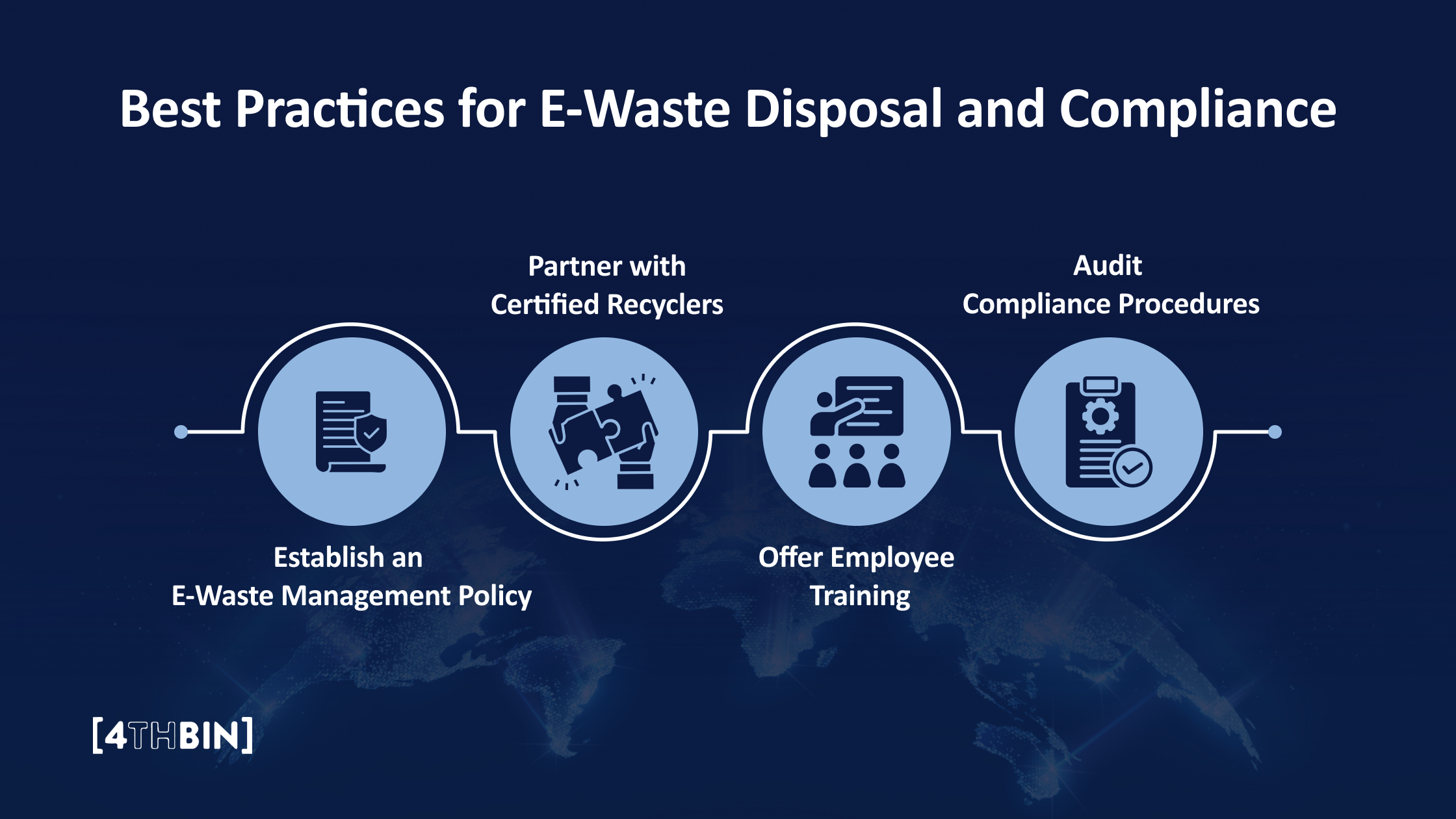
Implementing best practices for e-waste disposal and compliance is critical to ensuring companies meet legal requirements and enhance corporate responsibility and sustainability efforts. Here are a few practices your organization can adopt to ensure that businesses adhere to e-waste regulations:
Maintain an IT Asset Inventory
Maintaining a detailed inventory of IT assets helps businesses track devices throughout their lifecycle, from acquisition to disposal. Asset tracking systems allow organizations to identify when equipment reaches end-of-life and ensure that devices are properly recycled or refurbished. This approach not only improves compliance but also strengthens cybersecurity by preventing lost or untracked devices from exposing sensitive data.
Establish an E-Waste Management Policy
An essential first step for businesses is to create an internal e-waste management policy that outlines how electronic devices are handled throughout their lifecycle. This policy should detail procedures for the acquisition, use, and disposal of electronic equipment.
It’s important to involve multiple departments, such as IT, facilities management, and procurement, to ensure a unified approach. Establishing this policy allows businesses to take a structured approach that minimizes the risks of improper disposal while maximizing opportunities for reuse or recycling.
Partner with Certified Recyclers
Choosing the right recycling partners is critical for compliant e-waste disposal. Businesses should partner with certified recyclers that adhere to recognized standards, such as Responsible Recycling (R2) or E-Steward certification. Certified recyclers are trained to handle electronics safely, ensuring that harmful components such as lead and mercury are removed and properly managed.
Working with certified recyclers offers several benefits:
- Regulatory Compliance: Certified recyclers follow state and federal e-waste regulations, reducing the likelihood of fines or penalties.
- Environmental Responsibility: These recyclers follow strict protocols to minimize the environmental impact of electronic disposal.
- Data Security: Certified recyclers have procedures in place to ensure sensitive data is wiped clean from devices, reducing the risk of data breaches.
Before partnering with a recycler, businesses should verify certifications, check for any prior violations or issues, and ensure they can provide documentation proving that e-waste has been handled responsibly.
Offer Employee Training
To ensure compliance across the organization, businesses need to provide employees with regular training on e-waste management. This training should include information on federal and state regulations and internal policies for managing e-waste. Specific departments, such as IT, procurement, and facilities management, should receive more in-depth training, but all employees should understand their role in minimizing e-waste.
Here is what employee training programs can cover:
- Proper handling and categorization of electronic waste.
- How to securely erase data from devices.
- Internal processes for recycling or disposing of electronics.
- Consequences of improper disposal for the company and the environment.
Regular refresher courses help ensure compliance and reinforce the importance of responsible e-waste management.
Audit Compliance Procedures
Compliance is not a one-time effort; it requires ongoing monitoring and improvement. Businesses should conduct regular audits of their e-waste management systems to identify compliance gaps and ensure all processes comply with current regulations. Audits can help companies mitigate risks, improve efficiency, and maintain a proactive stance on e-waste management.
By following these steps, businesses can ensure compliance with e-waste regulations, reducing the risk of legal penalties and contributing to a sustainable, environmentally responsible future.
Businesses can also explore our guide on the hidden dangers of improper e-waste disposal to understand the environmental and data security risks.
Get Your Business Compliance-Ready with 4THBIN.

Managing electronic waste across multiple offices, IT upgrades, and regulatory requirements can be complex. 4THBIN helps organizations simplify e-waste compliance through secure data destruction, certified electronics recycling, and full-lifecycle asset management services.
With over a decade of experience, we’re a certified and secure e-recycling solution provider to over 10,000 businesses, from Fortune 100 companies to start-ups across the United States.
We believe that no data should be left behind! Backed by our data security expertise, we provide certified data destruction support to today’s top industries.
We are expanding our services to offer comprehensive universal waste services. From batteries and fluorescent lamps to other hazardous materials, we coordinate the safe collection, recycling, and disposal of universal waste, making it easier for your business to stay compliant with environmental regulations. We also help your business deliver on its corporate social responsibility commitments by ensuring its e-waste is securely and sustainably recycled.
Ensure Your Business Complies With E-Waste Regulations!
Contact Us
Frequently Asked Questions
1. What counts as e-waste for businesses?
E-waste refers to any electronic equipment that has reached the end of its useful life and is ready for disposal, recycling, or refurbishment. For businesses, this typically includes items such as computers, laptops, servers, smartphones, printers, monitors, networking equipment, batteries, and other devices that contain circuit boards, batteries, or electrical components. Even equipment that still functions but is no longer used due to upgrades or replacements is considered e-waste once it leaves active service.
2. Is e-waste considered hazardous waste under RCRA?
In many cases, yes. Under the Resource Conservation and Recovery Act (RCRA), electronic devices that contain hazardous materials, such as lead, mercury, cadmium, or certain flame retardants, may be classified as hazardous waste if improperly handled or disposed of. Businesses generating such waste must follow strict requirements for storage, labeling, transportation, and disposal to protect human health and the environment.
3. What documents should we keep to prove compliance?
To demonstrate compliance with e-waste regulations, businesses should maintain clear documentation of their disposal and recycling processes. Key records include:
- IT asset inventory or disposition log
- Chain-of-custody documentation for collected devices
- Certificates of data destruction or data sanitization
- Certificates of recycling or recycling reports
- Vendor certifications (R2, e-Stewards, NAID AAA, etc.)
- Weight tickets or material recovery reports
- Internal compliance or audit reports
Keeping these documents ensures businesses can verify that their electronics were handled responsibly and in accordance with regulatory requirements.
4. Do we need data destruction if devices are being recycled?
Yes. Data destruction should always occur before electronic devices are recycled or reused. Even non-functioning devices may still contain recoverable data on hard drives, solid-state drives, or embedded memory. Businesses should either securely wipe data using certified software or physically destroy data-bearing components to prevent unauthorized access and protect sensitive corporate or customer information.
5. How do we choose a certified recycler (R2 vs e-Stewards)?
When selecting an electronics recycler, businesses should look for industry-recognized certifications such as R2 (Responsible Recycling) or e-Stewards. Both certifications ensure that recyclers follow strict environmental, safety, and data security standards.
- R2 Certification focuses on responsible recycling processes, environmental protection, and supply chain transparency.
- e-Stewards Certification is considered one of the most rigorous standards, emphasizing ethical recycling practices and prohibiting the export of hazardous e-waste to developing countries.
Businesses should verify a recycler’s certifications, review their data destruction procedures and chain-of-custody tracking, and ensure they can provide documentation proving responsible disposal and data security.