Innovative E-Waste Recycling Technologies

Electronic devices have become essential to our daily lives, but their rapid turnover comes at a significant cost—e-waste.
Each year, we generate over six kilograms of e-waste per person globally, yet only about 17% of it is recycled. There are about 350 million tons of unrecycled e-waste on our planet.
With millions of tons of discarded electronics piling up daily, the need for effective e-waste management has never been more pressing.
Fortunately, innovative recycling technologies are stepping up to help businesses overcome the e-waste crisis. In this blog, we will explore how these technologies offer businesses solutions that reduce waste and create valuable opportunities for sustainability and resource recovery.
The Benefits of Innovative E-Waste Recycling
Here are the benefits of innovative e-waste recycling technologies that extend beyond simply managing waste:
Increased Material Recovery
The value of raw materials in the e-waste generated in 2019 was roughly $57 billion. Innovative methods can help recover more usable materials like metals, plastics, and glass while improving the precision and efficiency of material separation. By extracting more materials for reuse, less waste ends up in landfills, reducing the volume of waste and lessening the environmental burden associated with waste disposal.
Additionally, these advanced recovery processes enable components to be refurbished and reused, prolonging the lifespan of electronic products and reducing the demand for new resources.
Lower Environmental Impact
Modern recycling technologies offer cleaner alternatives to traditional methods, mitigating the environmental hazards of e-waste. They prevent harmful chemicals and heavy metals found in e-waste from infiltrating into soil and water sources, protecting ecosystems and human health. Moreover, these energy-efficient technologies lower the carbon footprint of recycling operations compared to conventional methods, contributing to a greener planet.
Economic Benefits
E-waste contains many precious metals and other valuable materials with significant economic potential when efficiently recovered. Gold, silver, and palladium recovered from e-waste alone represent about $13.5 billion. With innovative methods, recycling companies can easily extract materials like gold, silver, and copper, which can be sold back into the market, creating a profitable revenue stream for them. The recycling industry can also stimulate economic activity by creating jobs in technology development, facility operation, and material processing sectors.
Creating New Industry Standards
Adopting progressive recycling technologies sets a benchmark for responsible e-waste management across industries:
- Sustainability Leadership: Companies implementing these technologies position themselves as pioneers in environmental stewardship, enhancing their brand image and competitiveness.
- Regulatory Compliance and Advancement: Innovative methods help businesses meet and exceed environmental regulations, potentially influencing stricter industry-wide standards for e-waste handling.
- Consumer Confidence: Demonstrating a commitment to sustainable practices can strengthen consumer trust and loyalty, as more customers prefer to support environmentally responsible companies.
Innovative Technologies in E-Waste Recycling
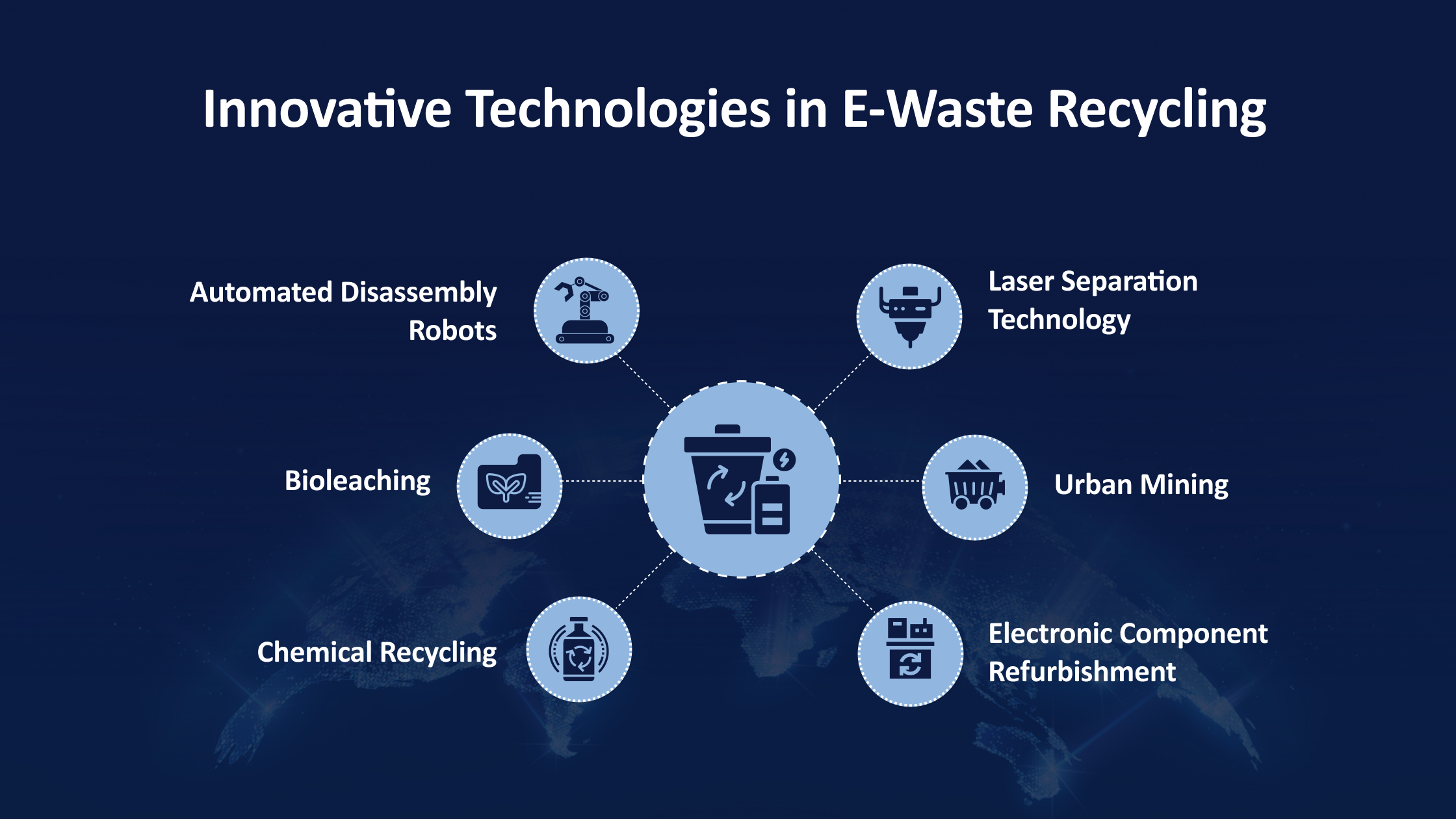
As the global e-waste problem grows, innovative technologies are stepping up to address the challenges of recycling electronic waste efficiently and sustainably. Here are a few promising technologies revolutionizing e-waste recycling:
Automated Disassembly Robots
One of the biggest hurdles in e-waste recycling is the manual disassembly of electronic devices, which is time-consuming and hazardous due to exposure to toxic substances. Automated disassembly robots are changing the e-recycling field by efficiently taking apart devices with precision and speed. These robots can identify and separate components like circuit boards, batteries, and screens, reducing the risk to human workers and increasing the volume of e-waste processed.
Bioleaching
Bioleaching harnesses the power of microorganisms to extract precious metals from e-waste. Certain bacteria and fungi can oxidize metals, making them soluble and more accessible to separate from other materials. This eco-friendly method offers a sustainable alternative to energy-intensive smelting processes that produce harmful emissions. Bioleaching is particularly effective for recovering metals like gold, copper, and palladium from circuit boards and other electronic components, turning waste into valuable resources.
Chemical Recycling
Chemical recycling involves breaking down electronic waste into its essential chemical components to recover valuable materials that are difficult to extract mechanically. There are two primary methods used in chemical recycling: hydrometallurgy and pyrometallurgy.
- Hydrometallurgy: This method dissolves and extracts metals from e-waste. By applying specific chemical solutions, metals like gold, silver, copper, and palladium are leached out from electronic components. Hydrometallurgy allows for selective recovery of metals with high purity levels and operates at lower temperatures, reducing energy consumption compared to traditional methods.
- Pyrometallurgy: This process involves using high temperatures to smelt and refine metals from e-waste. E-waste is heated in a furnace, causing metals to melt and separate based on their melting points. Pyrometallurgy is effective for processing large volumes of waste and can extract multiple metals simultaneously, including those deeply embedded in electronic devices.
Laser Separation Technology
Laser separation technology uses precision lasers to identify and sort different materials within e-waste. By adjusting the laser’s wavelength and intensity, recyclers can target specific substances, enabling the high-accuracy separation of metals, plastics, and glass. This method reduces the need for manual sorting and increases the efficiency of the recycling process. Laser technology also minimizes material contamination, ensuring that recovered resources meet the quality standards required for reuse.
Urban Mining
Urban mining is the process of recovering valuable metals and minerals from electronic waste in urban environments. Unlike traditional mining, which extracts resources from the earth, urban mining focuses on reclaiming materials from discarded electronics, buildings, and infrastructure.
This approach taps into the “above-ground ore” present in cities, where e-waste contains higher concentrations of precious metals than natural ores. Urban mining reduces the environmental damage associated with conventional mining and turns cities into resource hubs for valuable materials like gold, silver, and rare earth elements.
Closed-Loop Recycling Systems
Closed-loop recycling aims to create a circular economy where materials from old products are reused in new ones, minimizing waste and resource consumption. E-waste recycling means collecting discarded electronics, extracting usable materials, and feeding them back into manufacturing. This system reduces the need for virgin raw materials and lowers the environmental impact of electronic production. Large tech companies increasingly adopt closed-loop practices, making sustainability a core part of their operations.
Electronic Component Refurbishment
Refurbishment extends the life of electronic devices by repairing and upgrading them for continued use. Instead of breaking down devices entirely, refurbishers focus on fixing functional components and replacing faulty parts. This practice reduces e-waste generation and conserves resources by keeping electronics in circulation longer.
Refurbished devices provide affordable options for consumers and help bridge the divide by making technology accessible to a broader population. Companies specializing in refurbishment are vital in promoting a sustainable and circular economy.
Innovative e-waste recycling technologies offer more than just a solution to managing discarded electronics—they pave the way for a more sustainable future. By increasing material recovery, reducing environmental impact, and creating economic opportunities, these advanced methods are transforming how we handle e-waste.
To overcome the e-waste crisis, businesses must choose responsible recycling companies like 4THBIN. These companies prioritize sustainability and use innovative technologies to ensure safe, efficient, and compliant e-waste management. Partnering with such forward-thinking recyclers is essential for companies looking to reduce their environmental footprint and lead in corporate social responsibility.
Step Into the Future of Smart Recycling with 4THBIN.
Is your organization struggling to recycle its electronic waste? 4THBIN to the rescue! With over a decade of experience, 4THBIN is a certified and secure e-recycling solution provider to over 10,000 businesses – from Fortune 100 companies to start-ups across the United States.
Our innovative solutions ensure that electronic waste is not just discarded but repurposed and revitalized, reducing environmental impact while driving a circular economy.
We believe that no data should be left behind! Backed by our data security expertise, we provide certified data destruction support to today’s top industries. We also help them deliver on their corporate social responsibility commitments by ensuring their e-waste is securely and sustainably recycled.
Turn Your E-waste into an Opportunity!
Contact Us