Empowering Education through Technology + Ewaste Recycling
Walk into almost any classroom today and you will find laptops, tablets and interactive whiteboards where textbooks and chalkboards used to be. The benefits are real: students research more widely, learn in more ways and build the digital skills they will need for the rest of their lives.
But every one of those devices has a life cycle. Classroom technology is refreshed every few years, and each refresh leaves behind a pile of hardware that holds toxic materials, valuable metals and, often, sensitive student data. Schools and universities have become some of the largest producers of e-waste in their communities.
This piece follows that cycle from both ends: what technology gives students, and what schools owe the world when that technology is retired.
How Technology Lifts Learning Engagement
To see what a laptop can do for a student, it helps to look at a classroom that went without one.
Guatemala has the lowest literacy rate in Central America: according to UNESCO, about 74.5% of people aged 15 and over can read and write. In rural areas such as Santa Cruz del Quiché, many schools rely on a handful of shared textbooks. By contrast, many U.S. students use technology in class from kindergarten onward.
In 2022, donated laptops reached the Parish School of San Andrés Sajcabajá through the 4THBIN 4GOOD program. Since 2017 the program has placed more than 20 laptops with San Andrés and the United Association for Life, which runs an education program for students with disabilities.
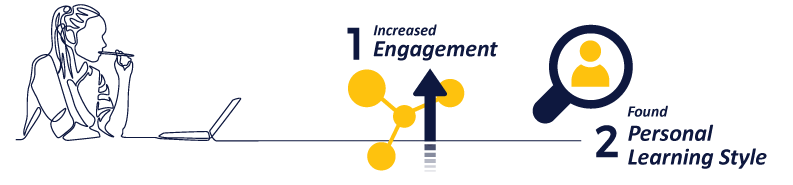
The change showed up quickly. Sister Rosa María of The Parish School reported that students became "more engaged with their classwork" and began discovering their own learning styles. Instead of a few textbooks, they could research widely and learn through videos, podcasts and interactive assignments.

The lesson travels well beyond Guatemala: a working device, put in a student's hands, opens doors. It also shows that a device retired in one place can keep teaching somewhere else.
Structured Learning, and the Reality of Recycling
Technology does more than spark interest. It gives learning structure: digital coursework, shared calendars, instant feedback and access to the same materials at school and at home. That is why districts and campuses keep investing in devices, and why they replace them on a regular schedule.
That schedule is where the problem starts. Electronic waste is one of the fastest-growing waste streams in the world. In 2022 the world generated a record 62 million tonnes of it, up 82% since 2010, according to the UN Global E-waste Monitor 2024.

Only 22.3% of that e-waste was documented as properly collected and recycled. The rest was landfilled, burned, stored in closets or handled informally. By 2030 the total is projected to reach about 82 million tonnes, while the recycling rate is expected to slip to 20%.

Why Data Security Matters in Schools
A retired school laptop is not just hardware. It may still hold grades, attendance records, health and counseling notes, family contact details, staff payroll files and saved logins. Schools hold some of the most sensitive personal data in any community, and much of it belongs to minors.
Deleting files or resetting a device does not remove that data. Unless a drive is properly wiped or physically destroyed, the information can often be recovered by whoever ends up with the device next. For a school, one exposed hard drive can mean a privacy breach, regulatory trouble and a loss of trust with families.
The challenge is that most schools are not set up to manage this. IT teams are small, budgets are tight and the rules for disposing of electronics vary by state. Good practice comes down to a few steps:
- Keep an inventory of every device and where it is in its life cycle.
- Sanitize data to a recognized standard, such as NIST 800-88 Rev. 2, before any device leaves the building.
- Get documentation, such as a certificate of data destruction, for every retired asset.
- Send hardware only to certified recyclers, such as those holding e-Stewards or R2 certification, so nothing ends up exported or dumped.
Secure disposal and sustainable disposal are the same job. A device that is wiped properly can be safely reused or recycled.
Universities and the Recycling Gap
College campuses concentrate the problem. Each fall brings a wave of new laptops, phones, monitors and lab equipment, and each spring, move-out leaves the old ones behind. Yet U.S. universities recycle only about a quarter of their waste on average, roughly 24% by some estimates.

What students throw away has real consequences. Improperly handled e-waste can release more than 1,000 toxic substances into air, water and soil. Lead, mercury and cadmium are especially harmful to children and pregnant women.
The same devices are also a resource. A tonne of mobile phones can contain up to 100 times more gold than a tonne of gold ore. Metals in the world's 2022 e-waste were worth about US91billion - roughlyUS62 billion of that went unrecovered (UN Global E-waste Monitor 2024). Recovering gold, silver and copper from old electronics reduces the need for destructive mining.
Students are well placed to lead here.
They can:
- Keep old devices out of the trash and dorm-room drawers.
- Use campus or community e-waste drop-off events.
- Wipe personal data before handing a device on.
- Choose repair, resale or donation before recycling.
- Push their schools to report and improve campus recycling rates.
Closing the proverbial Loop
Education technology works. It keeps students engaged, gives learning structure and, as one classroom in rural Guatemala showed, can change what a student believes is possible.
The job is not finished when a device stops being useful in one classroom, though. A responsible end of life protects student privacy, keeps toxic materials out of the ground and returns valuable metals to use. Where possible, it puts a working device in front of another learner.
Every school year starts with new technology. The goal is to make sure every school year also ends with the old technology handled well.