Why Automation in ITAD Operation Is Integral for The Future of Sustainability
Every piece of technology has two lifecycles: the one we use and the one we forget. As companies upgrade faster than ever, the pile of retired laptops, servers, and devices grows, along with the responsibility to manage them securely and sustainably.
That’s why IT Asset Disposition (ITAD) has now become a core part of responsible business. Each device carries both risk and value: risk if data isn’t destroyed, and value if materials are recovered and reused.
However, automation is transforming ITAD, enabling real-time tracking, verified data destruction, and automated compliance reporting, thereby replacing manual errors with precision and speed.
Companies today are using AI-enabled and certified ITAD services, which report higher accuracy, stronger auditability, and better compliance results, essential in ESG-driven operations.
That’s where 4THBIN leads. For over a decade, we’ve helped businesses retire technology responsibly, combining secure data protection with measurable sustainability outcomes.
In this blog, we’ll unpack how automation is reshaping ITAD, and how 4THBIN helps organizations turn compliance into lasting environmental progress.
What Is Automation in ITAD Operation?
Automation in ITAD refers to the integration of technologies such as Robotic Process Automation (RPA), Artificial Intelligence (AI), and the Internet of Things (IoT) into every stage of the IT asset lifecycle, from collection to destruction.
At its core, automation enables more innovative and faster execution of once manual processes, such as:
- Asset intake and tracking: Automation streamlines the process of receiving, logging, and monitoring IT assets throughout their lifecycle. Using RFID tags or barcode systems, devices are scanned and registered instantly, creating a live digital record for each item. This eliminates manual entry errors and provides complete traceability, from collection to final disposition, so nothing falls through the cracks.
- Data sanitization and verification: Secure data destruction is one of the most critical steps in ITAD, and automation takes precision to the next level. Advanced wiping software automatically erases data across multiple devices simultaneously, following strict industry standards. Once complete, the system verifies and documents successful data destruction, providing auditable proof for compliance and risk management.
- Compliance documentation: Every step of the process, from asset collection to final recycling, is automatically recorded and compiled into certificates of destruction and recycling reports. These records are generated instantly and stored securely, ensuring your organization can demonstrate compliance with regulatory frameworks like GDPR, HIPAA, and R2 without manual effort or uncertainty.
By minimizing manual intervention, automation drastically reduces human error, ensures standardization, and frees up teams to focus on high-value compliance and sustainability objectives.
Why Automation is Significant in Modern ITAD
Inefficiencies, manual asset logging, inconsistent reporting, compliance gaps, and fragmented audit trails often burden traditional ITAD operations. These flaws increase operational risk and delay crucial security actions.
Automation changes the equation. It ensures:
- Consistency: Every asset is processed following standardized protocols.
- Speed: Automated workflows can reduce processing times by up to 40%
- Accuracy: Smart validation systems enhance the precision of every ITAD step, reducing compliance and reporting errors while ensuring all asset records are consistent, traceable, and audit-ready.
In today’s regulatory and ESG-driven landscape, where traceability and proof are non-negotiable, automation ensures your ITAD program remains compliant, auditable, and future-proof.
Areas Transformed by Automation in ITAD Operation
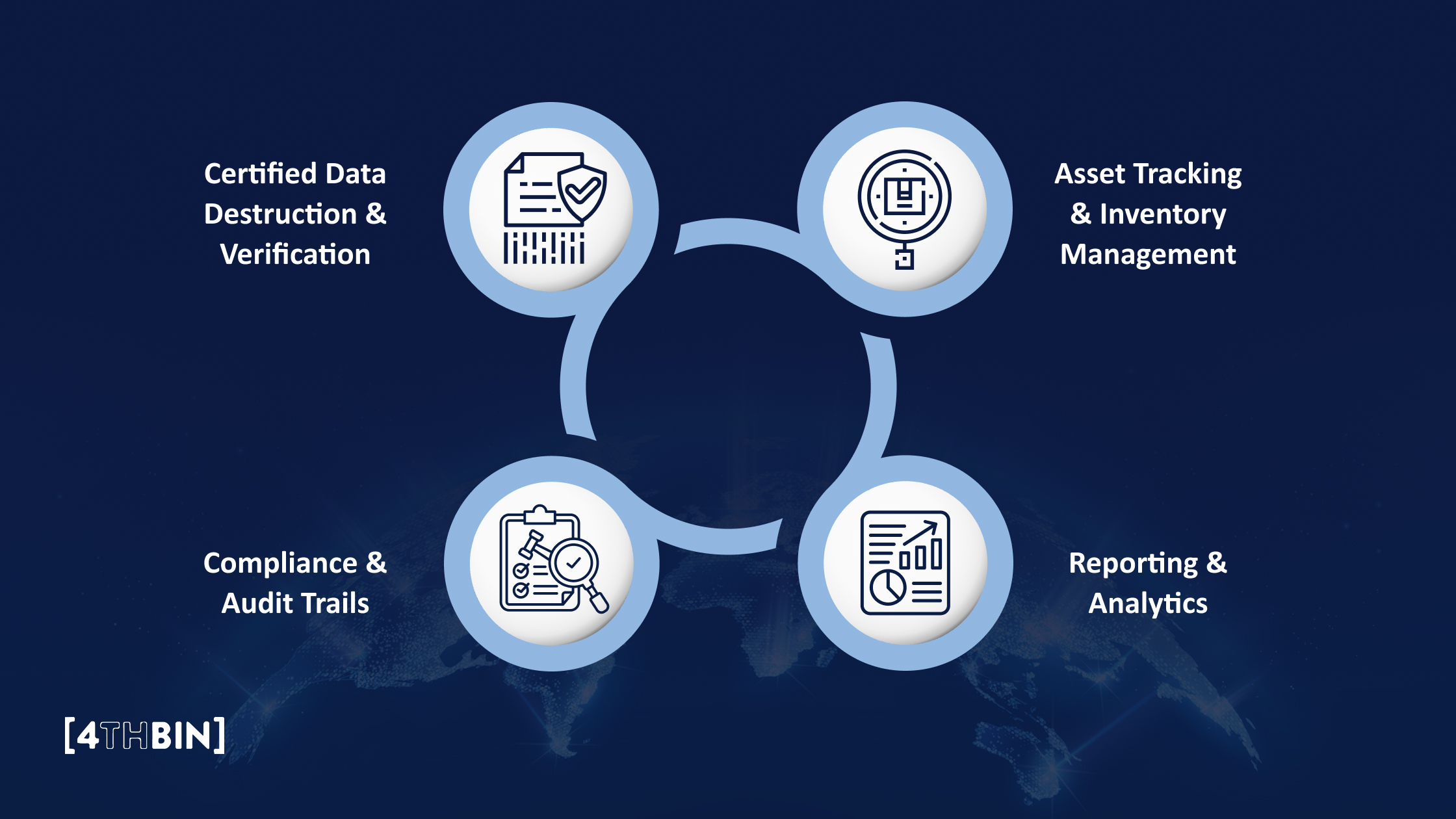
1. Certified Data Destruction & Verification
Automation enhances secure data destruction by using advanced, software-driven wiping systems that track every asset through completion. Tools automatically verify erasure success, generate certificates, and log them into compliance systems, ensuring verifiable protection against data breaches.
2. Asset Tracking & Inventory Management
Automated tracking through RFID tags and IoT sensors provides real-time visibility into the location of each device throughout its lifecycle. This transparency not only streamlines logistics but also helps enterprises plan for upgrades, redeployments, and audits with greater precision.
3. Compliance & Audit Trails
For organizations governed by GDPR, HIPAA, SOX, or R2v3, automation ensures airtight documentation. Every asset processed has a digital record, from intake to final disposition, providing an immutable audit trail.
4. Reporting & Analytics
Automated analytics offer immediate insights into recovery rates, cost savings, and sustainability outcomes. 4THBIN clients, for instance, receive verified carbon impact reports tied directly to recovered assets, data they can use in ESG reporting and sustainability disclosures.
The Role of AI and Machine Learning in ITAD Automation
AI takes automation a step further by introducing intelligence into the process. Through predictive analytics and machine learning, ITAD operations can now anticipate and optimize outcomes, not just record them.
Examples include:
- AI-driven component sorting to identify reusable parts and reduce waste.
- Predictive asset valuation to forecast recovery value and maximize returns.
- Smart routing systems that automatically direct assets to the most sustainable end-of-life option, refurbishment, resale, or recycling.
AI ensures that ITAD operations evolve from reactive waste management to proactive asset optimization.
Automation’s Environmental Impact on Sustainability
Automation doesn’t just improve efficiency; it directly advances sustainability goals. By optimizing asset recovery and refurbishment cycles, automation minimizes electronic waste and conserves critical materials, including copper, gold, and rare earth elements.
Automated systems also help identify which components can be reused, recycled, or safely disposed of, aligning with corporate ESG and circular economy objectives. At 4THBIN, this data is captured and verified in sustainability reports, allowing organizations to demonstrate measurable environmental progress.
Overcoming Challenges in Implementing Automation
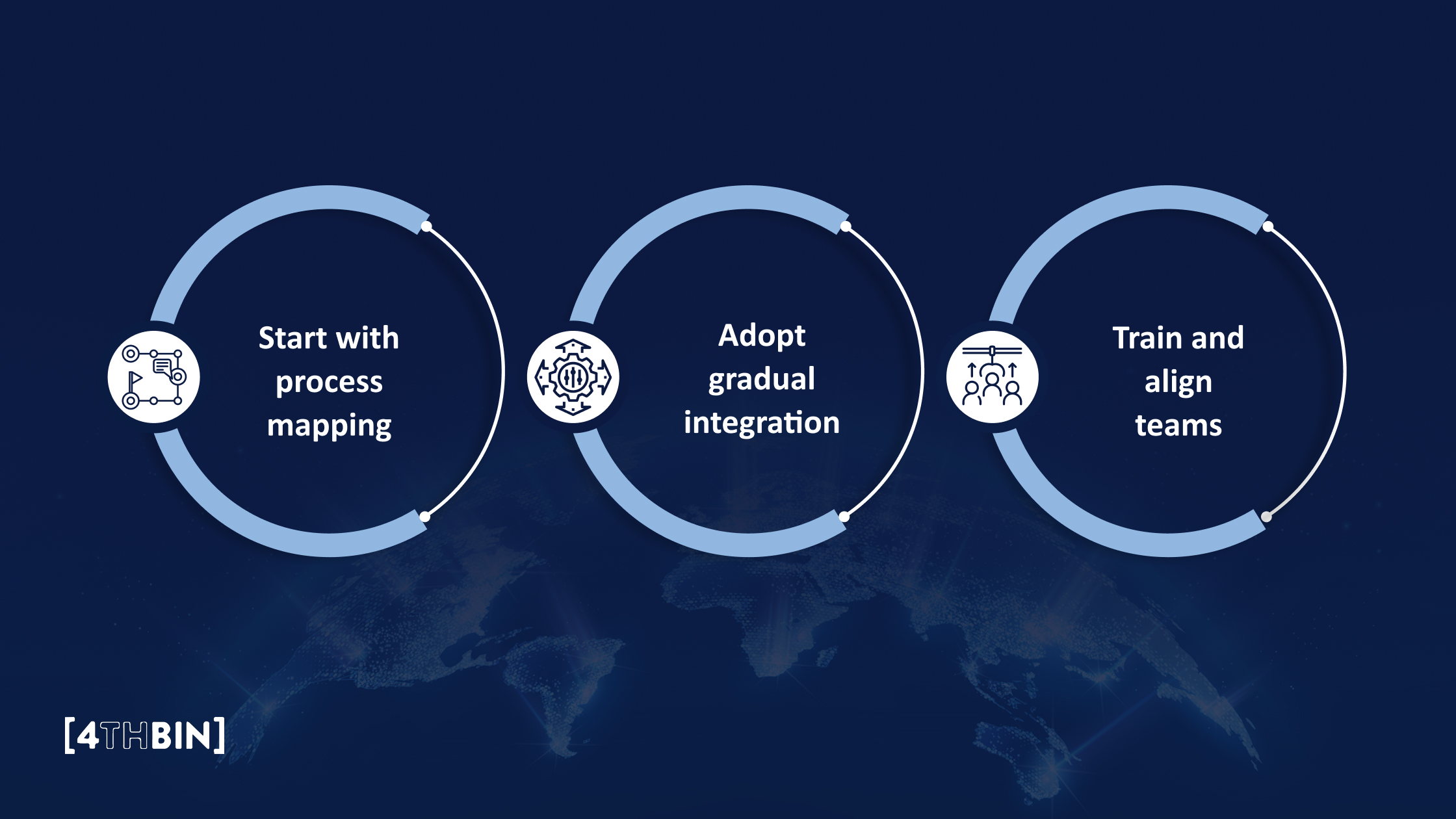
Transitioning to automated ITAD processes can present challenges, ranging from upfront technology costs to team adoption hurdles. The key is a phased, well-planned approach:
- Start with process mapping: Begin by taking a close look at your existing ITAD workflows and identifying high-risk, repetitive, or time-consuming manual tasks that require improvement. These could include asset logging, data erasure verification, or compliance reporting. Mapping them out helps you pinpoint where automation can make the most significant difference in reducing human error and improving turnaround times.
- Adopt gradual integration: Rather than overhauling everything at once, introduce automation tools in phases. Start small by automating data destruction verification or inventory tracking, and scale as your team gains confidence. This phased approach minimizes disruption, allows for real-world testing, and helps refine processes before full deployment.
- Train and align teams: Successful automation isn’t just about software; it’s about people. Bring your IT, compliance, and sustainability teams into the process at an early stage. Help them understand how automation changes their day-to-day workflows and, more importantly, how it strengthens compliance, security, and environmental goals. Clear communication and hands-on training build trust and ensure everyone moves forward together.
The Future of Automation in ITAD Operation
The next decade will redefine how technology assets are managed. Automation will merge with blockchain, ensuring immutable chain-of-custody tracking. AI-led decision systems will instantly predict reuse potential. Eventually, fully autonomous ITAD facilities will emerge, where devices are scanned, wiped, verified, and recycled with minimal human intervention.
These innovations point to one truth: automation is not a luxury. It’s becoming the foundation of secure, compliant, and sustainable IT asset management.
Automation is transforming ITAD operations from procedural to intelligent, enhancing security, efficiency, and sustainability in a single, unified motion. As organizations face increasing regulatory and ESG pressures, automating ITAD is no longer optional; it has become a strategic necessity.
At 4THBIN, we help enterprises transition from policy to performance through certified data destruction, Remote Return programs, and IT asset disposition and recovery services developed in collaboration with IT professionals. With proven expertise, transparent reporting, and a decade of trust, we turn compliance into measurable sustainability progress.
Lead the Change in Sustainable ITAD Practices with 4THBIN

Automation in ITAD operation isn’t all about improving speed or efficiency; it’s about building trust through precision, transparency, and measurable impact. At 4THBIN, we help organizations bridge the gap between compliance and sustainability by managing technology assets securely, responsibly, and with full accountability.
As a certified e-recycler and ITAD provider, we ensure that every stage of your IT lifecycle, from data center decommissioning to final recycling, meets the highest environmental and data security standards. Our certified data destruction services eliminate the risk of data exposure. At the same time, our IT asset disposition and recovery (ITAD) programs are developed to minimize waste, recover value, and support your organization’s sustainability goals.
For distributed or remote teams, our Remote Return mail-back program provides a seamless and secure way to manage retired devices, ensuring compliance while maintaining convenience. Every asset processed through our system is tracked, verified, and reported transparently, giving you confidence in both your environmental performance and data protection.
With over 10,000 clients, millions of pounds of e-waste responsibly recycled, and an unbroken record of zero data breaches, 4THBIN stands as a trusted partner for organizations that take data security and sustainability seriously.
Partner with 4THBIN to build an automated, compliant, and future-ready strategy that turns responsibility into measurable progress.