What is the Best Way to Dispose of CDs and DVDs?

Many households and offices still have stacks of old CDs and DVDs, music albums, movies, software discs, or backup media from years ago. The disposal question usually comes up during a cleanup: Can these discs be recycled, and what’s the safest way to get rid of them?
The answer depends on two things:
- Material composition (most discs are polycarbonate plastic with a metal layer), and
- Whether they contain sensitive information (backups, scanned documents, tax files, client records).
Most municipal curbside programs don’t accept optical discs because they’re mixed materials and can interfere with sorting equipment. And if a disc contains personal or business data, simply throwing it away can create a privacy risk unless it’s properly destroyed.
In this blog, you’ll learn what CDs/DVDs are made of, why curbside programs reject them, safe options for reuse, and when certified recycling with secure destruction is the most responsible choice.
Can CDs Be Recycled?
Yes, CDs and DVDs can be recycled, but not through most curbside programs.
Optical discs are typically made from polycarbonate plastic (often categorized under Resin Code #7), with a thin reflective metal layer (usually aluminum, sometimes gold), as well as dyes and protective coatings. This multi-layer construction makes discs durable but also difficult for standard municipal recycling systems to process.
While plastics like polycarbonate can be reused in manufacturing, discs generally require specialized recycling where materials are mechanically processed and separated under controlled conditions.
Important: the disc and its packaging are made of different materials. A “jewel case” may be made from a different type of plastic than the disc itself and should be handled separately based on local recycling rules.
What They’re Made Of
Every disc is made up of several layers. The bulk of it is polycarbonate plastic, a strong and clear material, topped with a thin layer of aluminum (and in some cases, even gold). On top of that are dyes and protective coatings that give the discs their shiny, rainbow-like surface.
These layers are what make CDs and DVDs so durable, but they’re also why they’re tricky to dispose of. They don’t break down naturally in landfills, and a single disc could sit unchanged for hundreds of years. The upside is that the materials inside, especially the plastic, can be recycled and used to make new products like automotive parts, office supplies, or even construction materials. The catch is that you need specialized recycling processes to separate those layers safely.
Why Most Curbside Programs Don’t Accept Them

Most curbside recycling in the U.S. is processed at Materials Recovery Facilities (MRFs) that sort common packaging materials (cardboard, aluminum, and PET bottles). CDs/DVDs create problems in that system for three reasons:
- Mixed materials: A disc combines plastic + metal + coatings, and typical MRF lines aren’t designed to separate those layers.
- Sorting and equipment issues: Discs are thin and rigid. They can slip through sorting screens or jam machinery, slowing the line and increasing maintenance risk.
- Low volume + low compatibility: Compared to packaging waste, discs arrive in small quantities and don’t cleanly fit into standard processing categories, so many facilities treat them as contamination.
That’s why the safest rule is: don’t place discs in curbside bins unless your local program explicitly says they accept optical media.
So while it might feel convenient to toss discs into your blue bin, most of the time they’ll just get pulled out and redirected to landfills. The only way to make sure they’re recycled is to go through a certified e-waste recycler, one equipped to handle the materials safely and give them a second life.
The Importance of Disposing of CDs and DVDs the Right Way
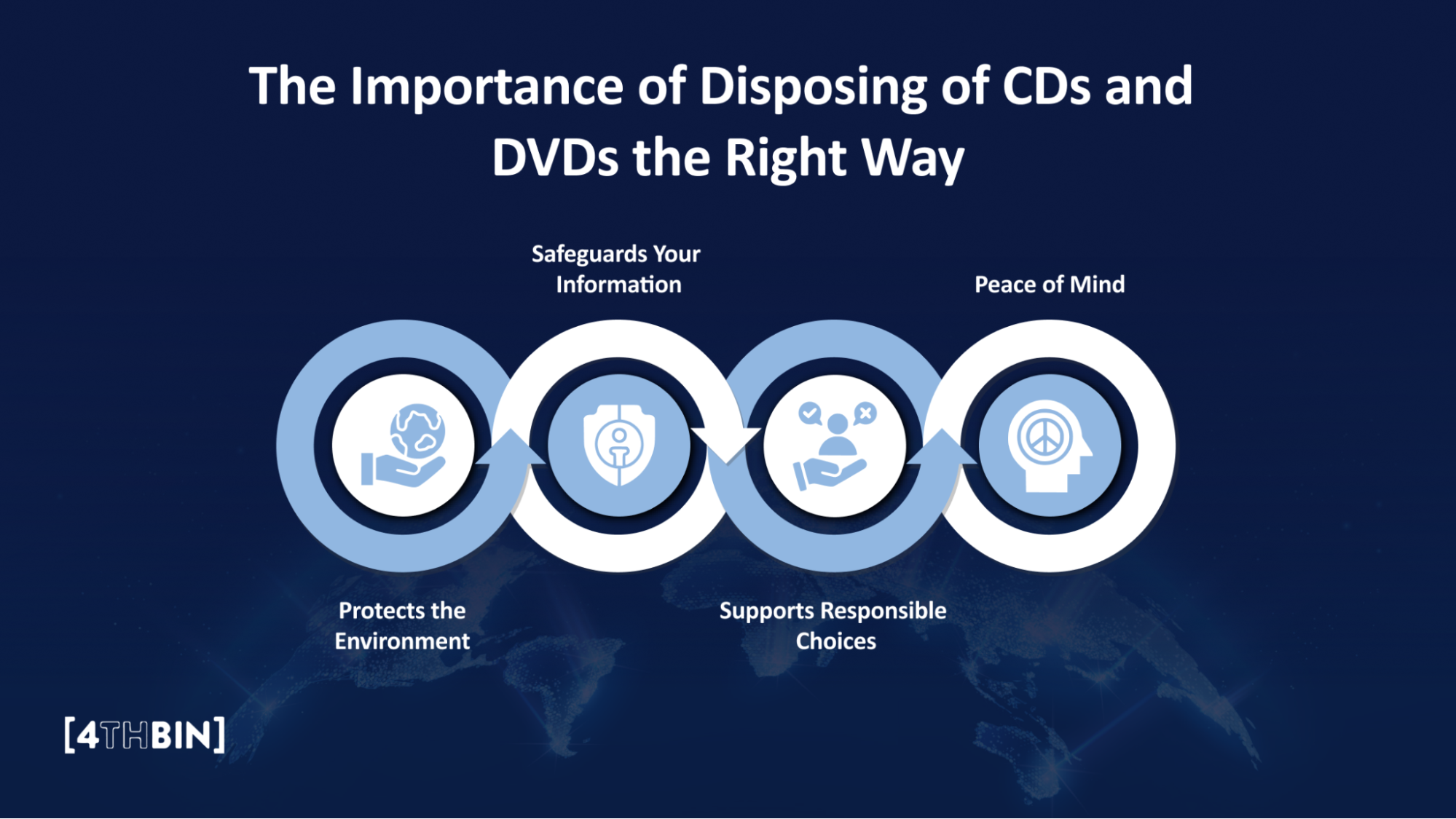
Old CDs and DVDs may look harmless, but proper disposal matters for two main reasons: environmental impact and data security.
Here is why proper disposal matters:
1) Environmental Responsibility
Optical discs are durable plastics with thin metal layers. They are not designed to biodegrade, and when discarded, they contribute to long-term plastic waste. Because they are made from mixed materials, they are rarely processed through municipal recycling systems and often end up in landfills if not handled properly.
Recycling through a specialized electronics recycling channel helps recover usable material and reduces landfill burden.
2) Data Security
Many discs contain sensitive information: backups, scanned IDs, tax files, medical records, client documents, or proprietary work. Unlike cloud accounts that can be password-protected or remotely wiped, a physical disc can be read years later if recovered.
For media containing sensitive data, recognized guidance such as NIST SP 800-88 (Media Sanitization) supports physical destruction as a reliable method for optical media when confidentiality is required.
What doesn’t reliably protect you: scratching the surface, snapping the disc in half, or tossing it intact. Partial damage may still allow data recovery.
The safest approach is to treat unknown discs as sensitive and use secure destruction before recycling.
3. Supports Responsible Choices
Many people want to reduce waste, but may not realize that CDs and DVDs require a specialized recycling stream. Working with a certified electronics recycler helps ensure that discs are handled under documented environmental and safety standards rather than being diverted to improper disposal channels.
This approach keeps materials in circulation while minimizing environmental impact.
4. Peace of Mind
Recycling through a certified provider goes beyond simply “getting rid of” discs. Recognized certifications such as R2v3 require recyclers to follow documented environmental, health, safety, and downstream accountability standards.
That level of oversight provides greater confidence that materials are processed responsibly and that sensitive media is destroyed in accordance with industry best practices.
What are Other Responsible Ways to Handle Old CDs and DVDs
Before you decide to recycle or destroy every disc, it’s worth asking if some of them can still serve a purpose. In some cases, donation or repurposing may extend their life and keep them functional a little longer.
1. Donation
If your CDs or DVDs are still in working condition, consider donating them. Many community organizations still welcome discs, especially when budgets for entertainment or resources are limited. Here are a few places to check:
- Libraries: Some accept music and movie donations for their collections or fundraising sales.
- Schools and after-school programs: Discs can be used for media projects, art, or even classroom learning tools.
- Thrift stores and charities: CDs and DVDs can be resold affordably, giving them a second life and raising money for good causes.
Donating clears out your space while making sure the discs remain helpful to others.
2. Repurposing
For discs that are too scratched or outdated, creative reuse is another option. Some common ideas include:
- Turning discs into coasters, wall art, or decorative mobiles.
- Using them as reflectors in gardens to keep birds away from plants.
- Crafting holiday ornaments or DIY projects with kids.
While repurposing won’t work for extensive collections, it’s a creative way to give a handful of discs a new function rather than sending them straight to waste.
When Recycling Is Still the Best Option
Donating and repurposing are temporary solutions; most discs eventually become unusable or unwanted. That’s when recycling through a certified provider becomes the most responsible choice. Unlike donation or DIY projects, certified recycling ensures that your discs are handled securely, with materials recovered and kept out of landfills.
Important note before donating: Do not donate discs that may contain personal or business data. If a disc is labeled “backup,” “tax,” “work files,” “photos,” “medical,” or anything uncertain, treat it as sensitive and choose secure destruction instead.
What Happens to CDs After Recycling?
If you’ve ever wondered what actually happens once your CDs and DVDs are recycled, the answer is both simple and reassuring: they don’t just disappear; their materials are given a second life.
When handled by a certified recycler like 4THBIN, discs undergo a secure destruction process that permanently erases any data. After that, the materials are carefully separated for reuse:
- Polycarbonate plastic: This is the main ingredient in a disc. Once recovered, it can be turned into useful products such as automotive parts, office equipment, or even building materials. Instead of sitting in a landfill for centuries, the plastic is put back into circulation.
- Metals: The thin layers of aluminum or gold found in discs are extracted and smelted for industrial use. These recovered metals can be used again in manufacturing without the need for new mining.
- Protective coatings and dyes: While not recyclable on their own, these are safely managed and disposed of under strict environmental standards.
The key difference is in how it’s done. With 4THBIN, you can trust that every step of the process follows the highest environmental and security standards. Nothing is shipped overseas or handled carelessly, your discs are responsibly destroyed, and their materials are recycled in ways that protect both people and the planet.
Quick Decision Guide: What to Do With Old CDs and DVDs
Not sure which option makes the most sense for you? Here’s a simple way to decide:
| You Situation | Best Option |
| Discs still play and are in good condition |
Donate to a library, school, or thrift store |
| Scratched, outdated, or no longer wanted | Recycle with a certified provider like 4THBIN |
| Discs contain personal or sensitive data | Secure destruction and recycling with 4THBIN |
| You want a quick DIY fix |
Repurposing a handful at home |
Recycle Your Old CDs and DVDs the Right Way with 4THBIN
Throwing CDs and DVDs in the trash may seem convenient, but it contributes to long-term plastic waste and can expose sensitive information if the discs contain personal or business data. Fortunately, there are safer and more responsible options available.
How to Choose a Safe Recycling Partner
Before handing over discs for recycling or destruction, verify that your provider can offer:
- Proof of certification (such as R2v3 or an equivalent recognized standard)
- A documented destruction process, including certificates of destruction if required
- Clear downstream handling policies that explain how recovered materials are processed
These safeguards help ensure your discs are securely destroyed and managed according to established environmental and data protection standards.
4THBIN is one example of an R2v3-certified recycler that offers secure optical media destruction and recycling. Services include mail-in options (RemoteReturn) for smaller quantities and scheduled on-site collections for organizations managing larger volumes.
If you’re clearing out old storage media, whether at home or in a business setting, working with a certified provider helps reduce environmental impact while protecting sensitive information.
Frequently Asked Questions
1. Can I put CDs and DVDs in my curbside recycling bin?
In most areas, no. CDs and DVDs are made from polycarbonate plastic combined with metal and protective coatings. Because they are mixed materials and can interfere with sorting equipment at Material Recovery Facilities (MRFs), most municipal curbside programs do not accept them. Always check your local recycling authority’s website before placing discs in your bin.
2. Are CD and DVD cases recyclable?
Sometimes. Standard “jewel cases” are often made from polystyrene (#6 plastic), which may or may not be accepted depending on your local recycling rules. Slim cases and sleeves may use different materials. Check the resin identification code on the packaging and confirm with your local recycling program before disposal.
3. Is scratching or breaking a CD enough to protect my data?
Not necessarily. Light scratching, snapping a disc in half, or cutting it may not fully prevent data recovery. If a disc contains sensitive information, recognized guidance such as NIST SP 800-88 recommends physical destruction as a reliable sanitization method for optical media. Secure shredding through a certified recycler is the safest option when confidentiality is important.
4. What is the safest way to dispose of CDs that contain personal or business information?
The safest method is physical destruction followed by recycling through a certified electronics recycler. Providers that follow recognized standards (such as R2v3 certification) use documented destruction processes and environmentally responsible downstream handling. For businesses handling confidential records, requesting a certificate of destruction is recommended
.
5. What happens to CDs and DVDs after they are recycled?
When processed by a certified recycler, discs are typically shredded and separated into component materials. The polycarbonate plastic can be recovered for reuse in manufacturing, and metal layers may be extracted where feasible. Certified recyclers are required to follow documented environmental and downstream accountability standards to ensure responsible material handling.
Reference List
- Stinson, D. G. (1998). Optical disks for image storage and distribution. Journal of Imaging Science and Technology, 42(1), 39–48. doi: 10.2352/J.ImagingSci.Technol. 1998.42.1.art00006.
- Bradshaw, S. L., Aguirre-Villegas, H. A., Boxman, S. E., & Benson, C. H. (2025). Material recovery facilities (MRFs) in the United States: Operations, revenue, and the impact of scale. Waste Management, 193, 317–327. doi: 10.1016/j.wasman.2024.12.008.
- National Institute of Standards and Technology (NIST). (2025). Guidelines for media sanitization (NIST Special Publication 800-88, Revision 2). doi: 10.6028/NIST.SP.800-88r2.