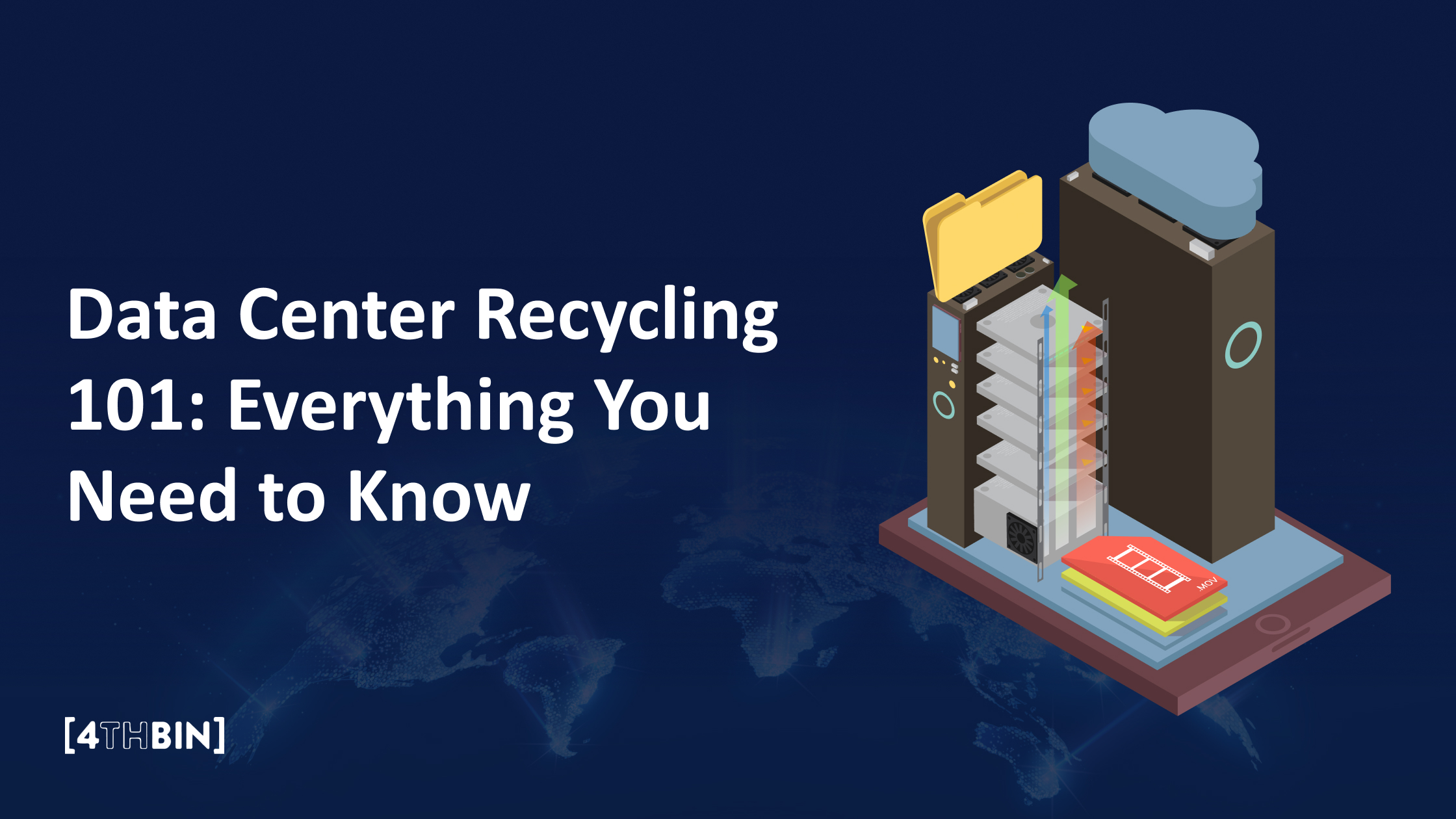
Data Center Recycling 101: Everything You Need to Know
When companies upgrade their data centers, old servers and storage devices don’t simply disappear; they must be securely wiped, recycled, or destroyed. Too often, this process breaks down. Equipment changes hands without proper sanitization, leaving sensitive data behind. What starts as a simple infrastructure refresh can quickly turn into a compliance risk or even a security breach.
This isn’t unusual. Data centers are constantly cycling through hardware: servers, storage devices, networking gear, and cooling systems all reach the end of life faster than most businesses expect. The real question isn’t whether this equipment will need to be replaced, but how it will be handled once it’s no longer in use.
That’s where data center recycling comes in. In this blog, we’ll break down what data center recycling really means, why it matters, the standard components involved, and the challenges organizations face when implementing it.
What Is Data Center Recycling?
At its core, data center recycling is the practice of securely and responsibly managing hardware that has reached the end of its useful life. This includes servers, storage devices, networking gear, cabling, and even infrastructure like racks, cooling systems, and power supplies. Instead of being discarded or left to collect dust in storage, these assets go through a structured process that focuses on three priorities:
- Data Security: Ensuring every hard drive, SSD, or storage array is properly wiped, degaussed, or physically destroyed so no sensitive information can ever be recovered.
- Environmental Responsibility: Recovering metals, plastics, and other components to reduce e-waste and prevent toxic materials from entering landfills.
- Value Recovery: Identifying equipment that can be refurbished, resold, or repurposed, allowing organizations to extract additional return from their investment.
In practice, data center equipment recycling is not just an end-of-life activity. It’s part of a broader IT lifecycle strategy. When done well, it helps businesses meet sustainability goals, maintain compliance with strict e-waste regulations, and protect themselves against the kind of data breaches that have made headlines in recent years.
Why Is Data Center Recycling Critical?
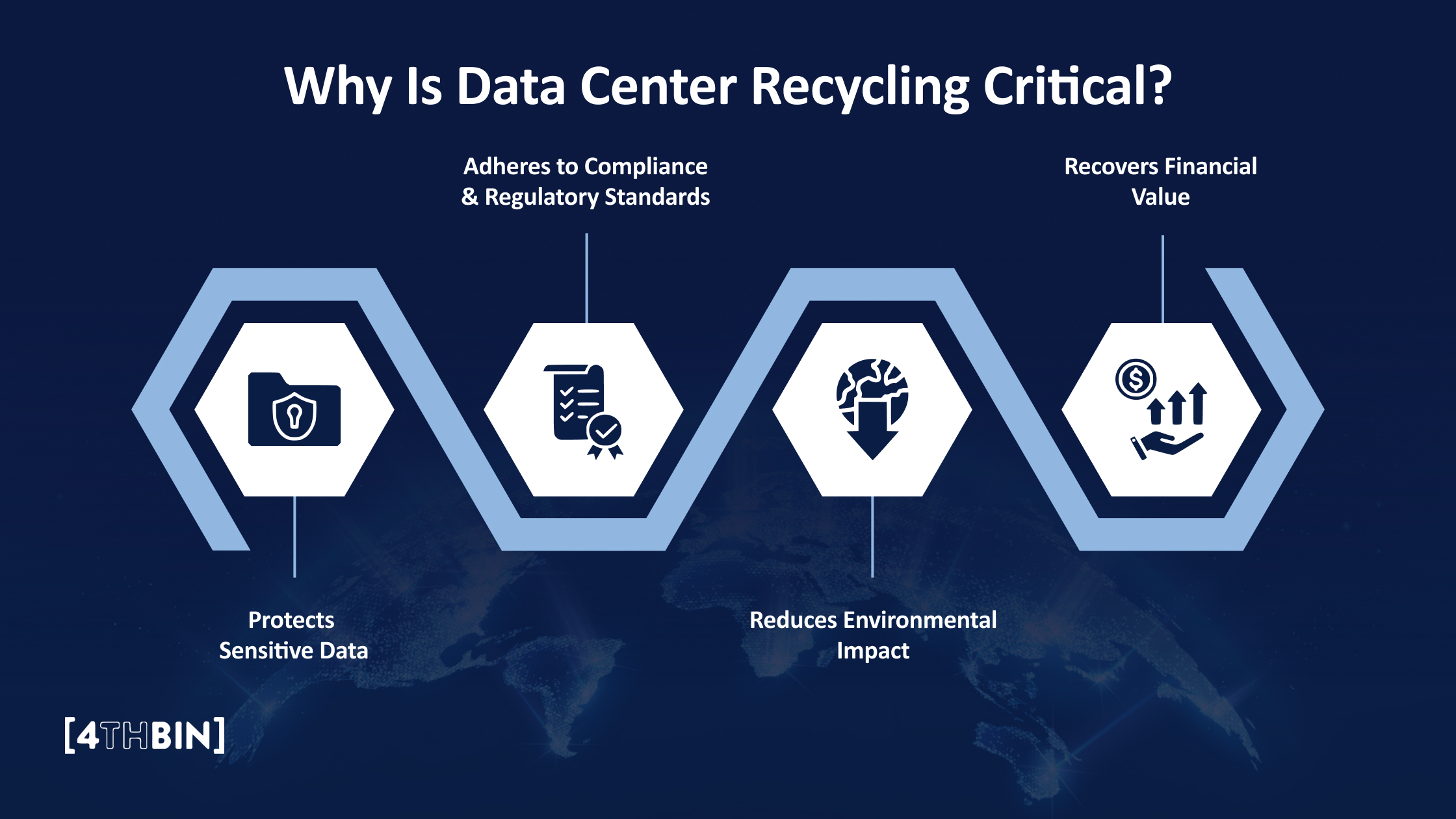
Recycling data center equipment addresses some of the most pressing risks and responsibilities modern organizations face. Here is why it is critical for today’s organizations:
Protects Sensitive Data
Every decommissioned server or storage device carries a hidden risk: the data stored on it. If those drives aren’t properly sanitized, they can expose confidential business information, intellectual property, or customer records. A fallout can result in multimillion-dollar lawsuits and lasting reputational damage.
Adheres to Compliance & Regulatory Standards
From GDPR to state-level e-waste laws, businesses are under increasing pressure to prove they’re disposing of IT assets responsibly. Non-compliance can bring heavy fines, but more importantly, it can undermine customer and investor trust. Certified data center recycling ensures organizations have the documentation and audit trails needed for ESG reporting and regulatory reviews.
Reduces Environmental Impact
Data centers generate enormous amounts of hardware waste. Without recycling, much of it ends up in landfills, releasing toxins like lead, mercury, and cadmium into the environment. Recycling not only prevents this harm but also allows for the recovery of precious metals like gold, silver, and copper, reducing the demand for new mining and lowering the industry’s carbon footprint.
Recovers Financial Value
Not all retired equipment is worthless. Through refurbishment, resale, or donation, organizations can recover part of their initial investment. Even components that can’t be reused often contain valuable materials that can be reclaimed. Recycling turns what might look like a sunk cost into an opportunity to offset expenses or reinvest in new infrastructure.
Common Components Involved in Data Center Recycling
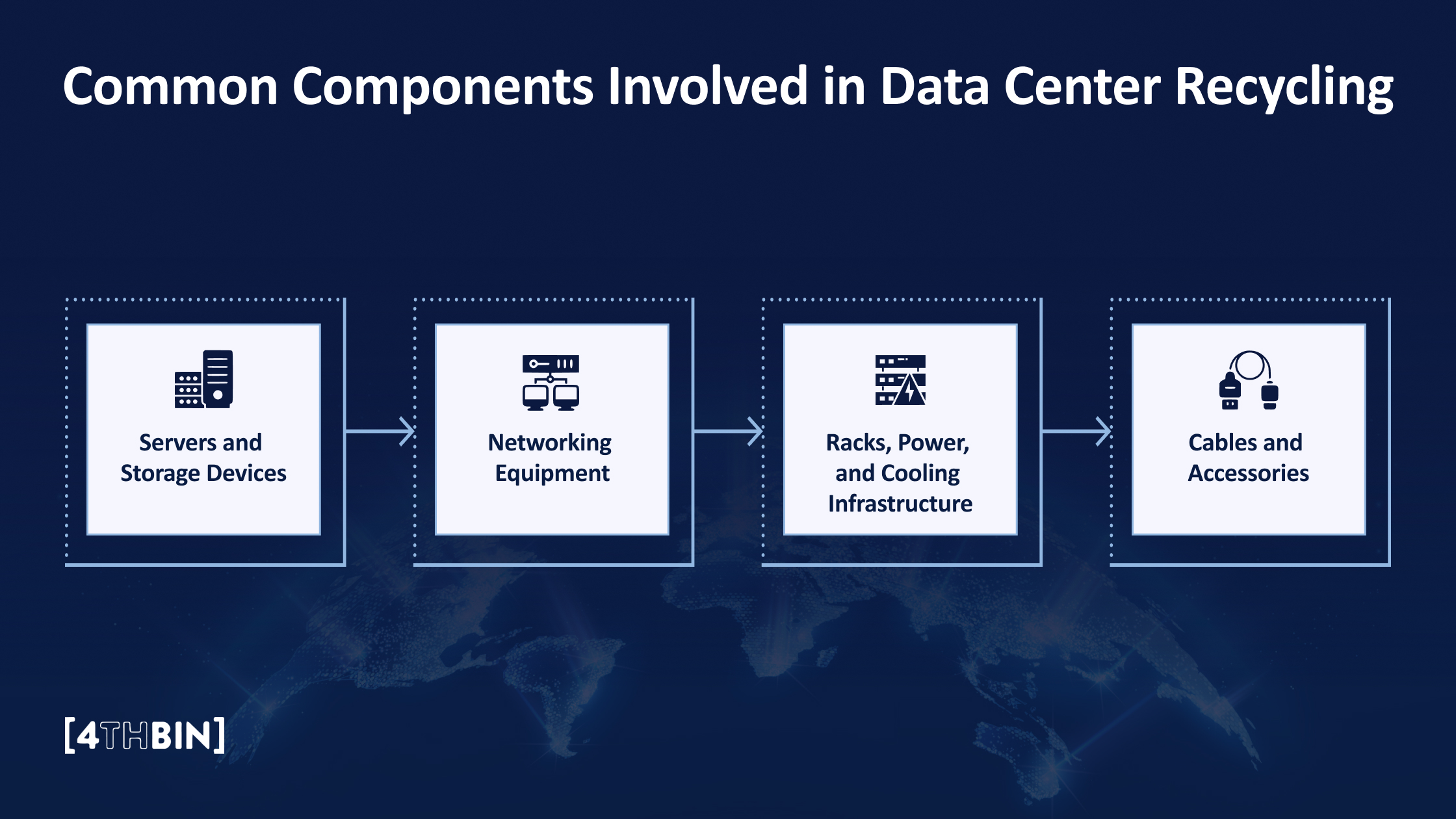
When people think of recycling, they often envision everyday electronics, such as laptops or smartphones. But in a data center, the scale and variety of equipment are much larger, and every piece needs to be handled responsibly. Some of the most common components include:
Servers and Storage Devices
The backbone of every data center, these systems hold sensitive business and customer data. They’re also rich in reusable parts and recoverable metals, making them a high priority for secure recycling.
Networking Equipment
Routers, switches, firewalls, and other networking gear are frequently upgraded to support higher speeds and greater bandwidth. Though smaller than servers, these devices add up quickly and contain recyclable circuit boards, plastics, and metals.
Racks, Power, and Cooling Infrastructure
Racks, uninterruptible power supplies (UPS), and cooling units don’t store data but are essential for operations. When replaced, their steel, copper, and other materials can be reclaimed rather than discarded.
Cables and Accessories
Miles of cabling, along with smaller accessories, often get overlooked during decommissioning. Yet they represent a significant volume of recyclable material, especially copper wiring.
By recognizing that data center equipment recycling involves much more than just servers, organizations can build a complete plan that addresses every asset in their facility. This ensures nothing ends up sitting unused in storage or, worse, in a landfill.
Data Center Recycling vs. Data Center Decommissioning
|
|
|
|
|
|
|
|
|
|
|
|
|
|
|
|
|
|
|
|
It’s easy to confuse recycling with decommissioning, since both happen when a data center or part of its infrastructure is retired. But they serve very different purposes, and understanding the distinction is critical.
Data center decommissioning is the process of shutting down and removing IT assets from service. It’s largely operational: equipment is powered down, disconnected, and physically removed from the facility. At this stage, the focus is on logistics, making sure workloads are migrated, downtime is minimized, and the facility is cleared.
Data center recycling, on the other hand, is the next step. It ensures that every retired server, drive, cable, and rack is handled in a responsible manner. Sensitive data is permanently destroyed, reusable equipment is refurbished or resold, and the remaining materials are recycled in compliance with environmental standards.
In short, decommissioning stops the operation, but recycling ensures that nothing valuable, whether data, equipment, or materials, is wasted or mishandled. The two should work hand in hand, but only recycling closes the loop on sustainability and security.
Common Challenges and How to Overcome Them
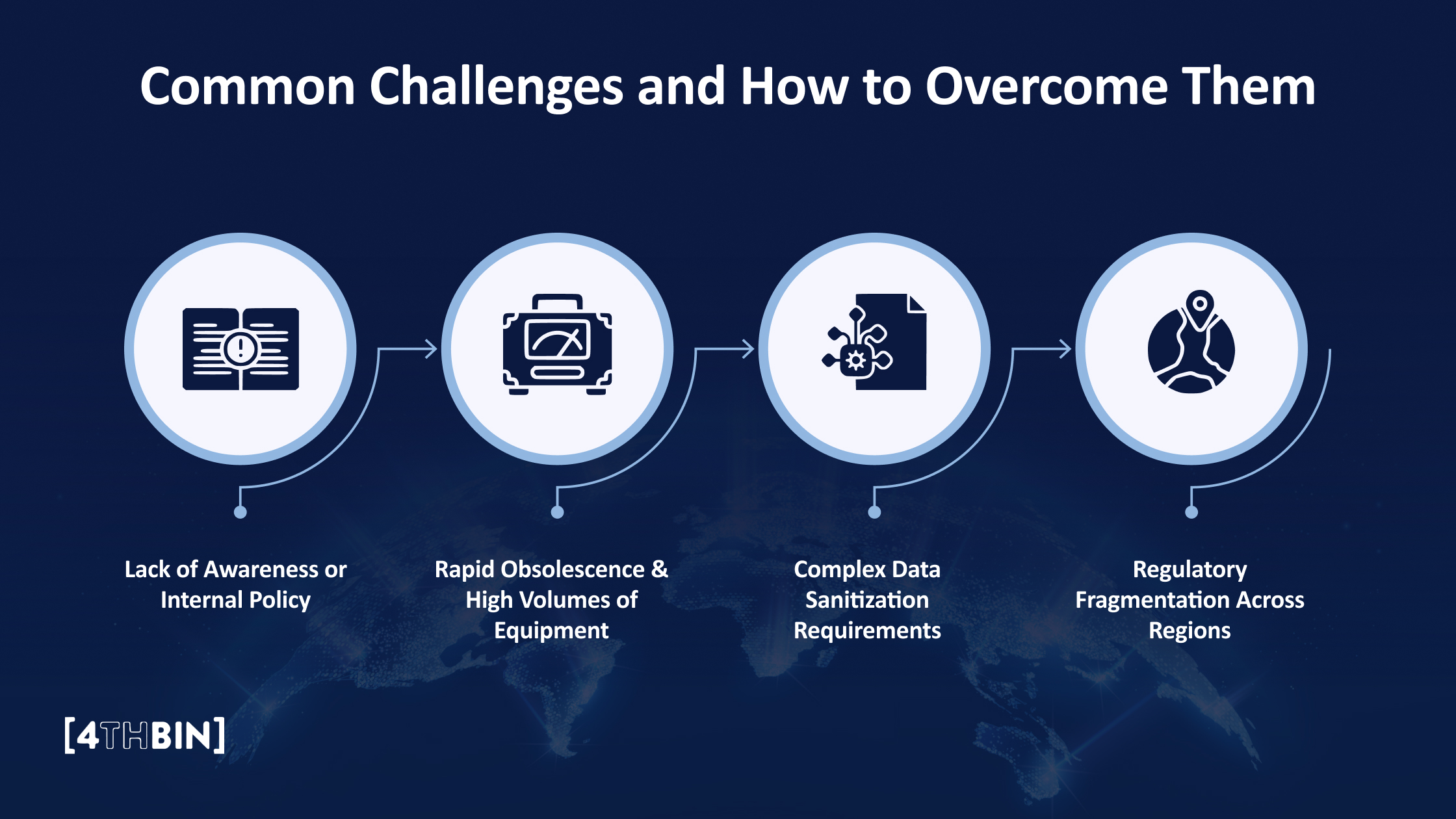
Recycling data center equipment may sound straightforward until organizations attempt to put it into practice. What often looks like a simple handoff of old servers quickly becomes a maze of compliance rules, security risks, and operational headaches. Here are some of the biggest obstacles businesses face, along with strategies for navigating them.
1. Lack of Awareness or Internal Policy
Many companies fail to incorporate recycling into their IT lifecycle planning. Equipment is often decommissioned, but what happens next is frequently left to chance, resulting in devices piling up in storage rooms or being sold to uncertified vendors.
Without formal policies, there’s no accountability. This creates risk on multiple fronts: data may remain on devices, e-waste could be mishandled, and organizations can fail ESG or compliance audits.
How to Overcome It? Treat recycling as a strategic process, not an afterthought. Build it into procurement and decommissioning policies. For example, every hardware refresh should include a defined recycling partner, chain of custody documentation, and internal reporting requirements.
2. Rapid Obsolescence & High Volumes of Equipment
Data centers refresh equipment every few years to keep up with performance demands. That means large volumes of gear, racks of servers, miles of cabling, and endless networking components are constantly being cycled out.
Without a plan, IT teams get overwhelmed by sheer volume. Hardware sits idle, value recovery opportunities are lost, and disposal ends up rushed or mismanaged.
How to Overcome It? Establish a rolling lifecycle management plan. Instead of waiting for massive refreshes, schedule smaller, regular recycling cycles that align with equipment warranties or depreciation schedules. Partnering with a certified recycler who can handle enterprise-scale volumes ensures nothing falls through the cracks.
3. Complex Data Sanitization Requirements
Simply deleting files or reformatting drives doesn’t erase data. Sophisticated recovery tools can still pull information from improperly wiped devices. Standards like NIST 800-88 or DoD 5220.22-M exist for a reason; they define the level of erasure or destruction regulators expect.
Mishandling data-bearing devices can lead to breaches, regulatory fines, lawsuits, and reputational damage, as the case we read about at the beginning of the article, where a company faced a $60 million settlement resulting from the reselling of retired servers with sensitive data intact, is proof of how costly these mistakes can be.
How to Overcome It? Require recyclers to use certified erasure or destruction methods (software-based wiping, degaussing, or shredding) and provide auditable certificates of destruction. This not only protects sensitive data but also creates a documented trail for regulators and auditors to follow.
4. Regulatory Fragmentation Across Regions
Data protection and e-waste regulations vary dramatically by state, country, and industry. A multinational company may be subject to GDPR in Europe, HIPAA in the U.S., and local e-waste laws in Asia, all with different requirements.
Failure to comply with even one jurisdiction’s rules can result in fines, halted projects, or reputational damage. For companies reporting on ESG metrics, inconsistency across regions can also undermine investor confidence.
How to Overcome It? Collaborate with recycling partners who possess multi-jurisdictional expertise and certifications, such as R2v3 or e-Stewards, which reflect internationally recognized standards. Ensure they can provide region-specific compliance documentation to keep your organization protected globally.
Organizations that anticipate and address these hurdles proactively turn recycling into an advantage, protecting data, meeting compliance standards, and demonstrating leadership in sustainability.
How to Choose the Right Recycling Partner
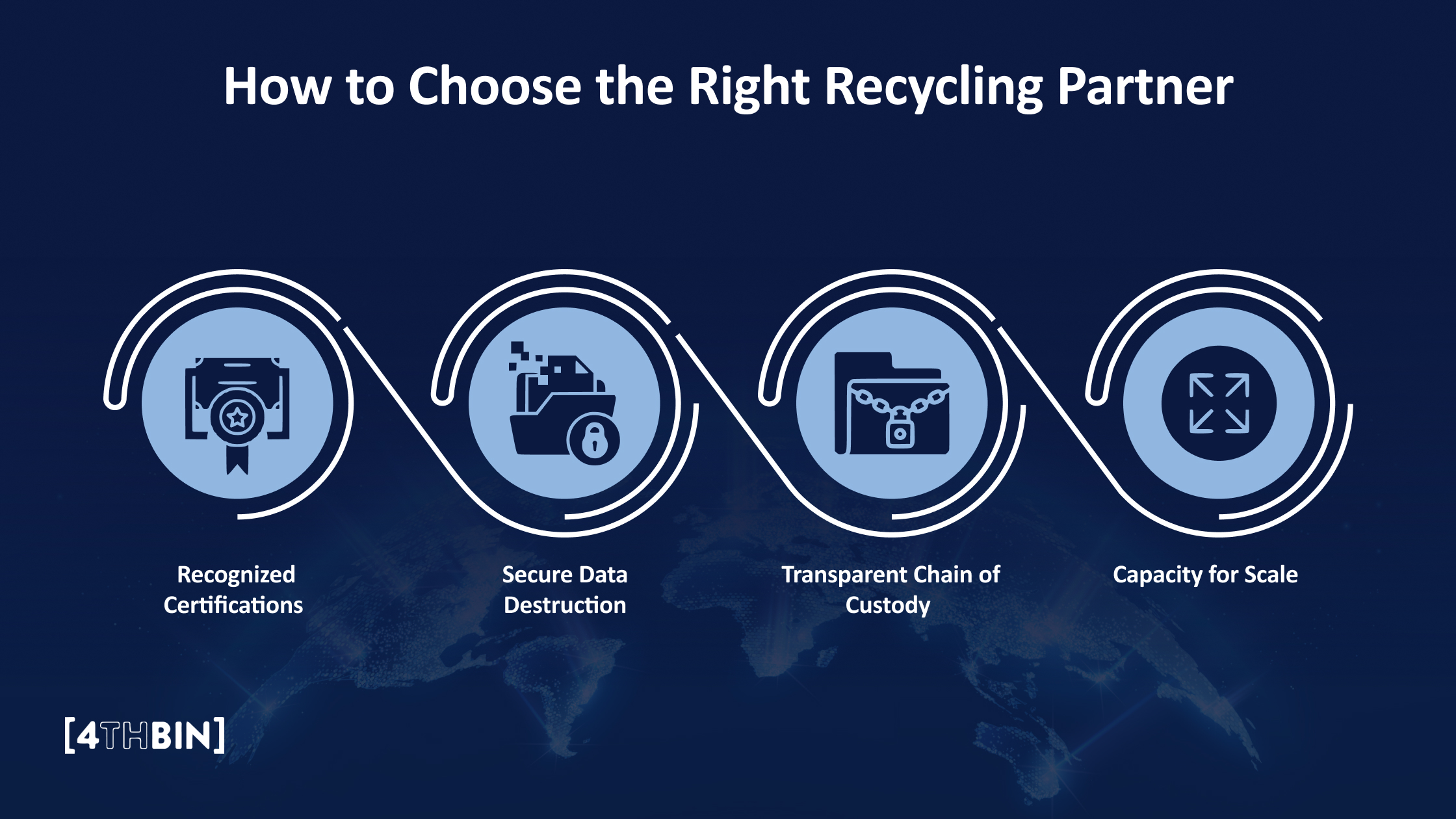
Not all recycling vendors are created equal. Handing over retired equipment to the wrong partner can undo every effort to secure data and protect the environment. Here’s what to look for:
Recognized Certifications
Certifications such as R2v3 and e-Stewards are more than logos on a website — they’re proof that a recycler meets rigorous industry standards for environmental practices, data security, and worker safety. Partnering with uncertified vendors may save costs upfront but exposes your organization to regulatory risk and reputational harm if equipment is mishandled.
Secure Data Destruction
A credible recycling partner doesn’t just “promise” data destruction; they prove it. Look for providers who follow NIST 800-88 or DoD-approved sanitization methods and issue a verifiable certificate of destruction for every asset processed. This gives your organization a defensible position during audits or investigations, and removes the single most significant risk in recycling: sensitive data falling into the wrong hands.
Transparent Chain of Custody
The journey of your equipment should never be a mystery. From the moment the hardware leaves your site until it is finally processed, every step should be documented. A transparent chain of custody eliminates uncertainty and gives you confidence that equipment hasn’t been resold, diverted, or mishandled along the way.
Capacity for Scale
Whether it’s a few racks of servers or an entire facility, your recycler should be able to handle the project without cutting corners. Scalable partners bring the proper logistics, processes, and teams to manage large volumes efficiently, ensuring that recycling doesn’t disrupt your IT operations.
When done well, data center equipment recycling protects your data, demonstrates compliance, and advances your sustainability commitments.
Secure the Future of Your Data Center with 4THBIN
Recycling retired equipment isn’t just about clearing space; it’s about protecting sensitive data, meeting regulatory requirements, and ensuring valuable materials are recovered responsibly. Data centers in particular carry unique risks: high volumes of hardware, complex data-bearing devices, and infrastructure that should never end up in a landfill.
At 4THBIN, we help organizations close this critical loop. For more than a decade, we’ve partnered with enterprises, institutions, and local businesses to ensure data center assets are retired securely, compliantly, and with full environmental responsibility. As an R2v3-certified recycler, we guarantee that every server, drive, and piece of infrastructure is processed to the highest standards of security and sustainability.
Our certified data destruction services eliminate the risk of data recovery from decommissioned equipment, protecting your business from costly breaches and regulatory penalties. From secure RemoteReturn mail-in options to convenient on-site collection, our customizable solutions allow you to choose the plan that best suits your organization’s needs.
Secure recycling for every rack and server.
Contact Us