Top 8 E-Waste Disposal Techniques in 2025

Did you know that 151 million phones are trashed, incinerated, or landfilled each year — approximately 416,000 a day? What’s more surprising is that 40% of heavy metals in US landfills come from these discarded electronics.
Now, what happens to your old smartphone after you upgrade? Does it sit in a drawer, forgotten? Or does it add to the growing global e-waste problem? According to the Global E-Waste Monitor, over 57 million metric tons of e-waste are generated worldwide each year. And what about broken laptops or outdated appliances, are they simply destined for landfills?
These questions highlight a growing global e-waste crisis. Inside discarded electronics lie valuable materials such as metals and rare-earth elements that could be recovered and reused. Yet, much of it is mismanaged or lost, while toxic substances like lead and mercury seep into our environment, harming ecosystems and human health.
Thankfully, 2025 brings a new wave of solutions that address these challenges head-on. From innovative recycling methods to advanced systems ensuring secure data destruction, these strategies are revolutionizing how we handle electronic waste.
This blog will take you through eight unique e-waste disposal techniques in 2025 that are reshaping e-waste disposal this year and guide you through best practices for e-waste disposal that will help you truly create a difference.
Top E-Waste Disposal Techniques
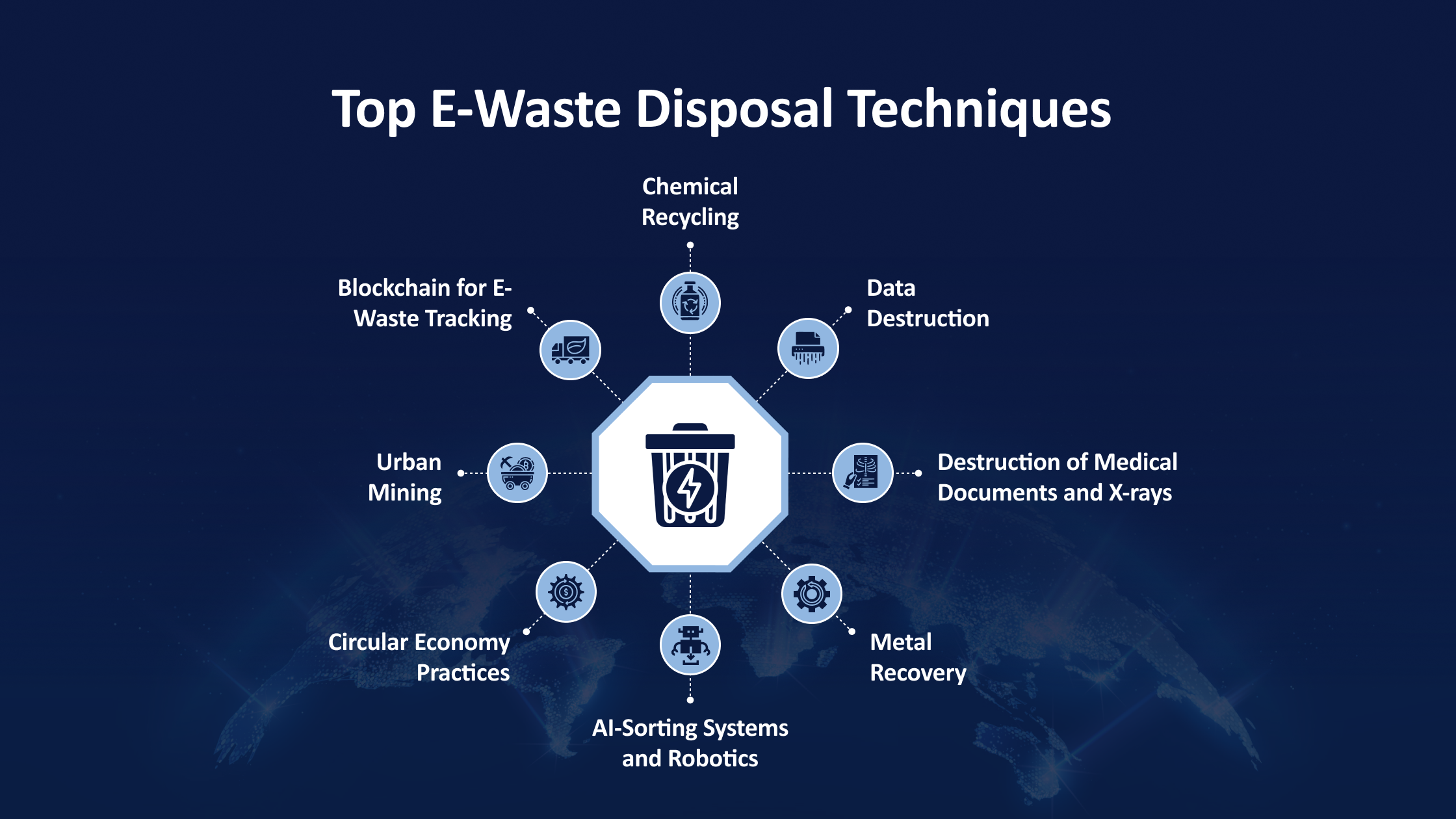
As the world generates unprecedented amounts of e-waste, innovative techniques transform how we manage electronic waste. Here are eight effective approaches shaping the future of e-waste disposal in 2025.
Chemical Recycling
Chemical recycling employs advanced chemical processes to decompose complex electronic materials into their essential raw components. For example, plastics can be broken down into monomers, while circuit boards yield high-purity metals. This method allows recyclers to recover commonly used materials like aluminum and rare and precious elements, such as palladium, in their purest forms.
This approach significantly reduces the volume of e-waste destined for landfills, thereby minimizing the environmental impact of recycling processes. It has become an especially effective solution for handling intricate devices like smartphones and computers, where standard recycling methods fall short.
In practice, chemical recycling is often used for complex devices where traditional mechanical recycling cannot efficiently separate mixed materials.
Data Destruction
As data breaches become more prevalent, securely erasing sensitive information is more critical than ever. Data destruction techniques involve using specialized software to overwrite data multiple times or physically shredding storage devices such as hard drives, SSDs, and USB sticks.
Organizations handling sensitive information, such as financial institutions and healthcare providers, often use certified data destruction services that guarantee compliance with data privacy laws like GDPR and HIPAA. This process safeguards personal and business information and mitigates the risk of identity theft.
Moreover, data destruction ensures that confidential information on hard drives, phones, and other electronics is irretrievably wiped. This practice is essential for maintaining privacy, complying with regulations, and preventing unauthorized access to personal or corporate data.
In real-world scenarios, organizations frequently underestimate how much recoverable data remains on devices that were simply deleted or formatted.
Destruction of Medical Documents and X-rays
Medical e-waste includes electronic health records, digital imaging files, and traditional X-ray films, all of which contain sensitive patient data. When managing such waste, hospitals and clinics must prioritize the secure disposal of sensitive data and the recovery of valuable metals. X-rays, for instance, contain silver, which is extracted through a process known as silver recovery. Meanwhile, digital records are wiped from devices or shredded to ensure destruction.
Moreover, healthcare facilities must adhere to HIPAA regulations to ensure the privacy and security of patient information during disposal. By choosing HIPAA-compliant destruction services, they can securely dispose of sensitive data while addressing the environmental risks associated with hazardous materials, such as silver in X-ray films, through safe processing and recycling practices.
Metal Recovery
Electronic devices like smartphones, laptops, and circuit boards are rich sources of valuable metals, including gold, silver, platinum, and copper. Metal recovery focuses on extracting these materials from discarded electronics, reducing dependence on mining activities. Recovering these metals involves two primary techniques:
- Pyrometallurgy employs high-temperature smelting to separate metals from other materials in electronic waste. Precious metals like gold and silver are isolated during this process as they melt and concentrate at high temperatures. While effective, this method requires substantial energy and must be carefully controlled to limit emissions.
- Hydrometallurgy, in contrast, uses chemical solutions to dissolve metals selectively from e-waste. This process is exact, allowing for the efficient recovery of specific metals, such as copper or palladium. Though it produces fewer emissions than pyrometallurgy, hydrometallurgy requires strict chemical management to ensure environmental safety.
These methods reduce reliance on environmentally damaging mining operations and help preserve finite natural resources. Moreover, recovered metals can be reintegrated into new manufacturing cycles, promoting a more sustainable and circular supply chain.
AI-Sorting Systems and Robotics
Artificial intelligence(AI) and robotics are transforming recycling efficiency. AI-powered sorting systems utilize machine learning algorithms to identify and separate materials in e-waste based on their type and composition. For instance, optical sensors can differentiate between metals, plastics, and glass, ensuring precise categorization.
Meanwhile, robotic arms are developed to precisely dismantle devices, efficiently removing batteries or hazardous components before shredding them. This integration of technology improves material recovery rates, reduces contamination, and minimizes human exposure to potentially hazardous waste, making the recycling process safer and more effective.
Circular Economy Practices
The circular economy approach prioritizes repairing, refurbishing, and repurposing electronics to extend their lifespans. For instance, businesses and manufacturers invest in repair programs to extend the functionality of products, while refurbished devices are resold to consumers at affordable prices.
Beyond reuse, some components are repurposed for entirely new products, reducing the need for virgin materials. Moreover, this shift from a linear “use and dispose” model to a circular one decreases e-waste and promotes a culture of sustainability among consumers and businesses.
Urban Mining
Urban mining treats e-waste as a resource rather than a burden. By extracting metals, minerals, and rare earth elements from discarded devices, urban mining reduces the demand for orthodox mining practices, which are often energy-intensive and environmentally destructive. A range of advanced techniques is used to recover high-value materials:
- Hydrometallurgical Extraction: This process uses chemical solutions to dissolve metals selectively from e-waste, enabling the recovery of elements like cobalt from batteries and indium from display screens. It is precise and effective for targeting specific materials.
- Pyrometallurgical Processing: High-temperature smelting separates metals from other materials in electronic waste. This method efficiently extracts precious metals like gold and silver, though it requires careful management to control emissions.
- Bioleaching: Microorganisms are employed to extract metals from e-waste in an environmentally friendly way. Microbes break down electronic components to release metals such as copper and gold, eliminating the need for harsh chemicals or extreme temperatures.
- Electrochemical Recovery: Electric currents extract metals from e-waste in solution form. This method is particularly effective for refining high-purity metals like platinum and palladium.
By combining these techniques, urban mining transforms discarded electronics into a rich source of materials. This reduces the environmental impact of customary mining and supports resource conservation and economic growth.
Blockchain for E-Waste Tracking
Blockchain technology is improving transparency in e-waste management. By tracking the entire lifecycle of electronic devices, blockchain ensures that waste is handled responsibly and ethically.
Blockchain technology ensures transparency and accountability throughout the e-waste disposal process. Each step, from collection to material recovery, is recorded on an immutable ledger, making verifying compliance with ethical and environmental standards easy. This is particularly valuable for companies outsourcing their e-waste management, as it provides a clear audit trail.
Blockchain can also prevent illegal dumping and fraud, ensuring that materials are recycled or disposed of as promised. It also helps prevent fraud, such as misreporting disposal methods, while building trust between recyclers and stakeholders by offering a verifiable accountability system.
While still emerging, some large-scale recycling programs are beginning to adopt blockchain for compliance tracking and reporting.
Best Practices for E-Waste Disposal
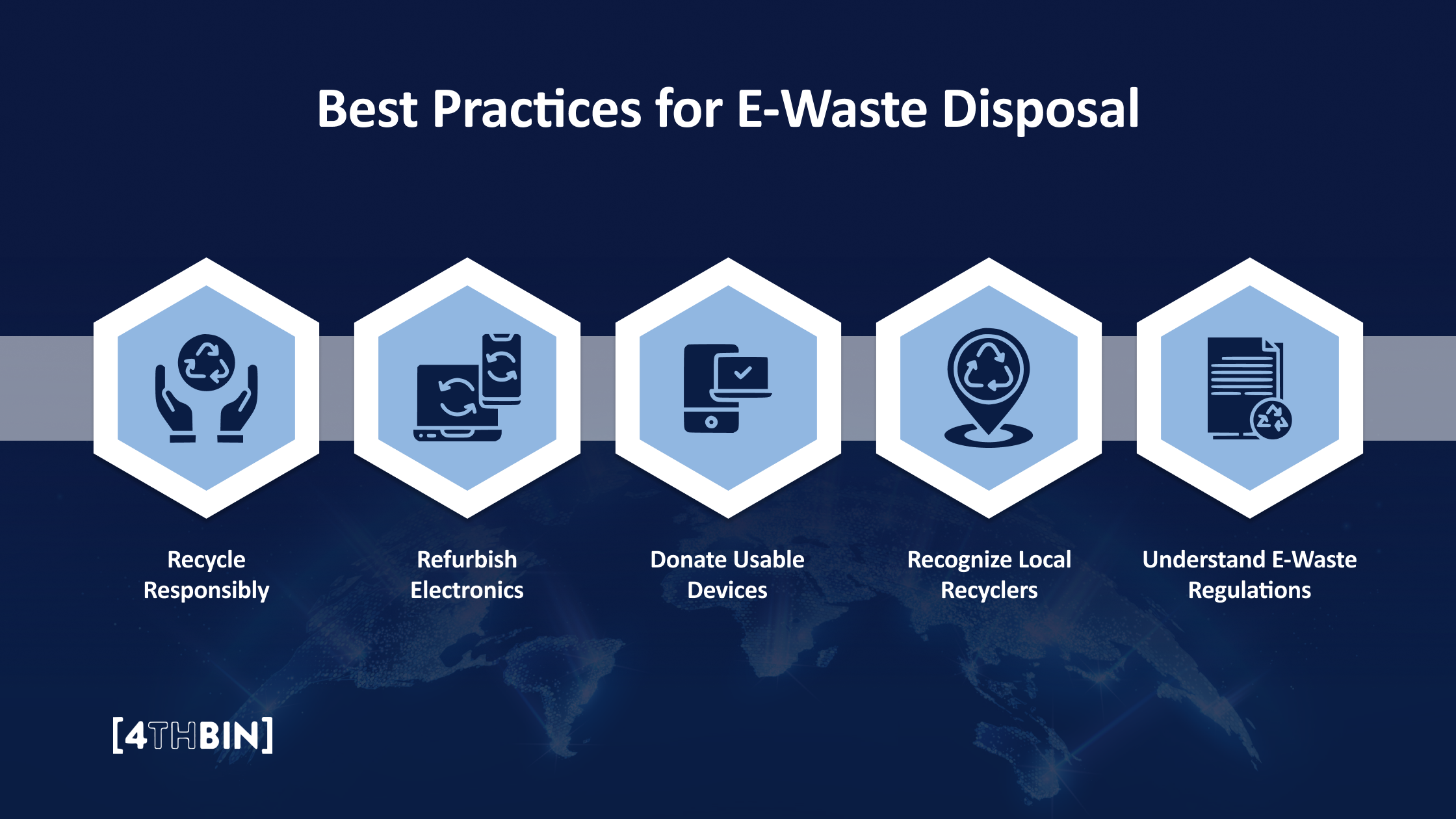
Effective e-waste disposal is a shared responsibility for both businesses and individuals. By adopting thoughtful practices, we can minimize environmental harm, recover valuable materials, and ensure electronics are handled responsibly. Here are a few best practices that everyone can follow:
Recycle Responsibly
Recycling is one of the most impactful ways to manage e-waste. You must take outdated or non-functional devices to certified recycling centers, where valuable materials like metals and plastics can be recovered and reused.
Many manufacturers and retailers now offer take-back or trade-in programs, making the process convenient and accessible. Setting up dedicated e-waste collection points at homes or workplaces can simplify the process, encouraging more people to recycle instead of improperly discarding electronics.
Read More: How to Properly Dispose of Your Old Electronics?
Refurbish Electronics
Not all electronics need to be discarded as waste. Repairing and upgrading devices can significantly extend their lifespan, keeping them out of landfills. Refurbished electronics can be reused, repurposed for different needs, or sold in secondary markets. For businesses, refurbishing IT equipment can reduce technology costs and align with sustainability goals.
Donate Usable Devices
Electronics in good working condition can be donated to schools, non-profits, or community organizations. This helps bridge the digital divide by providing access to technology for those in need while keeping functional devices from becoming waste. Before donating, it is critical to erase all data to protect personal or business information securely. Donation programs reduce e-waste and support community development, making this a meaningful option for individuals and companies.
Recognize Local Recyclers
In many communities, local recyclers play an essential role in managing e-waste. These facilities are often well-equipped to handle electronics responsibly, and their proximity makes them convenient options. However, verifying that these recyclers follow environmentally safe practices and comply with regulations is necessary. Supporting local recycling initiatives also strengthens regional waste management systems and reduces the carbon footprint of transporting e-waste long distances.
Understand E-Waste Regulations
E-waste disposal is governed by various regulations designed to protect the environment and ensure ethical practices. For example, laws may require proper disposal of hazardous components or mandate secure data destruction. To ensure compliance, it is crucial to be familiar with e-waste regulations, whether at the local, national, or international level.
Businesses, in particular, must stay updated on e-waste laws to avoid penalties and demonstrate environmental responsibility. Understanding these regulations empowers better decision-making and ensures e-waste is handled legally and ethically.
Choose Certified E-Waste Recyclers
Partnering with certified e-waste recyclers is the most reliable way to ensure that discarded electronics are handled responsibly. Certifications like R2 (Responsible Recycling) or e-Stewards indicate adherence to strict environmental, ethical, and data security standards.
Certified recyclers use innovative recycling technologies to process e-waste, ensuring that hazardous materials are safely disposed of and recoverable components are efficiently recycled. This choice also supports compliance with legal requirements and reinforces businesses' corporate sustainability goals. For individuals, it offers peace of mind knowing that their electronics are managed in an environmentally and socially responsible manner.
By integrating these best practices into daily habits or organizational policies, everyone can take meaningful steps toward reducing the global e-waste crisis.
Choose Smart E-Waste Disposal with 4THBIN
The most effective e-waste disposal technique in 2025 is choosing a certified recycler to ensure compliance with regulations, protect sensitive data, and minimize environmental harm. With 4THBIN ’s e-recycling solutions, your organization can rest assured of secure, compliant, and environmentally responsible electronic waste disposal.
With over a decade of experience, 4THBIN has partnered with more than 10,000 organizations, including Fortune 100 companies and small businesses, to transform e-waste challenges into opportunities. We make the process seamless, offering businesses a way to turn a potential liability into an opportunity for leadership in sustainability and responsibility.
Our certified data destruction services ensure that sensitive information is completely safeguarded, eliminating the risks of data recovery associated with improper disposal. From secure RemoteReturn mail-in options to convenient on-site collection, our customizable solutions allow you to choose the plan that best suits your organization’s needs.
The Future of Recycling Starts Here.
Contact Us
Frequently Asked Questions
1. What is the safest way to dispose of electronic devices that contain sensitive data?
The safest approach is to use a documented process that includes certified data destruction before any device is reused, resold, donated, or recycled. Depending on the device and the level of sensitivity involved, this may include secure data wiping, degaussing, or physical destruction. Businesses should also work with certified providers that can issue destruction records and chain-of-custody documentation.
2. Which e-waste disposal techniques are most practical for businesses today?
For most organizations, the most practical options today are secure data destruction, refurbishment and reuse, donation of usable equipment, and certified recycling for end-of-life assets. While advanced methods like AI-assisted sorting, hydrometallurgy, and blockchain-based tracking are gaining attention, the biggest impact for most businesses still comes from following secure, well-documented disposal basics.
3. Is it better to recycle old electronics or refurbish them for reuse?
That depends on the condition of the equipment. If devices are still functional and data can be securely removed, refurbishment or reuse is often the better option because it extends asset life and can recover value. If the equipment is obsolete, damaged, or no longer safe to use, certified recycling is usually the more responsible choice.
4. What should organizations look for in an e-waste disposal partner?
A reliable partner should offer secure data destruction, clear chain-of-custody procedures, transparent reporting, and recognized certifications such as R2v3 or e-Stewards. It is also important to ask how downstream recycling is handled, whether documentation is provided for audits, and how the provider supports environmental compliance and sustainability goals.
5. How can businesses prove their e-waste was handled responsibly?
Organizations should keep records such as asset inventories, pickup logs, chain-of-custody documents, certificates of data destruction, and recycling or remarketing reports. These records help demonstrate compliance, support internal governance, and provide evidence that retired electronics were managed securely and responsibly.