How to Dispose of Small Household Appliances

Ever notice how small household appliances seem to accumulate over time? One day, it’s a toaster that’s stopped toasting; the next, it’s a blender that’s lost its blend. Before you know it, you’ve got a cabinet full of gadgets that no longer serve their purpose. So, what do you do with them?
Tossing them in the trash might seem like the quickest solution, but here’s the thing: those small appliances can have a lasting impact on the environment if not disposed of properly.
Inside that broken coffee maker or old hairdryer are metals, plastics, and electrical components that can be recycled and given a new life.
In this blog, we’ll explore what counts as a small household appliance, why it’s essential to recycle it, and the best ways to do it. Whether you’re clearing out a cluttered kitchen or upgrading your home gadgets, you’ll discover simple, effective ways to dispose of small appliances without harming the planet.
What Is Considered a Small Household Appliance?
Small household appliances are the everyday devices that make life easier, whether you’re whipping breakfast, cleaning your home, or getting ready in the morning. They’re typically compact, portable, and designed for regular use. While they may seem insignificant, these appliances add up quickly when it’s time to replace them, so it’s essential to know how to dispose of them properly.
So, what exactly counts as a small household appliance? Let’s break it down:
- Kitchen Appliances: Toasters, coffee makers, blenders, and microwaves are common examples. Even smaller devices like electric kettles, mixers, and rice cookers fall into this category.
- Cleaning Appliances: Vacuum cleaners, irons, steam cleaners, and handheld dustbusters are all considered small household appliances. Don’t forget items like electric brooms and fabric shavers.
- Personal Care Devices: Hair dryers, electric razors, hair straighteners, and electric toothbrushes are just a few examples. Other items like facial steamers and massage devices also count.
- Other Electronics: This category covers devices that don’t quite fit into the kitchen or bathroom but are still essential. Fans, space heaters, clocks, humidifiers, and power tools like drills or electric screwdrivers are all considered small household appliances.
Now, you might wonder — Are small household appliances the same as e-waste? Not exactly. E-waste typically refers to electronic devices like computers, phones, and TVs—items that store data or have more complex electrical components. On the other hand, small household appliances usually have simpler electrical systems and don’t store personal information. However, both categories often contain materials like metals, plastics, and wiring that must be handled carefully when it’s time to dispose of them.
While small household appliances might not fall under standard e-waste regulations, many recycling programs still accept them due to their electrical components and potential environmental impact. Plus, some devices, like those with rechargeable batteries, must be recycled as e-waste because of their hazardous materials.
The bottom line is if it plugs in, runs on batteries, or uses electricity, it likely falls into the category of small household appliances.
Why Is It Important to Recycle Small Household Appliances?
Tossing an old toaster or vacuum into the trash doesn’t just disappear—it often ends up in a landfill, where its materials can cause lasting damage. Small household appliances contain metals, electrical components, and hazardous materials that must be handled carefully.
Many appliances contain metals like copper, aluminum, and steel, which can be recovered and reused, reducing the need for mining and conserving natural resources. The electrical components inside—like wiring and circuit boards—also contain valuable materials that can be repurposed. Plus, recycling uses far less energy than producing new materials from scratch, helping reduce greenhouse gas emissions.
Safety is another significant factor. Many devices, especially those with rechargeable batteries, contain hazardous materials that can leak harmful chemicals if not disposed of properly. Batteries, in particular, can catch fire if damaged, posing risks in landfills and garbage trucks. By recycling, you ensure these materials are handled responsibly, preventing contamination and reducing the risk of fires.
In short, recycling small household appliances helps protect the environment, conserves energy, and keeps hazardous materials out of landfills. It’s a simple action that makes a big difference, ensuring that valuable resources are reused while reducing pollution and energy consumption.
Can Small Household Appliances Be Disposed of With Regular Trash?
Throwing small household appliances in the regular trash might seem like the easiest option, but it’s often not the right one. Many regions prohibit tossing electronics and appliances with regular waste because they contain metals, wiring, and sometimes hazardous materials that can harm the environment.
Some areas allow small, non-electric appliances—like manual kitchen tools—to be thrown away. But if an appliance plugs in or uses batteries, it may need to be recycled. Regulations can vary depending on where you live, so checking your local recycling guidelines is essential. Not only does this help protect the environment, but it can also save you from potential fines for improper disposal.
What to Do with Broken Household Appliances
Not every broken appliance belongs in the recycling bin. Here’s how you can make the most of small household appliances that still have potential:
Refurbish
Repairing a broken appliance is often cheaper and more sustainable than replacing it. Many common issues—like a blender that won’t blend or a vacuum that’s lost suction—can be fixed with simple repairs. Online tutorials, repair manuals, and DIY videos can guide you through basic fixes, from replacing worn-out parts to troubleshooting electrical issues.
If DIY isn’t your thing, consider taking the appliance to a professional repair service. Many repair shops can refurbish your appliances at a fraction of the cost of buying new ones. Some manufacturers also offer repair services or replacement parts, making it easier to fix rather than toss.
Donate
If your appliance still works or only needs a minor fix, consider donating it to someone in need. Many charities, thrift stores, and community organizations welcome small household appliances in good working condition. Local shelters, schools, and community centers may also accept donations, especially for kitchen or personal care appliances.
Before donating, ensure the appliance is clean and safe. It must also include any necessary accessories it came with. Double-check the organization’s guidelines to ensure they accept the item you’re donating. By donating, you not only reduce waste but also help individuals and families who may not be able to afford new appliances.
Sell
If your appliance is still functional or only needs a simple repair, selling it can be a great way to give it a second life while making a bit of extra money. Online platforms like Craigslist, Facebook Marketplace, eBay, and OfferUp make it easy to find buyers in your local area.
Be honest about the appliance’s condition, mentioning any minor issues or needed repairs so potential buyers know what to expect. Even if an appliance no longer works, someone might be interested in purchasing it for spare parts. Pricing it affordably or offering it free can help it find a new home quickly.
How to Recycle Small Household Appliances
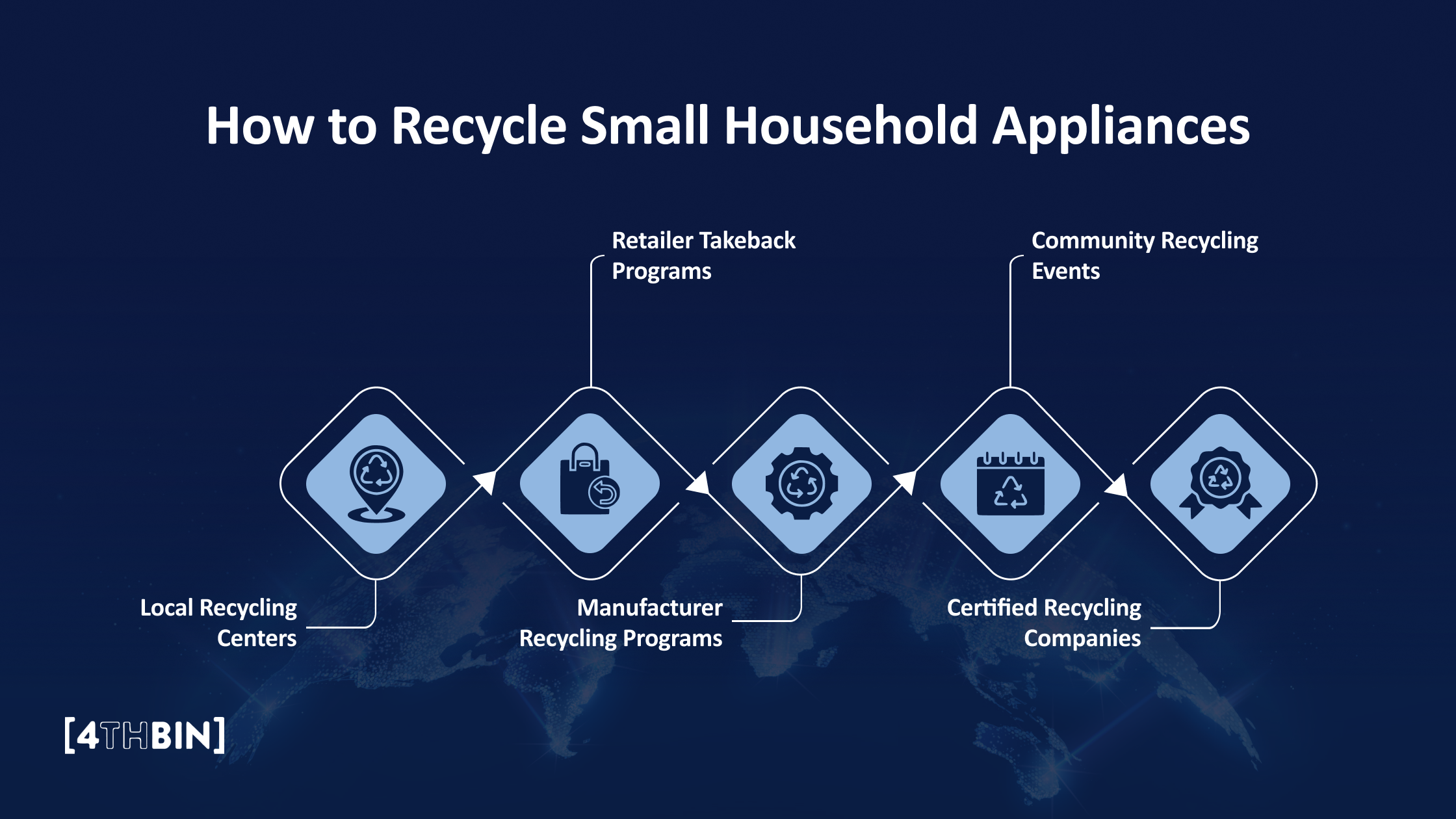
Recycling small household appliances might seem like a hassle, but it’s easier than you think. Here’s where to start:
Local Recycling Centers
Check out local recycling centers if you prefer to drop off your appliances in person. Many municipalities have designated facilities that accept small household appliances. A quick search on your city’s website or resources like Earth911’s recycling locator can help you find the nearest location.
Before you go, ensure the center accepts the type of appliance you recycle. Some locations only take specific items, while others may charge a small fee for certain electronics. When dropping off your appliance, remove any batteries and wipe down the item to ensure it’s clean and safe to handle. Most centers have dedicated bins or collection areas, so the process is usually quick and straightforward.
Retailer Takeback Programs
Many retailers offer recycling programs to help customers dispose of old appliances responsibly. For example:
- Best Buy accepts small household appliances like microwaves, coffee makers, and fans. Some items can be dropped off for free, while others may have a small fee.
- Staples recycles electronics such as printers, shredders, and other office appliances. They also have a rewards program that gives you credit for recycling certain items.
- Home Depot offers recycling programs for items like power tools and batteries.
Some retailers also have trade-in programs where you can exchange old appliances for store credit or discounts on new purchases. These programs not only help you recycle responsibly but can also save you money. Check each retailer’s website for current guidelines, as policies vary by location.
Manufacturer Recycling Programs
Many appliance manufacturers offer takeback programs to help customers recycle old products. These programs are designed to ensure that appliances are dismantled and recycled in an environmentally responsible manner. For example:
- Dyson accepts old vacuum cleaners and other appliances, ensuring they are recycled or refurbished.
- Philips offers recycling programs for electric toothbrushes, shavers, and other personal care devices.
- KitchenAid encourages customers to recycle small kitchen appliances like mixers and blenders through their mail-in program.
Visit the manufacturer’s website to see if they offer a takeback program for your appliance. Some companies provide free shipping labels, making it easy to mail in your item without additional cost.
Community Recycling Events
Watch for local recycling events hosted by your city or community organizations. These events often accept small household appliances and other items like electronics, batteries, and light bulbs. They’re usually held seasonally or annually and provide a convenient way to recycle multiple items simultaneously.
Many communities also host “clean-out” days where residents can drop off appliances, electronics, and other bulky items for free. If you’re unsure whether your appliance will be accepted, contact the event organizers in advance to confirm.
Certified Recycling Companies
The most reliable way to recycle small appliances is through certified recycling companies.
Look for companies with R2v3 certification, which is the industry standard for responsible recycling. Certified recyclers like 4THBIN guarantee that your appliances are handled according to strict environmental and data security protocols.
Moreover, they simplify the process with services like scheduled pickups and mail-in options. This is especially helpful for businesses or households with multiple items to recycle. Simply contact a certified recycler, arrange a collection or drop-off, and know that your electronics will be recycled the right way.
Recycle Your Small Appliances the Right Way with 4THBIN
When it comes to getting rid of old small appliances, choosing a certified recycler is the best way to make sure they’re disposed of safely. With 4THBIN’s reliable recycling solutions, you can trust that your appliances are recycled safely, keeping harmful materials out of landfills and conserving valuable resources.
With over a decade of experience, 4THBIN has helped more than 10,000 organizations—from Fortune 100 companies to local businesses—turn e-waste challenges into opportunities. Our streamlined process simplifies recycling, providing companies and individuals with a hassle-free way to responsibly dispose of unwanted electronics and appliances.
Whether you choose our secure RemoteReturn mail-in option or prefer a convenient on-site collection, our customizable solutions allow you to choose a plan suited to your needs.
Safely dispose of those old appliances today.
Contact Us