
How to Responsibly Recycle Your Old Electrical Cords?

Electric cords power nearly every device in modern homes and offices, from smartphones and laptops to printers, routers, and monitors. As technology upgrades become more frequent, cords and chargers are often left behind, collecting in drawers or storage bins long after the devices they supported are gone.
Although small, electrical cords are considered electronic waste (e-waste). They contain recoverable metals such as copper and aluminum, along with plastic insulation and connectors. When discarded in regular trash, these materials are lost instead of being reclaimed through recycling.
This blog explains:
- When an electrical cord should be replaced
- Why cords should not go in household trash
- Which types can typically be recycled
- How to prepare cords for safe and responsible recycling
Proper handling not only reduces unnecessary waste but also supports responsible material recovery.
When Should You Replace or Recycle an Electrical Cord?
Not every old cord needs to be thrown away immediately. However, certain warning signs indicate when a cord should be removed from use for safety and performance reasons.
1. Visible Physical Damage
Inspect cords periodically for:
- Cracked or broken insulation
- Exposed internal wires
- Bent or loose plug prongs
- Burn marks or melted plastic
If insulation is compromised, the cord can pose a shock or fire risk. Stop using it immediately and prepare it for recycling.
2. Overheating During Use
A cord that becomes unusually warm may have internal damage or a short circuit. Overheating can damage connected devices and increase fire risk. If a cord feels hot to the touch during normal use, discontinue use and replace it.
3. Intermittent or Unreliable Performance
If your device only charges at certain angles or frequently loses connection, the internal wiring may be damaged. While minor wear can sometimes be repaired, recurring connectivity issues usually indicate the cord has reached the end of its usable life.
4. Outdated or Incompatible Connectors
Technology evolves quickly. Older connector types, such as mini-USB or proprietary charging formats, may no longer match current devices. If a cord no longer supports any active device in your home or office, consider donating (if functional) or recycling it responsibly.
5. Excessive Wear Over Time
Frequent bending, tight coiling, or heavy daily use can weaken internal wiring, even when no visible damage appears. Cords used in high-traffic areas or commercial settings may require earlier replacement.
When safety or reliability is uncertain, replacing and recycling the cord is the safer choice.
Quick Thumb Rule
|
Why Electrical Cords Should Not Go in Household Trash
Throwing electrical cords in the trash may seem harmless, but it prevents valuable materials from being recovered and can contribute to broader electronic waste challenges.
1. Valuable Metals Are Lost
Electrical cords contain recoverable metals such as copper and aluminum. Copper, in particular, is highly recyclable and can be reused repeatedly without losing performance quality.
When cords are discarded in regular trash, these materials are permanently lost rather than reintroduced into manufacturing supply chains.
2. Plastics and Mixed Materials Complicate Disposal
Cords are made of layered materials, metal cores, plastic insulation (often PVC or polyethylene), and sometimes rubber or coated connectors.
Because these components are bonded together, they are not suitable for standard curbside recycling bins. Specialized processing is typically required to safely separate and recover the materials.
3. E-Waste Regulations Vary by Location
Many states and municipalities have specific rules regarding electronic waste disposal. While cords are not always individually regulated, they are often categorized as electronic accessories and should be handled through electronics recycling programs rather than general waste streams.
Before disposal, check your local waste authority’s guidance to ensure compliance with regional e-waste rules.
4. Landfilling Prevents Resource Recovery
Even when cords do not contain hazardous batteries or storage components, landfilling prevents the recovery of reusable metals and plastics.
Electronics recycling programs are designed to reclaim these materials, reducing the need for new raw material extraction and supporting more sustainable resource use.
Electrical cords are small, but they are still part of the electronic waste stream. Recycling through an electronics-specific program helps ensure materials are properly separated and recovered.
What Electrical Cords Are Made Of & What Can Be Recycled
Understanding what’s inside an electrical cord helps clarify why specialized recycling is important. Electrical cords are multi-material products. While most components are recyclable, they must be processed through electronics-specific recycling streams rather than household bins.
The Core Materials Inside Electrical Cords
1. Conductive Metal Core: At the center of most cords is copper wire. Some lower-cost cables may use aluminum. Copper is highly recyclable and retains its conductivity through repeated recycling cycles. It is commonly recovered and reused in:
Electrical wiring
- Renewable energy systems
- Construction materials
- Industrial manufacturing
Because copper has strong commodity value, it is one of the primary materials recovered during cord recycling.
2. Insulation Layer: Surrounding the metal core is insulation, typically made from:
- PVC (polyvinyl chloride)
- Polyethylene
- Thermoplastic elastomers
These materials prevent electrical shock and protect the wire from environmental exposure.
In certified recycling facilities, insulation is separated from metal during mechanical processing.
3. Outer Sheath or Jacket: Heavier-duty cables (extension cords, appliance cords) often include an outer protective sheath made of rubber or reinforced plastic. Depending on the recycler’s capabilities, these materials may be:
- Processed for plastic recovery
- Directed to specialized downstream material handlers
4. Connectors and Tips: Plugs, USB tips, HDMI connectors, and prongs contain small amounts of:
- Brass
- Nickel
- Steel
- Occasionally, gold plating (in data cables)
These components are typically processed along with the cable and separated during mechanical recycling.
Can All Electrical Cords Be Recycled?
Most standard household cords can be processed by certified electronics recyclers, including:
- Extension cords
- Power cables
- USB cables
- HDMI, Ethernet, and AV cables
- Charging cables and adapters
However, acceptance policies vary by facility.
Before recycling:
- Confirm the recycler accepts loose cables
- Do not attempt to burn or strip wires yourself
- Do not place cords in curbside recycling unless explicitly permitted
| Important Safety Note: Attempting to strip copper from cords at home using burning or cutting methods is unsafe and environmentally harmful. Proper recycling facilities use industrial separation equipment designed to safely recover metals without releasing harmful emissions. |
What to Do With Old Electrical Cords
Not every cord needs to be recycled immediately. The most responsible option depends on its condition, safety, and compatibility.
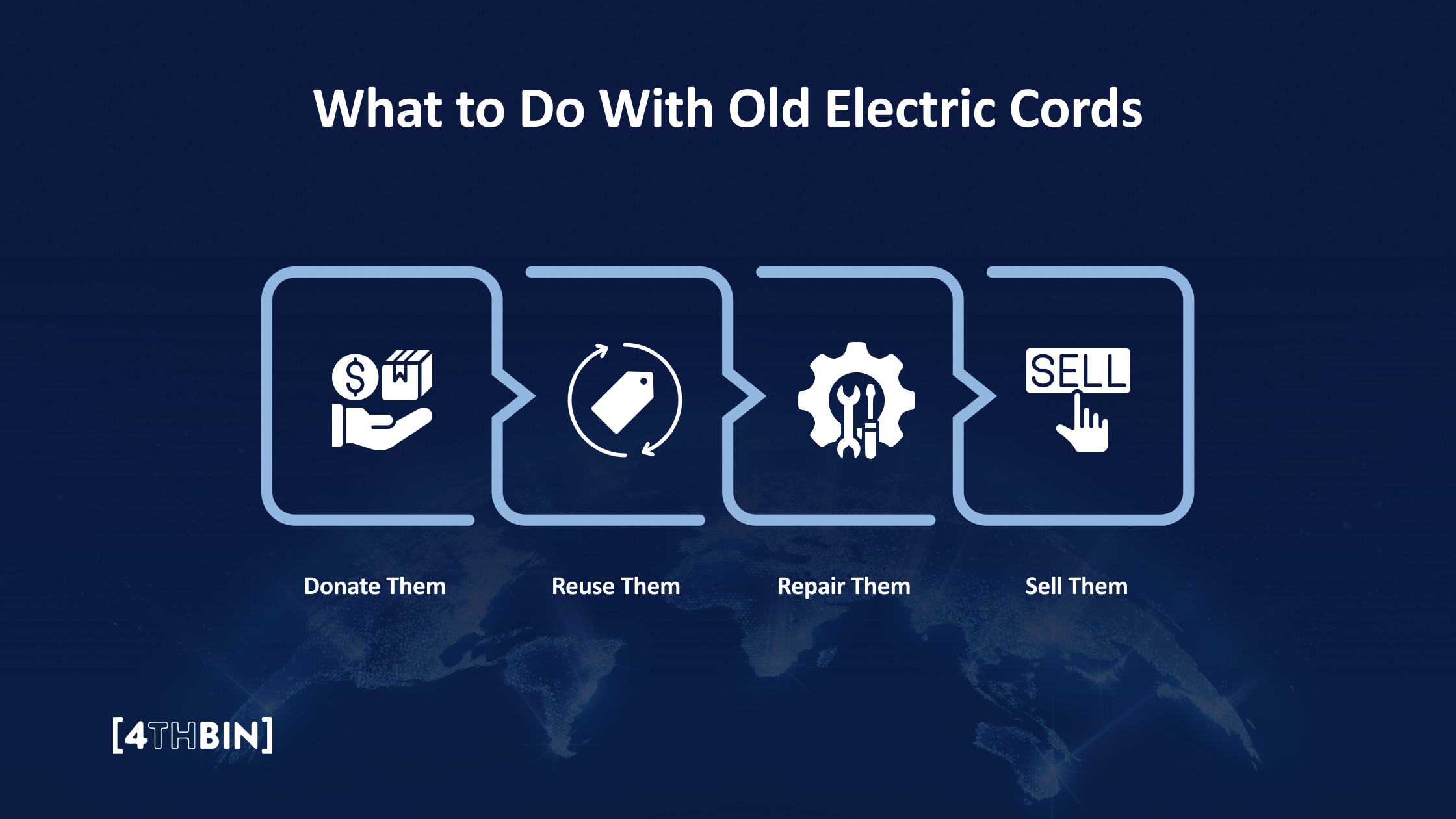
Electrical cords are recyclable, but not through standard municipal recycling bins. Electronics-specific recycling programs are required to properly separate and recover their materials.
Step 1: If It’s Safe and Functional then Reuse It
If a cord:
- Has no fraying or exposed wiring
- Does not overheat
- Maintains stable connectivity
- Matches current device voltage and amperage
Then keeping it as a backup may extend its useful life and prevent unnecessary replacement purchases.
Extension cords and power cables often remain usable for many years if properly stored.
Step 2: If It Works but You Don’t Need It the Donate It
Functional cords can often be donated to:
- Schools
- Community centers
- Nonprofit refurbishers
- Local tool libraries
- Electronics repair collectives
Before donating:
- Inspect for insulation damage
- Ensure connectors are intact
- Avoid donating proprietary or obsolete formats unless requested
Only donate items that are safe and fully functional.
Step 3: If It’s Damaged or Outdated then Recycle It
Cords that show:
- Fraying
- Overheating
- Exposed wiring
- Connector damage
- Compatibility obsolescence
Should be routed to electronics recycling programs. Recycling allows recovery of copper and other materials while preventing unsafe reuse.
Step 4: Avoid Unsafe DIY Disposal
Do not:
- Burn wires to extract copper
- Place cords in curbside recycling bins
- Discard large quantities in household trash
- Attempt unsafe repairs involving exposed conductors
Improper handling can create injury risks and environmental harm.
Quick Decision Guide
| Conditions | Best Option |
| Fully functional | Reuse |
| Working but unused | Donate |
| Damaged or frayed | Recycle |
| Contains electronics (dock/hub) | Verify data Handling before recycling |
How to Dispose of Electric Cords Safely
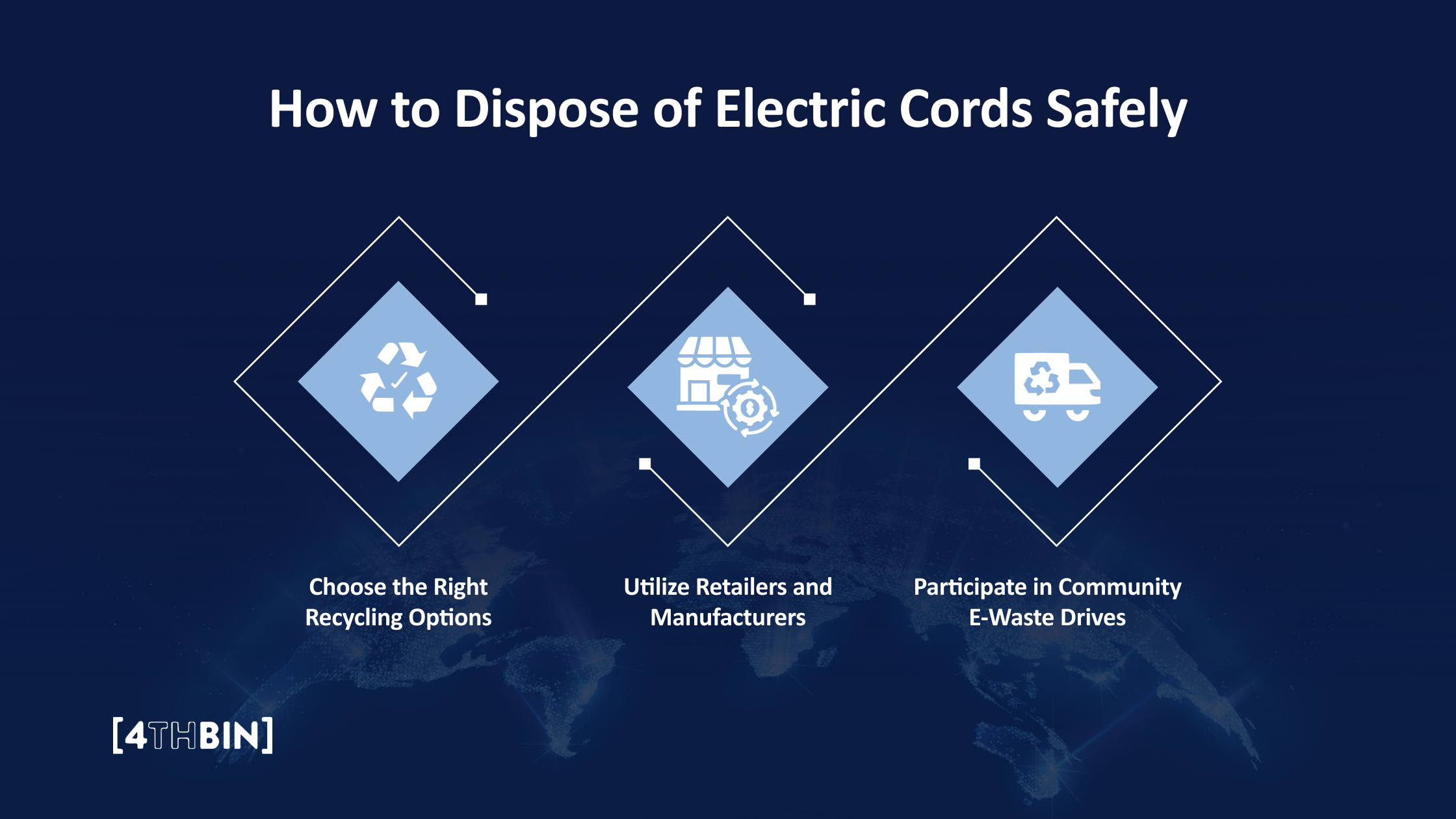
Electric cords might seem like small, inconsequential items, but they can have a significant environmental impact if not disposed of responsibly. Here’s how to ensure electric cords are disposed of safely and recycled effectively:
Choose the Right Recycling Options
Finding e-waste recycling facilities or programs that accept electric cords is the first step in disposing of them. These outlets specialize in safely processing cords to recover valuable materials like copper, plastic, and aluminum while ensuring that non-recyclable elements are handled responsibly.
Many local recycling centers and municipal recycling programs now accept electric cords as part of their e-waste initiatives. Check with your city or town’s waste management department to locate a nearby center. Some centers may have specific guidelines, such as separating cords by type or removing connectors, so confirming the requirements is essential before dropping off your cords.
Specialized e-waste recycling programs handle electric cords, cables, and chargers. These facilities use innovative recycling technologies to separate valuable materials, such as copper and aluminum, from the cords, which can be repurposed for new products.
To ensure the highest environmental and ethical standards, opt for certified e-waste recyclers, such as those with R2v3 (Responsible Recycling) certification. These certified services follow strict guidelines for data security, material recovery, and environmentally responsible recycling practices.
Moreover, E-waste programs often operate on a larger scale and may offer additional drop-off or pick-up services.
Utilize Retailers and Manufacturers
Retailers and manufacturers play a significant role in making e-waste recycling accessible. Many have implemented take-back programs specifically for small electronics, including cords.
Electronics retailers like Best Buy and Staples often offer convenient, in-store e-waste recycling bins. These programs allow customers to drop off cords and cables for free or a nominal fee. This is an easy and reliable option for recycling cords, especially if you’re already shopping there.
Brands such as Apple, Dell, and HP have established recycling initiatives to take back their products, including cords and chargers. Many programs allow you to mail in your cords or drop them off at specific locations. Check the manufacturer’s website for details on how to participate.
Participate in Community E-Waste Drives
Local communities frequently organize e-waste collection events where you can drop off old cords alongside other electronics like laptops and phones. These events are usually seasonal or one-time efforts, making them an excellent opportunity to simultaneously clear out multiple electronic items. Monitor local announcements, community websites, or social media groups to stay informed about upcoming drives.
How to Prepare Electric Cords for Recycling
Properly preparing your electric cords for recycling makes the process more efficient for recycling facilities. Here is how you can prepare:
- Clean and Inspect Cords: Wipe down cords to remove dirt, dust, or residue. This ensures they’re clean and ready for processing. Inspect cords for damage. If they’re still functional, consider donating or reusing them instead of recycling them.
- Untangle and Organize: Untangle cords to make them easier to handle. Jumbled wires can slow down processing at recycling facilities. Group similar types of cords together, such as USB cables, power cords, or extension cords, to simplify sorting.
- Remove Non-Recyclable Parts: Detach non-recyclable components, such as rubber straps, zip ties, or connectors. Some recycling facilities may not process these parts. Check if your local facility accepts cords with adapters or bulky connectors or if they need to be handled separately.
- Bundle Cords Neatly: Coil cords individually and secure them with a twist tie or rubber band. This prevents them from getting tangled during transport or at the recycling facility. Group cords together in labeled bags or boxes for larger quantities, indicating the type of cords inside.
Recycling electric cords responsibly requires effort, but the impact is worth it. Every step you take contributes to reducing e-waste and preserving the environment for future generations!
Declutter Your Space by Recycling Old Cords with 4THBIN
Are you worried that your old electric cords take up unnecessary space in your drawers? With 4THBIN ’s e-recycling solutions, you can ensure secure, compliant, and environmentally responsible disposal of old chargers and cables.
With over a decade of experience, 4THBIN has partnered with more than 10,000 organizations, including Fortune 100 companies and small businesses, to transform e-waste challenges into opportunities.
Our certified data destruction services ensure that sensitive information is completely safeguarded, eliminating the risks of data recovery associated with improper disposal. From secure RemoteReturn mail-in options to convenient on-site collection, our customizable solutions allow you to choose the plan that best suits your needs.
Don’t let old cables collect dust.
Contact Us
Frequently Asked Questions
1. Can I put old electrical cords in my curbside recycling bin?
In most areas, no. Electrical cords are considered electronic accessories and are typically not accepted in standard curbside recycling programs. Their mixed materials (metal cores, plastic insulation, connectors) can interfere with sorting equipment at municipal recycling facilities.
Instead, use an electronics-specific recycling program, a certified e-waste recycler, or a designated drop-off event. Always check your local waste authority’s website for current guidance.
2. Are electrical cords considered hazardous waste?
Electrical cords themselves are not typically classified as household hazardous waste, but they are part of the broader electronic waste stream.
They contain recoverable metals such as copper and aluminum, along with plastics that require specialized processing. Recycling through electronics programs ensures proper material separation and recovery.
3. Can I donate old electrical cords?
Yes, but only if they are:
- Fully functional
- Free of fraying or exposed wires
- Not overheating
- Compatible with active devices
Schools, nonprofit refurbishers, and community repair groups may accept safe, working cords. Damaged or unsafe cords should not be donated and should instead be recycled.
4. Is it safe to strip copper from cords at home?
No. Burning or cutting cords to remove copper is unsafe and environmentally harmful.
Improper stripping can:
- Release toxic fumes
- Create fire hazards
- Cause injury
- Violate local waste regulations
Certified recycling facilities use industrial mechanical separation equipment designed to safely recover metals without harmful emissions.
5. How do I choose a responsible recycling provider for electrical cords?
Look for recyclers that can provide:
- Recognized certifications (such as R2v3 or e-Stewards)
- Clear downstream material handling policies
- Designated electronics recycling channels
- Drop-off or collection options appropriate for your needs
If you are recycling accessories that contain electronics (such as docking stations or powered hubs), ask whether separate handling procedures are required.