The Importance of Proper E-Waste Recycling

Did you know that about 53.6 million metric tons of e-waste was generated worldwide in 2019? This figure is equivalent to the weight of 350 cruise ships worth of electronic products. Yes, you read that right. That’s not all; this figure is expected to exceed 74 million metric tons by 2030.
But what is more alarming is that, out of the 53.6 million metric tons of e-waste, only about 17.4% was recycled! The disposed waste was valued at nearly 57 billion U.S. dollars, more significant than most countries’ GDP.
With the value of e-waste so high, it only makes sense for businesses to harness the potential of e-waste recycling. However, economic gain is not the benefit of recycling e-waste. This blog will explore e-waste, its types, how businesses can manage their e-waste disposal, and the importance of e-waste recycling.
What is E-Waste?
Electronic waste, commonly known as e-waste, refers to electrical or electronic devices that have reached the end of their life cycle, have become obsolete, yield no value, and are no longer applicable. Old, used electronics discarded for refurbishment, reuse, resale, recycling, or disposal are also considered e-waste.
Types of E-Waste

Managing e-waste involves understanding the various electronic and electrical equipment types that accumulate in commercial environments. Here are the different kinds of e-waste generated by businesses:
Office Electronics
This category includes computers, laptops, printers, scanners, and copiers—essential tools for daily operations in any office setting. Frequent upgrades and the need for the latest technology lead to the rapid turnover of these devices, resulting in substantial e-waste.
Telecommunication Equipment
Businesses often rely on extensive telecommunication systems, including servers, routers, telephones, and communication hubs. As companies upgrade their IT infrastructure or expand their operations, older telecommunication devices become redundant, contributing significantly to e-waste.
Commercial & Industrial Equipment
This broad category encompasses specialized tools and machinery used in various industries, such as manufacturing equipment, testing devices, and large-scale printers. These items are often bulky and contain hazardous materials and valuable metals.
Medical Devices
Hospitals and healthcare providers use various electronic devices, from imaging machines to patient monitoring systems. As medical technology advances, older models are frequently replaced, creating a specific stream of e-waste that requires careful disposal due to potential contamination and the devices’ complexity.
Retail & Payment Devices
Electronic point-of-sale systems, ATMs, and card readers are widespread in retail. These devices are subject to security upgrades and technological advancements, leading to periodic replacement and disposal.
Data Storage Devices
Businesses generate large amounts of data and use numerous storage devices, including hard drives, SSDs, and backup tapes. Data security concerns often necessitate the complete destruction of these storage devices, contributing to e-waste.
Commercial buildings and facilities use various lighting solutions, including fluorescent and LED lights, which must be replaced over time due to wear or to improve energy efficiency.
Understanding these categories helps businesses implement effective waste management and recycling strategies tailored to their specific e-waste types. Let us now explore the importance of proper e-waste recycling.
Why is E-Waste Recycling Important?
Proper e-waste recycling is not merely a compliance requirement but a crucial responsibility that presents multiple benefits for businesses, society, and the environment. Here are a few reasons why e-waste recycling is essential and why firms must invest in it:
- Environmental Protection
E-waste accounts for 70% of toxic waste in the USA. Electronic devices contain hazardous substances like lead, mercury, cadmium, and arsenic, which can leach into the soil and waterways, causing significant environmental damage. Proper recycling ensures these harmful elements are safely managed and neutralized, preventing pollution and protecting wildlife and ecosystems from exposure to toxins.
- Preservation of Resources
According to the EPA, for every million of those cell phones that are recycled, the following can be recovered:
- 35,000 pounds of copper
- 772 pounds of silver
- 75 pounds of gold
- 33 pounds of palladium
E-waste recycling conserves limited natural resources by recovering valuable materials such as gold, silver, and rare earth metals from old electronics. This recovery process is much less resource-intensive than mining raw materials from the earth, reducing the environmental degradation associated with mining processes like deforestation, soil erosion, and habitat destruction. Furthermore, it ensures that these finite resources are reused in new products, promoting a more sustainable cycle of consumption and production.
- Creation of Job Opportunities
A recent report revealed that if 100 percent of the e-waste were recycled each year, we could recover 78 million pounds of valuable materials and create over 1,700 job opportunities! E-waste recycling is a labor-intensive process that involves collecting, sorting, and processing electronic waste.
By investing in e-waste recycling programs, businesses can stimulate local economies through job creation. These jobs not only provide employment but also often require skill development, offering workers valuable training in the growing field of waste management and recycling.
- Reduction of Greenhouse Gases
Manufacturing new electronic products from scratch is highly energy-intensive and contributes to significant carbon emissions. Just one computer and monitor require 530 pounds of fossil fuel, 48 pounds of chemicals, and 1.5 tons of water.
In contrast, using recycled materials from e-waste significantly reduces energy consumption, reducing greenhouse gas emissions. This reduction is vital for combating climate change and achieving global targets for reducing carbon footprints.
- Economic Opportunities
Recycling e-waste opens up diverse economic opportunities by providing secondary raw materials at a lower cost than freshly mined resources. This affordability can lower production costs for manufacturers who rely on these materials, encouraging more businesses to choose recycled over new.
Additionally, the growth of the recycling sector facilitates a circular economy, where products are made to be remade, thus perpetuating economic activity without additional resource extraction.
- Prevention of Security Risks
In 2023, over 353 million individuals were affected by data compromises, including breaches, leakage, and exposure. Discarded electronic devices often contain sensitive data, posing significant security risks if disposed of improperly.
Through secure data destruction processes integrated into e-waste recycling, businesses can ensure that confidential information is safely destroyed, protecting them from data breaches and identity theft. It also safeguards business reputation by complying with data protection regulations.
Proper e-waste recycling is essential for protecting the environment, conserving resources, and providing economic benefits. By recognizing these outcomes, businesses can adopt sustainable practices that positively impact the planet and future generations.
How Can Your Business Manage Its E-Waste Disposal & Recycling?
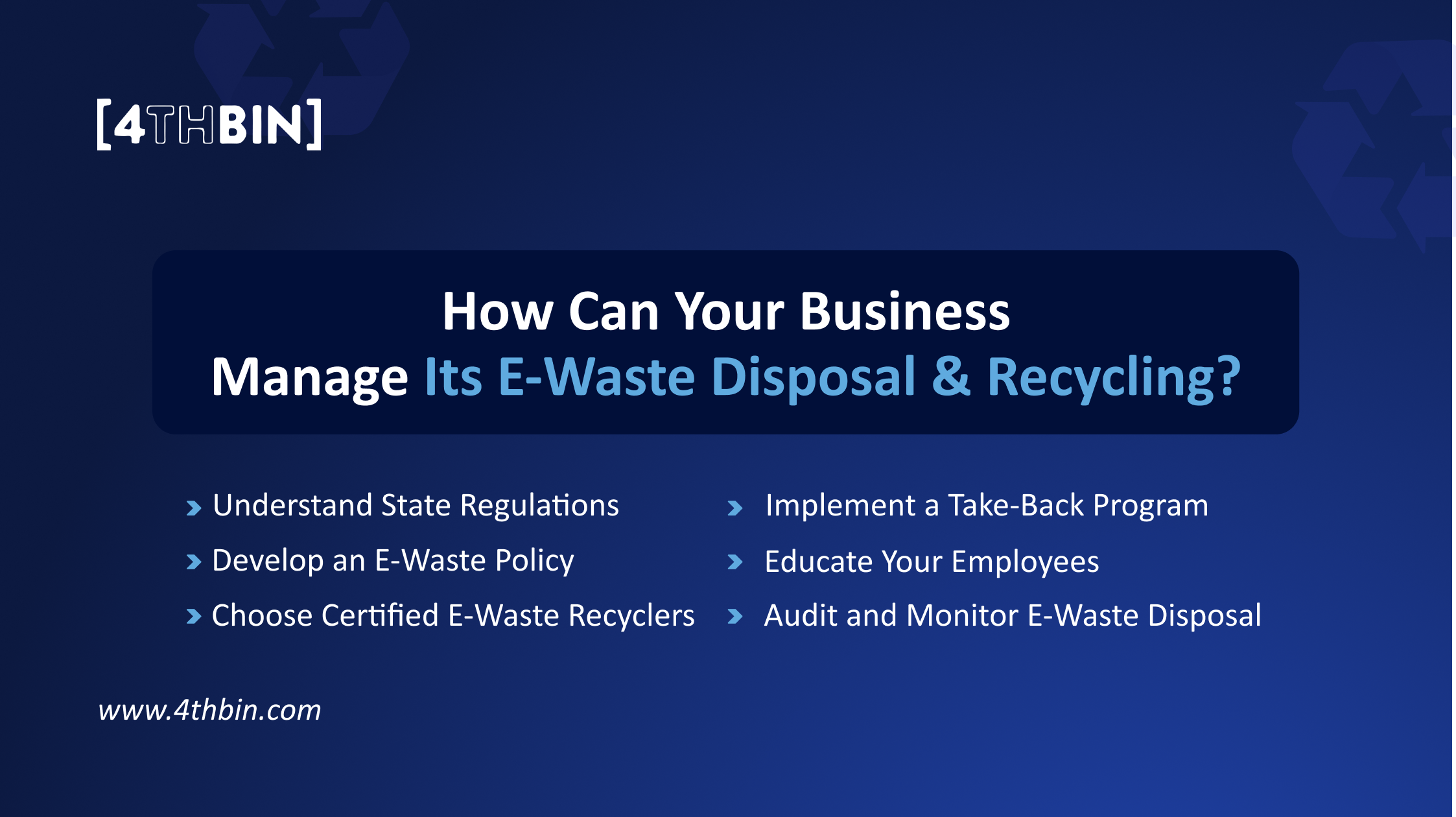
Effectively managing e-waste is crucial for businesses to protect the environment and comply with U.S. e-waste regulations. Here are strategies your business can adopt to ensure responsible e-waste disposal:
Understand State Regulations
When disposing or recycling your business’s e-waste, you must consider the Resource Conservation and Recovery Act (RCRA). Depending on its chemical composition, this act may categorize some e-waste as hazardous waste.
Additionally, states often have additional rules and programs, which can be more stringent than federal regulations. For example, states like California, New York, and Minnesota have specific e-waste recycling laws. Businesses should familiarize themselves with federal and applicable state regulations to ensure compliance.
Develop an E-Waste Policy
Creating a comprehensive e-waste management policy is a proactive step towards sustainability. This policy should outline procedures for properly handling and disposing of electronic devices, from procurement to disposal. It should also incorporate practices that encourage reducing, reusing, and recycling electronic materials.
Choose Certified E-Waste Recyclers
To ensure environmentally sound e-waste management, businesses must choose to partner with recyclers certified in under-recognized programs defined by the EPA. These certifications ensure that the recycler meets specific standards in managing e-waste, protecting worker safety, and preventing environmental contamination.
Implement a Take-Back Program
Many manufacturers offer take-back programs for their electronic products at the end of their useful life. Participating in these programs can be an effective way for businesses to dispose of outdated electronics responsibly. These programs often ensure the devices are appropriately recycled, refurbished, and resold.
Educate Your Employees
Educating employees about the importance of e-waste recycling and the correct disposal procedures can significantly improve compliance and reduce risks associated with improper handling. Regular training sessions and clear communication of the e-waste policy can foster a culture of environmental responsibility within the organization.
Audit and Monitor E-Waste Disposal
Regular audits of e-waste disposal practices help ensure the business complies with its internal policies and external regulatory requirements. Monitoring the flow of e-waste can also help identify opportunities to reduce waste or improve recycling processes.
By adopting these strategies, businesses can manage their e-waste more effectively, ensuring compliance with U.S. regulations and contributing to environmental sustainability. They can also opt for certified e-waste recycling companies such as 4THBIN to ensure safe and secure e-waste disposal and recycling processes, ultimately leading to a stress-free waste disposal process!
Reduce, Reuse, and Recycle Your E-Waste with 4THBIN!

Is your organization struggling to recycle its electronic waste? 4THBIN to the rescue! With over a decade of experience, 4THBIN is a certified and secure e-recycling solution provider to over 10,000 businesses – from Fortune 100 companies to start-ups across the United States.
We support a full range of e-waste, from desktops to data centers, and we do it securely and sustainably. Additionally, we offer RemoteReturn, a direct mail-in service, as well as on-site collection service.
We believe that no data should be left behind! Backed by our data security expertise, we provide certified data destruction support to today’s top industries. We also help your business deliver on its corporate social responsibility commitments by ensuring its e-waste is securely and sustainably recycled.
Ensure Responsible E-Waste Recycling and Disposal Today!
Contact Us