Secure Data Destruction: How Businesses Can Protect Sensitive Information in 2026
Data Security Doesn't End When Technology Reaches End-of-Life
Organizations today generate, store, and manage more data than ever before. From employee records and customer information to financial documents and proprietary business data, sensitive information exists across countless devices throughout the workplace.
While many organizations focus heavily on securing active systems and networks, a critical risk often goes overlooked: retired technology assets.
Laptops, desktops, servers, hard drives, mobile devices, and other electronic equipment can continue to store sensitive information long after they are removed from service. Without proper data destruction procedures, these devices can become a significant source of security, compliance, and reputational risk.
As organizations continue to modernize their technology infrastructure in 2026, secure data destruction remains an essential component of both cybersecurity and IT Asset Disposition (ITAD) strategies.
What Is Secure Data Destruction?
Secure data destruction is the process of permanently removing or destroying data stored on electronic devices to ensure it cannot be recovered, accessed, or misused by unauthorized parties.
Contrary to popular belief, simply deleting files or reformatting a hard drive does not permanently remove information. In many cases, data can still be recovered using readily available software tools.
Organizations typically rely on one or more secure destruction methods, including:
Data Sanitization
Data sanitization uses specialized software to overwrite stored information and render it unrecoverable while preserving the functionality of the device.
Physical Destruction
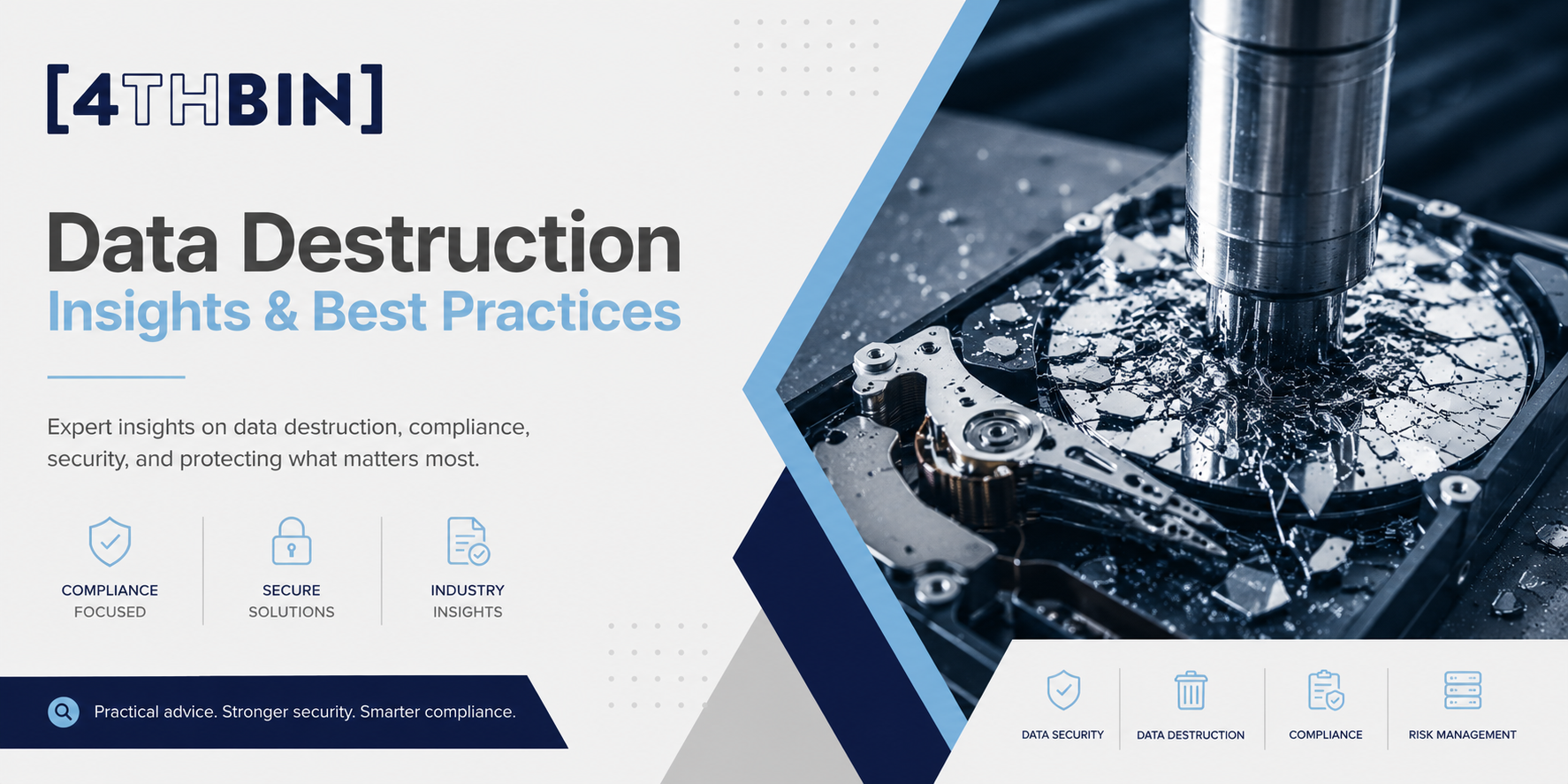
Physical destruction involves shredding, crushing, or otherwise destroying storage media to eliminate any possibility of data recovery.
NIST 800-88 Compliant Data Erasure
Many organizations follow the guidelines outlined in NIST Special Publication 800-88, which provides a framework for secure media sanitization and data disposal.
When implemented correctly, these methods help organizations maintain security, compliance, and accountability throughout the technology lifecycle.
Why Secure Data Destruction Matters More Than Ever
Cybersecurity conversations often focus on phishing attacks, ransomware, and network security. However, retired technology assets remain one of the most overlooked vulnerabilities within many organizations.
Every retired hard drive, server, laptop, and storage device may contain years of confidential business information. If those assets are improperly stored, discarded, or recycled without secure data destruction, organizations risk exposing sensitive information long after the equipment is no longer in use.
Potential consequences include:
- Data breaches
- Regulatory penalties
- Compliance violations
- Reputational damage
- Loss of customer trust
- Intellectual property exposure
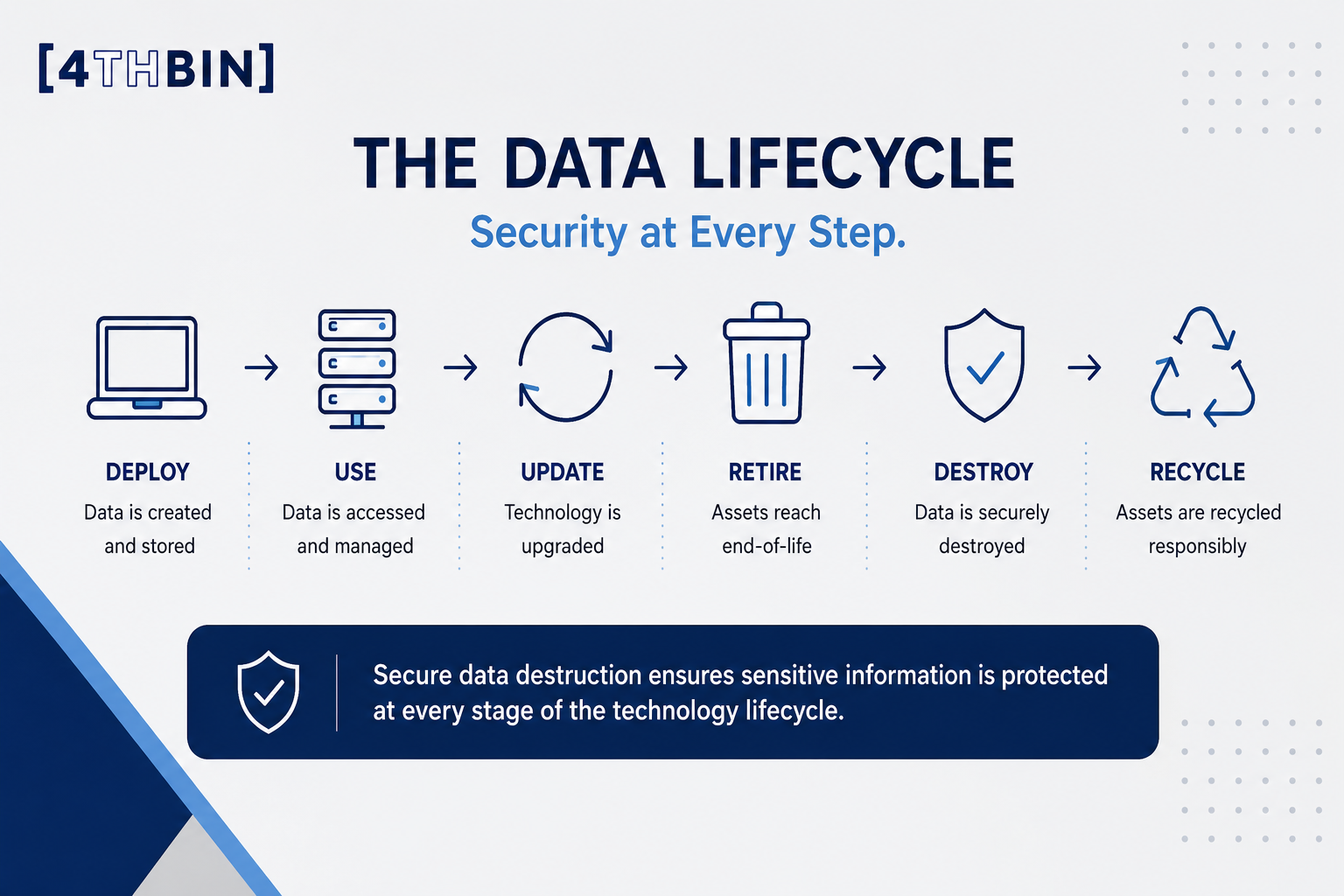
Proper data destruction helps eliminate these risks while ensuring organizations maintain control over sensitive information from deployment through final disposition.
Data Destruction and IT Asset Disposition Go Hand-in-Hand
Secure data destruction is not a standalone process. It is a critical component of a broader IT Asset Disposition (ITAD) strategy.
When technology reaches the end of its useful life, organizations must determine how assets will be securely managed, whether equipment can be redeployed or remarketed, and how sensitive information will be permanently removed before assets leave their control.
An effective ITAD program helps organizations:
- Maintain chain of custody
- Protect sensitive information
- Meet compliance requirements
- Maximize asset value recovery
- Support sustainability initiatives
- Reduce environmental impact
By integrating secure data destruction into a comprehensive ITAD strategy, businesses can reduce risk while improving operational efficiency and accountability.
Compliance Considerations for Modern Organizations
Many industries face strict requirements regarding the protection and disposal of sensitive information.
Organizations operating in healthcare, finance, education, legal services, government, and other regulated industries often must demonstrate that data has been securely destroyed when devices are retired.
Depending on the organization, compliance considerations may include:
- HIPAA
- PCI DSS
- GDPR
- State privacy regulations
- Corporate governance requirements
- Industry-specific data retention policies
A documented data destruction process helps organizations maintain compliance while providing the records and reporting necessary for audits and regulatory reviews.
Common Data Destruction Mistakes Businesses Still Make
Despite growing awareness around cybersecurity, many organizations continue to make avoidable mistakes when retiring technology assets.
Assuming Deleted Data Is Gone
Deleting files or emptying a recycle bin does not permanently remove information from a storage device.
Holding Onto Retired Equipment
Unused devices often sit in storage rooms, closets, and warehouses for months or even years while still containing sensitive information.
Lacking a Documented Process
Without clear procedures, organizations may struggle to maintain accountability, chain of custody, or compliance documentation.
Choosing Unverified Vendors
Not all electronics recyclers or disposal providers follow secure data destruction standards. Organizations should work with certified providers that offer transparent processes and documented results.
Data Security and Sustainability Can Work Together
Organizations no longer need to choose between protecting sensitive information and supporting sustainability goals.
A modern data destruction strategy should include environmentally responsible downstream management for retired technology assets.
Responsible electronics recycling helps organizations:
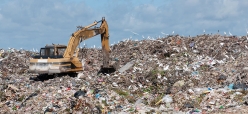
- Reduce landfill waste
- Support circular economy initiatives
- Minimize environmental impact
- Meet corporate sustainability goals
- Ensure hazardous materials are properly managed
When secure data destruction and responsible recycling are combined, organizations can protect sensitive information while making meaningful progress toward their environmental objectives.
Why Organizations Trust 4THBIN
Secure data destruction requires more than simply destroying a hard drive. It requires documented processes, secure logistics, complete chain of custody, industry certifications, and environmentally responsible downstream management.
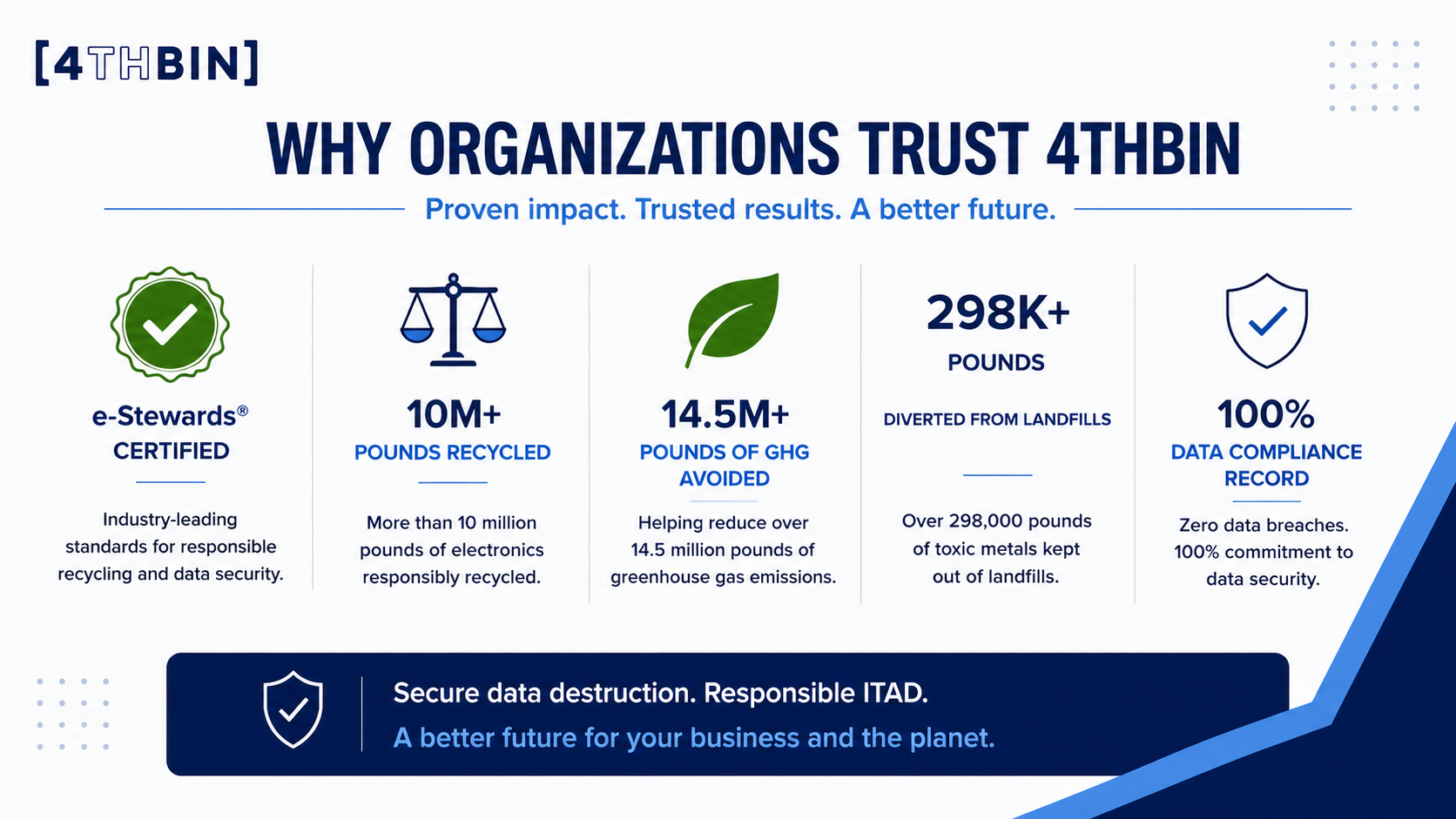
As the first company in New York City to be certified by e-Stewards®, 4THBIN adheres to some of the industry's most rigorous environmental and socially responsible standards. Our secure data destruction services help organizations protect sensitive information while ensuring retired technology assets are managed responsibly from pickup through final disposition.
Whether organizations require on-site data destruction, secure transportation, hard drive shredding, data sanitization, or full IT asset disposition support, 4THBIN delivers secure, compliant, and transparent solutions backed by industry-leading certifications.
To date, 4THBIN has helped organizations recycle more than 10 million pounds of electronics, helping reduce over 14.5 million pounds of greenhouse gas emissions and divert more than 298,000 pounds of toxic metals from landfills.
Protect your data. Protect your business. Recycle responsibly. Contact 4THBIN today.