Silver Key Program: Silver Recovery for Environmental Compliance

Centuries ago, silver was prized for its beauty and crafted into coins, jewelry, and treasured heirlooms.
The first significant silver mining and craftsmanship centers were in Turkey and Greece, where skilled silversmiths produced beautiful artifacts over 5,000 years ago. From 800 B.C., silver was traded throughout Asia and North Africa, and as early as 700 B.C., merchants in Mesopotamia were using silver as a form of exchange.
But today, silver’s use is not limited to jewelry and artifacts. In fact, this versatile metal has found its way into our everyday lives in ways that might surprise you. So much so that global industrial demand has hit a record high of 445.1 million ounces.
From the smartphones in our hands to the solar panels powering our homes, silver’s unique properties make it indispensable. As silver’s importance in modern technology and healthcare continues to grow, so does the need for its responsible recycling.
In this blog, we will walk you through the industrial uses of silver, the environmental compliance of silver recycling, why silver recovery is essential, and a step-by-step process of silver recovery.
What Are the Industrial Uses of Silver?

Silver has many industrial uses, accounting for over half of annual demand worldwide over the last five years. Here’s a closer look at some of the critical industrial uses of silver:
Electronics
Silver’s excellent electrical conductivity makes it a critical material in the electronics industry. It is widely used in manufacturing printed circuit boards, conductors, and connectors, where reliable performance is essential.
It is also found in crucial components like switches, relays, and contacts, which require high conductivity and durability. As electronic devices become more sophisticated and compact, the demand for silver in this sector continues to grow.
Solar Panels
The solar energy industry relies heavily on silver, particularly in producing photovoltaic (PV) cells used in solar panels. Silver paste is applied to the cells to conduct electricity generated from sunlight. The demand for solar panels and silver has surged as the world shifts towards renewable energy sources.
Medical Equipment
Silver’s antimicrobial properties make it invaluable in the medical field. It is used in wound dressings, catheters, and other medical devices to prevent infections and promote healing. Additionally, silver nanoparticles are incorporated into various healthcare products, including coatings for surgical instruments and implants.
Photography
Although digital photography has reduced the demand for traditional photographic film, silver halide is still used in specialized applications such as X-ray imaging and high-quality film production. In these processes, silver is essential for capturing clear, detailed images. Even with the decline in consumer film use, the photographic industry remains a significant consumer of silver.
Water Purification
Silver’s ability to kill bacteria and other pathogens has led to its use in water purification systems. Silver ions are used in filters and water treatment systems to ensure the safety and cleanliness of drinking water. This application is critical in areas where access to clean water is limited, highlighting silver’s role in public health and safety.
Environmental Compliance on Silver Waste Recycling
The management and disposal of silver-containing waste are governed by specific environmental regulations designed to protect public health and the environment. Here are a few environmental compliance and regulations businesses must adhere to when disposing and recycling their silver in the US:
Resource Conservation and Recovery Act (RCRA)
The Resource Conservation and Recovery Act (RCRA) is the primary federal law governing hazardous waste disposal in the United States, including silver-containing waste. The RCRA outlines strict guidelines for treating, storing, and disposing of hazardous materials to prevent environmental contamination.
Under the RCRA, silver waste is classified as hazardous if it exhibits specific characteristics, such as toxicity. Businesses that generate silver waste must manage it according to the RCRA’s hazardous waste regulations, which include proper labeling, storage, and transportation procedures.
Clean Water Act (CWA)
The Clean Water Act (CWA) regulates the discharge of pollutants, including silver, into the waters of the United States. Under the CWA, industries that produce silver waste must ensure that their waste management practices do not result in the contamination of water bodies.
The CWA requires businesses to obtain permits for any discharge of silver into water sources and to meet specific effluent guidelines. These are national standards for industrial waste management. They mandate particular regulations for each industry, from electronics and electronic components to pharmaceutical manufacturing, to help prevent the harmful effects of silver on aquatic life and water quality, ensuring that silver waste is treated before it reaches natural water bodies.
Why Is Silver Recovery Important?
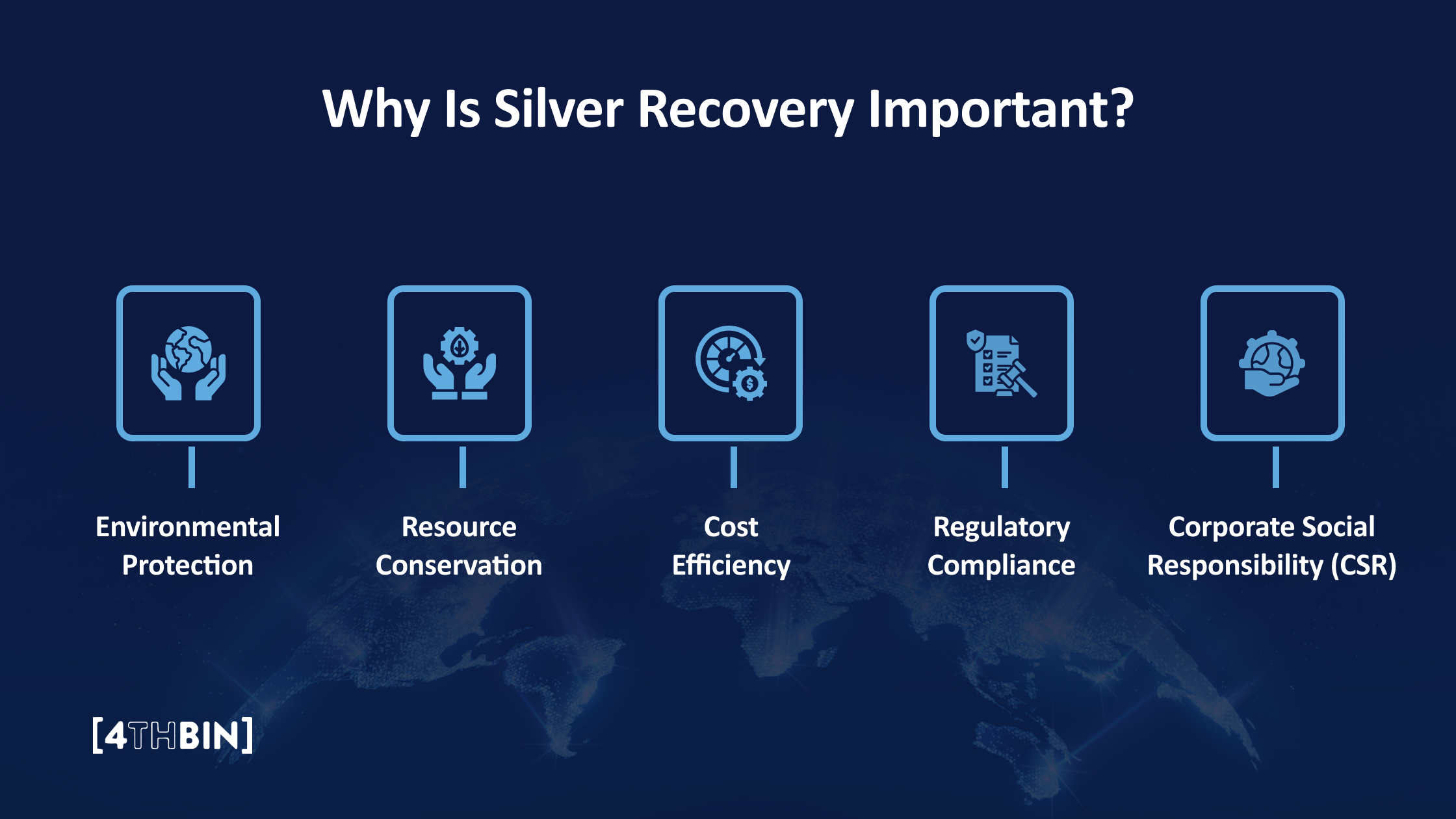
Silver is more than just a precious metal; it’s an essential resource in various industries, from healthcare to electronics. However, its value extends beyond its monetary worth. Here are a few reasons why silver recovery is crucial:
Environmental Protection
Improper disposal of silver-containing waste can lead to serious environmental hazards. Silver, particularly in its ionic form, is toxic to aquatic life and can contaminate water sources if not managed correctly. Silver recovery from waste can prevent pollution and reduce the environmental footprint of industries that rely on this metal. This is crucial in promoting sustainability and protecting our ecosystems for future generations.
Resource Conservation
Statistics reveal that the global demand for silver will rise to 1.2 billion ounces in 2024 across various sectors, including renewable energy, medical devices, and electronics. Silver recovery allows us to recycle this valuable material, reducing the need for new mining operations, which can be environmentally damaging. With proper silver recovery, we can ensure that this critical and finite resource remains available for essential applications without further depletion of natural reserves.
Cost Efficiency
Silver recovery isn’t just an environmental responsibility for many businesses, especially those in photography, healthcare, and electronics manufacturing—it’s also a wise financial decision. Recycling silver can significantly reduce costs associated with purchasing new silver and managing hazardous waste disposal. Companies can repurpose their silver waste into a valuable asset, contributing positively to their bottom line.
Regulatory Compliance
In many regions, strict environmental regulations govern the disposal of silver-containing waste. Non-compliance can lead to hefty fines, legal repercussions, and damage to a company’s reputation. Implementing a silver recovery program helps businesses stay compliant with these regulations, avoid potential penalties, and demonstrate their commitment to environmental stewardship.
Corporate Social Responsibility (CSR)
In today’s corporate environments, consumers and stakeholders are increasingly concerned with how companies impact the environment. Silver recovery programs allow businesses to showcase their commitment to sustainable practices and responsible resource management. This not only enhances their brand image but also builds trust and loyalty among customers who value environmental responsibility.
Silver Key Program: Step-by-Step Process for Silver Recovery
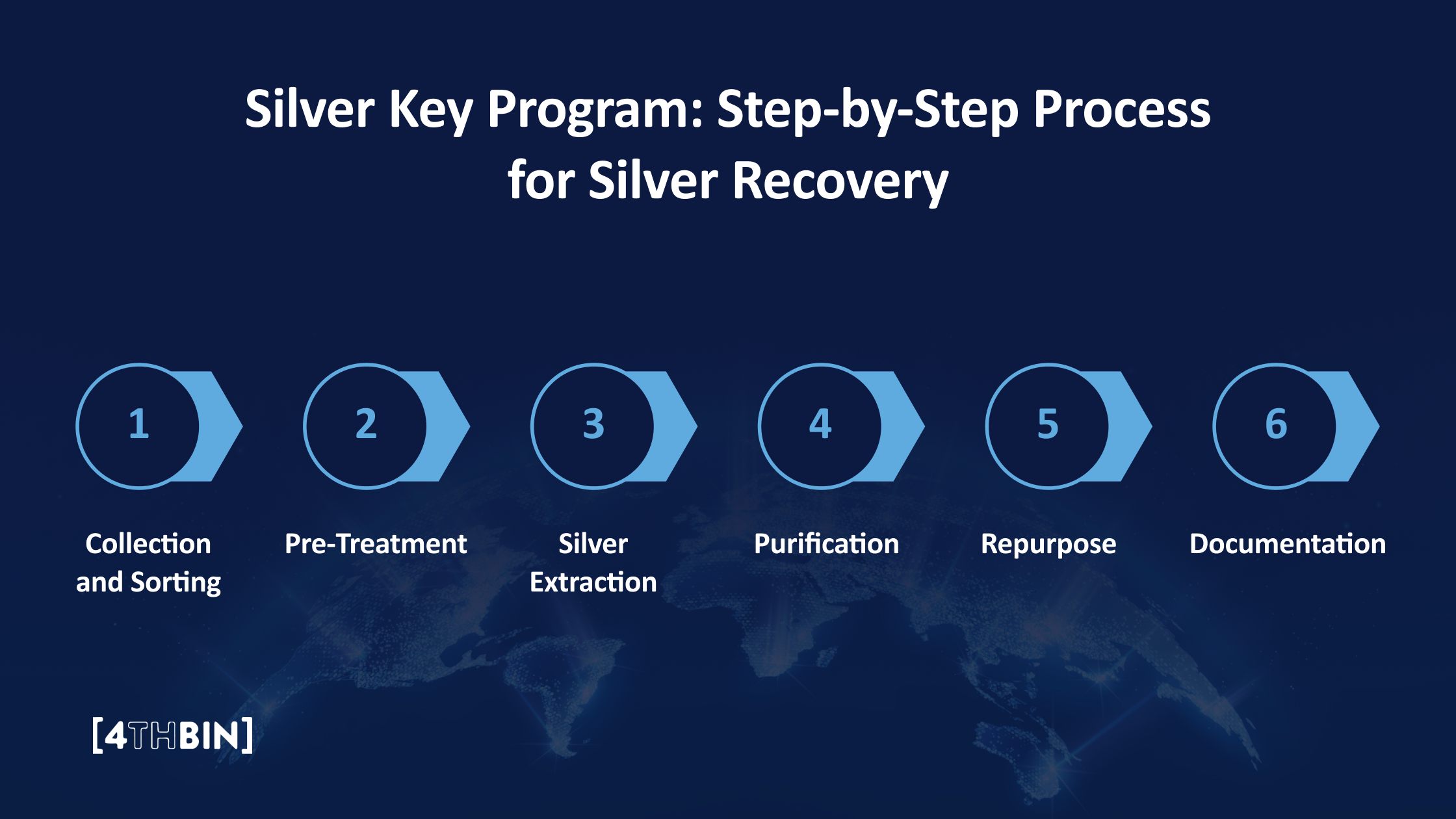
The silver recovery process is crucial for businesses involved in industries like photography, electronics, and healthcare, where silver is frequently used. Here’s how silver is recovered from various sources:
1. Collection and Sorting
The initial step of silver recovery involves gathering all silver-containing materials. These could include everything from photographic films and papers to electronic components and medical apparatus. The materials are carefully sorted to separate them based on their silver content and the type of recovery suitable for each category.
2. Pre-Treatment
Depending on the source of the silver, pre-treatment may be necessary to prepare the material for recovery. For instance, in the case of photographic waste, the film might need to be washed or treated with chemicals to loosen the silver content. In electronic waste, components might be shredded or chemically treated to separate the silver from other metals and materials.
3. Silver Extraction
Once the material is pre-treated, the next step is to extract the silver. Several methods can be used, depending on the type of waste and the concentration of silver:
- Electrolysis: In this process, the silver-containing solution is subjected to an electric current, causing silver ions to migrate to the cathode, where they are deposited as pure silver. This method is commonly used for photographic and X-ray processing solutions.
- Chemical Precipitation: Chemicals are added to the silver-containing solution to precipitate the silver as a solid, which can then be filtered out. This method is often used in wastewater treatment to recover silver from rinse water or other industrial effluents.
- Smelting and Refining: Smelting may melt down the silver-containing material for electronic waste and other solid materials. The molten metal is refined to separate silver from other impurities, producing high-purity silver.
4. Purification
The silver extracted in the previous step often contains impurities that must be removed to achieve a marketable purity. Refining processes can vary from simple melting and purifying to more complex electrolytic refining, depending on the purity requirements and the scale of operations.
5. Repurpose
Once the silver has been purified, it is collected and formed into a usable product, such as silver bars, granules, or powders, depending on the end-use requirements. The recovered silver is then stored in a secure environment until it is ready to be used or sold.
6. Documentation
Proper documentation of the silver recovery process is essential for compliance with environmental regulations. Businesses must maintain records of the amount of silver recovered, the methods used, and how the recovered silver is stored or disposed of. This documentation ensures transparency and compliance with local, state, and federal regulations regarding hazardous waste management.
Recover and Repurpose Silver with 4THBIN!

Is your organization struggling to recycle its electronic waste? 4THBIN to the rescue! With over a decade of experience, 4THBIN is a certified and secure e-recycling solution provider to over 10,000 businesses – from Fortune 100 companies to start-ups across the United States.
We believe that no data should be left behind! Backed by our data security expertise, we provide certified data destruction support to today’s top industries.
Our new Silver Key Program is a game-changer. Some medical procedures, like film washing, create wastewater containing traces of silver, which can’t go into the sewage system without proper filtration.
Our program provides special canisters that filter the silver out of the water. This ensures compliance with environmental regulations and promotes sustainability by recovering precious metals. It’s a win-win for your business’s bottom line and the planet!
We also help your business meet its corporate social responsibility commitments by ensuring that its e-waste is securely and sustainably recycled.
Ensure Responsible Silver Recycling Today!
Contact Us