How to Adopt Sustainable Tech for a Greener Workplace

Green tech is no longer a niche. For many companies, it is becoming a baseline expectation as ESG reporting becomes prevalent and procurement teams are expected to show measurable reductions in waste and emissions.
That shift is supported by challenging facts. Global e-waste reached 62 million tonnes in 2022, and only 22.3% was documented as properly collected and recycled. Technology also carries a significant impression at scale. The ICT sector is estimated to account for about 1.4% of global greenhouse gas emissions and about 4% of global electricity.
For end-user devices, much of the impact is front-loaded in manufacturing, which is why short refresh cycles add up quickly.
In this context, sustainable tech gadgets and Green Gadgets reflect a broader change in how technology is designed, sourced, used, and retired. For companies, this is not just about buying eco-friendly devices. It is about building a lower-impact technology lifecycle that supports ESG goals, reduces avoidable replacement costs, and improves risk control across procurement, IT operations, and end-of-life handling.
In this blog, we’ll show how companies can embrace sustainable tech gadgets and how 4THBIN helps extend, recover, and retire devices responsibly to support ESG goals and reduce risk.
What “Sustainable Tech” Really Means
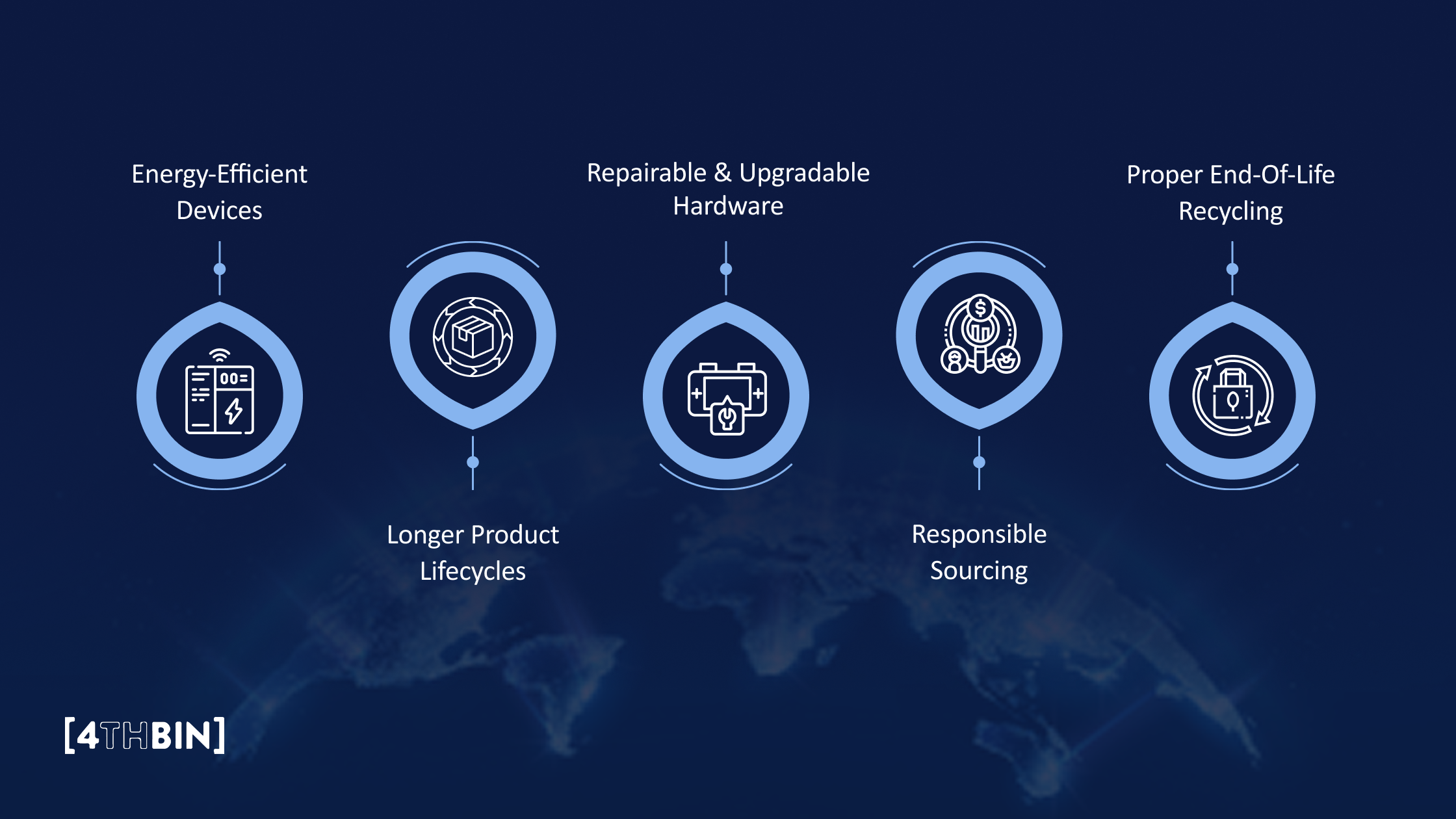
Sustainable tech or green tech is not about one green label or one recycled part. It is about how a device is designed, used, and retired across its entire life. A truly sustainable gadget delivers value while keeping its environmental footprint as low as possible at every stage. That usually comes down to the following:
Energy-Efficient Devices
Sustainable tech uses less power to do the same job. This shows up in everyday workplace tools like energy-efficient laptops and monitors, modern network equipment, and LED lighting systems that deliver the same performance while using far less electricity.
Smart tools push this even further. Smart thermostats adjust heating and cooling based on occupancy, while smart lighting systems automatically dim or turn off lights when rooms are empty or when daylight is sufficient. Smart power strips and wireless charging pads with auto shutoff cut “vampire energy” from devices that would otherwise draw power even when not in use.
For businesses operating offices, data rooms, and campuses, these energy-efficient gadgets quietly reduce emissions and utility bills year after year.
Longer Product Lifecycles
The greenest device is the one you do not replace too soon. Sustainable tech is built to last longer, which is especially important for frequently replaced items like laptops, monitors, keyboards, and mice.
Choosing durable, upgrade-friendly models means fewer refresh cycles and fewer devices sent into storage or waste streams. That matters because most of a device’s carbon footprint is generated during manufacturing, not during use.
Repairable & Upgradable Hardware
When devices can be repaired or upgraded, they stay in use instead of becoming waste. Sustainable tech favors hardware that allows batteries, storage, or screens to be replaced rather than forcing full device replacements.
This applies to everything from business laptops and monitors to network equipment and even peripherals like keyboards and mice. The easier it is to fix or upgrade, the longer a device can remain productive and out of the waste stream.
Responsible Sourcing
Green gadgets increasingly use recycled, renewable, or low-impact materials. That includes eco-friendly keyboards and mice made from recycled plastics or bamboo, phone cases made from compostable bioplastics, and hardware enclosures made from recycled aluminum or post-consumer plastics.
Responsible sourcing reduces demand for new mining and petroleum-based plastics, cutting both environmental damage and embedded carbon before the device ever reaches a desk.
Proper End-Of-Life Recycling
A device is truly sustainable only if it can be handled safely when retired. That means being reused, refurbished, or recycled through responsible channels that recover valuable materials and keep hazardous substances out of landfills.
This applies not just to computers and phones, but also to batteries, chargers, networking gear, lighting systems, and even e-mobility devices like electric bikes and scooters.
Taken together, this lifecycle view explains why sustainable tech is about more than what you buy. It is about how long devices last, how efficiently they operate, and how responsibly they are retired from your organization. That is how green gadgets actually reduce emissions and waste, rather than just shifting the problem somewhere else.
Why Buying Green Gadgets Is Only Half the Solution
This is where most sustainability strategies quietly fall apart.
Buying eco-friendly devices is a great first move, but it does not solve the full problem. Even the most energy-efficient laptop, recycled keyboard, or biodegradable phone case will eventually age, slow down, or get replaced. When that happens, it either stays in circulation or becomes waste. What determines which path it takes is not the product. It is how the organization manages it.
Green Devices Still Become E-Waste
Every gadget, no matter how responsibly it was designed, has a limited useful life. Software requirements change. Performance needs grow. Batteries degrade. Screens crack. Over time, even the greenest device becomes surplus.
In many companies, that surplus turns into forgotten inventory. Laptops sit in closets. Monitors pile up in storage rooms. Old phones end up in desk drawers. Others are discarded quickly, even though they still work.
Buying greener tech slows the rate of waste, but it does not stop it. Without a plan for what happens next, organizations simply shift the problem forward in time.
The Hidden Impact Of Improper Disposal
What happens to retired devices matters just as much as how they were made.
Electronics contain hazardous materials such as lead, mercury, and flame retardants. When dumped in landfills or handled through informal recycling channels, these substances can leak into soil and water, harming ecosystems and human health. Batteries can spark fires. Circuit boards can release toxic dust.
There is also the data risk. Old devices often still hold customer records, employee data, or intellectual property. When hardware leaves a business without verified data destruction, the security exposure can last long after the device is gone.
Sustainability fails when disposal is unstructured. You cannot call a gadget green if it ends its life creating pollution, risk, or harm.
True Sustainability Means Managing Full Tech Lifecycle
Real sustainability does not stop at procurement. It spans the entire life of a device.
That includes:
- Choosing energy-efficient, responsibly sourced hardware
- Using devices as long as they remain productive
- Repairing and upgrading instead of replacing
- Redeploying and refurbishing before discarding
- Recycling through certified, traceable channels when reuse is no longer possible
Green gadgets only deliver their promise when they are part of a green lifecycle. That lifecycle is what turns good products into real environmental and business impact.
And that is where the next step begins.
How Businesses Can Make Green Gadgets Truly Sustainable
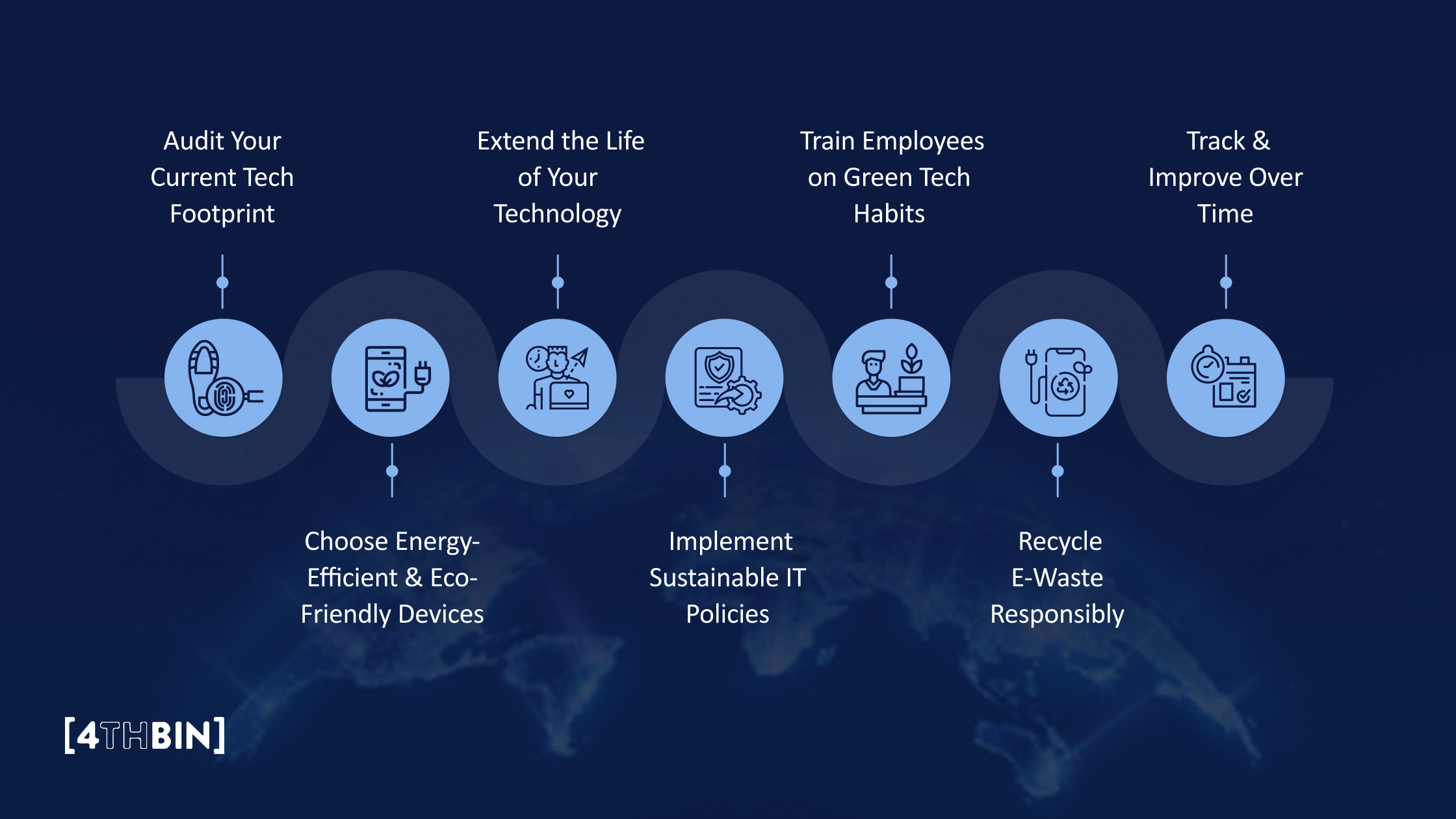
Buying green gadgets is a strong start. But what determines real impact is what happens after those devices arrive. How long they stay in use, how they are handled when they change hands, and how they leave the organization all decide whether sustainability is delivered or quietly lost.
Here is how companies can turn eco-friendly devices into a truly sustainable tech strategy.
1. Audit Your Current Tech Footprint
You cannot improve what you do not understand. The first step is getting visibility into what you already have.
Most organizations underestimate their tech footprint. Devices are spread across offices, remote employees, storage rooms, and data centers. Some are used every day. Others are forgotten but still drawing power or holding sensitive data.
A practical audit should answer simple but powerful questions:
How many devices are active today?
How often are they replaced?
Which systems consume the most energy?
What happens to equipment when it is retired?
This baseline reveals where energy, money, and materials are being wasted and where the biggest sustainability wins exist.
2. Choose Energy-Efficient & Eco-Friendly Devices
ENERGY STAR and EPEAT-rated laptops, monitors, and peripherals consume far less electricity over their lifetime than older models. In many environments, modern laptops and all-in-one systems also use significantly less power than conventional desktops. Servers, networking gear, and Wi-Fi systems designed for efficiency can cut energy draw while delivering the same performance.
Smart power management features such as automatic sleep modes, adaptive brightness, and low-power charging reduce waste without affecting productivity. These choices lower energy bills and simultaneously shrink the organization’s carbon footprint.
3. Extend the Life of Your Technology
Every laptop, phone, and monitor carries a heavy carbon cost from mining, manufacturing, and shipping. Replacing devices too early re-triggers that cost. Extending their useful life is one of the fastest ways to reduce environmental impact.
This means maintaining hardware, upgrading components instead of replacing entire devices, and keeping software optimized. When a device changes hands, secure data wiping enables it to be safely reused or refurbished rather than retired.
Refurbishment and redeployment keep green gadgets in circulation longer, reduce e-waste, and stretch IT budgets further. This is where sustainability and cost control meet.
4. Implement Sustainable IT Policies
Sustainability should not depend on individual choices. It should be built into the organization's operations.
Clear policies make the difference. Green procurement guidelines ensure new purchases meet efficiency and sustainability standards. A repair-first approach prevents unnecessary replacements. Device lifecycle management defines how long hardware should stay in service and how it moves between roles. Responsible disposal policies prevent risky or informal dumping.
When these rules are in place, sustainable tech becomes part of how the company runs, not just how it shops.
5. Train Employees on Green Tech Habits
Small habits add up. Power-saving settings, shutting down unused devices, reducing unnecessary printing, and avoiding duplicate equipment all reduce waste. Digital decluttering lowers storage and energy demand. Reporting broken or unused devices helps IT recover and redeploy them, rather than losing track of them.
When employees understand how their daily actions connect to sustainability, green gadgets deliver far more value.
6. Recycle E-Waste Responsibly
Every device eventually becomes e-waste. That includes laptops, phones, servers, batteries, cables, and peripherals. These items contain hazardous materials and sensitive data. When dumped in landfills or handled through informal recycling, they create pollution, pose safety risks, and expose people to legal liability.
Responsible e-waste recycling requires certified processes, secure data destruction, and full traceability. That is where 4THBIN plays a critical role.
4THBIN provides R2v3-certified electronics recycling, certified data destruction, and compliant handling of all technology assets. Devices are processed securely, materials are recovered responsibly, and every outcome is documented. This protects the environment, safeguards data, and supports compliance and ESG reporting in one workflow.
This is how green gadgets stay green at the end of their life.
7. Track & Improve Over Time
Organizations should track energy use, device lifespans, reuse and refurbishment rates, and recycling volumes. These numbers inform ESG reporting and reveal where progress is being made and where it is not.
With clear data, companies can set realistic goals, measure improvement, and continuously reduce their tech footprint without sacrificing performance.
Green gadgets create potential. Lifecycle management creates results.
ESG & Circular Economy Impact
Sustainable tech gadgets paired with responsible lifecycle management produce measurable ESG outcomes.
Environmentally, they reduce waste and emissions. Socially, they prevent unsafe recycling and toxic exposure. From a governance perspective, they create traceable, auditable records for compliance and reporting.
Unlike high-level sustainability pledges, device reuse, refurbishment, and recycling can be documented and verified. That makes green tech one of the most defensible ESG actions a company can take.
Most organizations focus on buying greener technology, but no one owns what happens afterward. Sustainability teams manage procurement. IT teams manage operations. End-of-life falls into the cracks. Devices get lost, stored, or disposed of informally, and the environmental and security risks quietly grow.
This ownership gap is why many green gadget strategies never deliver their full potential. This is where execution comes in.
Scale Your Greener Workplace Strategy With 4THBIN

4THBIN helps organizations make sustainable tech gadgets truly sustainable by managing what happens after devices enter the business. Through IT asset disposition and recovery, companies can identify which devices should be repaired, redeployed, or refurbished instead of replaced.
Secured data destruction ensures sensitive information is permanently removed before any device moves to its next life. Responsible electronics recycling guarantees that when hardware can no longer be reused, its materials are recovered safely and transparently.
By combining these services into one accountable lifecycle, companies move beyond one-time green purchases and build a system that reduces waste, lowers emissions, and strengthens ESG reporting over time.
If you want your investment in green gadgets to actually deliver environmental and business returns, it has to be supported by a lifecycle that keeps technology in use longer and out of landfills.
Partner with 4THBIN & turn sustainable intent into measurable impact.