What Does Closed-Loop Recycling Mean? A Guide
Think about the last time you recycled a soda can, an old laptop, or even the cardboard box from an online order. You probably assumed it would get a new life as something valuable.
However, the reality is that not all recycling works the way we imagine. Some items are downcycled, meaning they’re turned into lower-quality products, while others still end up in landfills despite our best intentions.
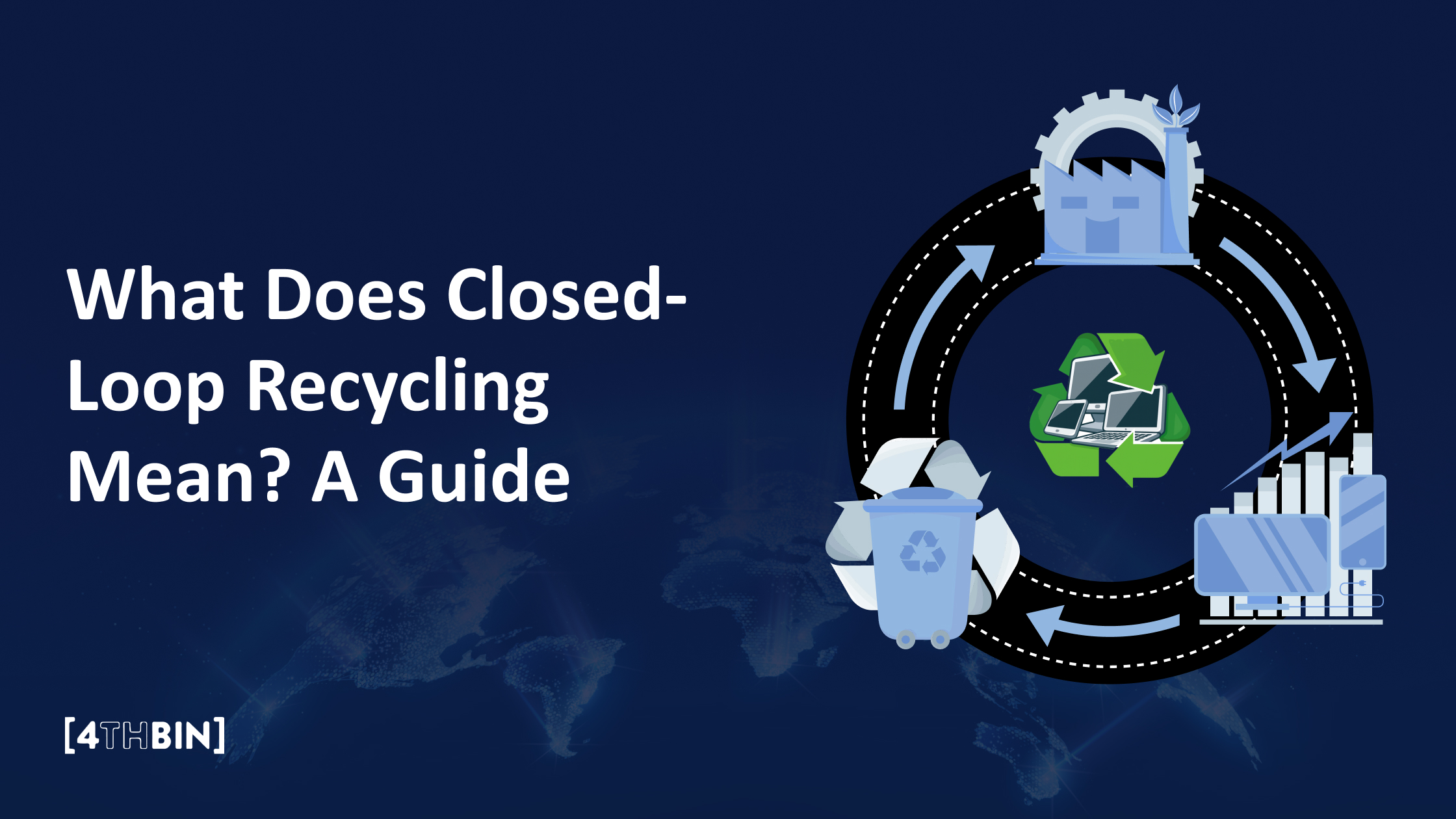
This is where closed-loop recycling comes in. Instead of being used once and discarded, materials in a closed-loop system are recovered and reused repeatedly, retaining their original quality each time they are used. It’s about keeping resources in play for as long as possible, reducing waste, and moving toward a truly sustainable, circular economy.
So, what exactly is closed-loop recycling, and why does it matter? In this blog, we’ll break it down and explore why this method of recycling is essential for a sustainable future.
What Is Closed-Loop Recycling?
Closed-loop recycling is the process of recovering materials from used products and reusing them to produce the same product type, maintaining their original quality.
- In packaging, aluminum cans are collected, melted down, and remade into new cans. This process can repeat indefinitely without degrading the aluminum.
- In electronics, valuable materials such as copper, gold, and high-grade plastics are recovered from old devices and recycled for use in the manufacturing of new electronics.
By contrast, open-loop recycling, sometimes referred to as “downcycling,” repurposes materials into different, lower-grade products. For example, a plastic bottle might be recycled into carpet fibers. While still useful, these materials eventually reach an end-of-life stage, meaning they can’t be recycled further.
Closed-loop recycling is considered the gold standard of sustainable recycling because it preserves value, avoids waste, and reduces the need for extracting virgin resources.
Why is Closed-Loop Recycling Critical in Today’s Economy
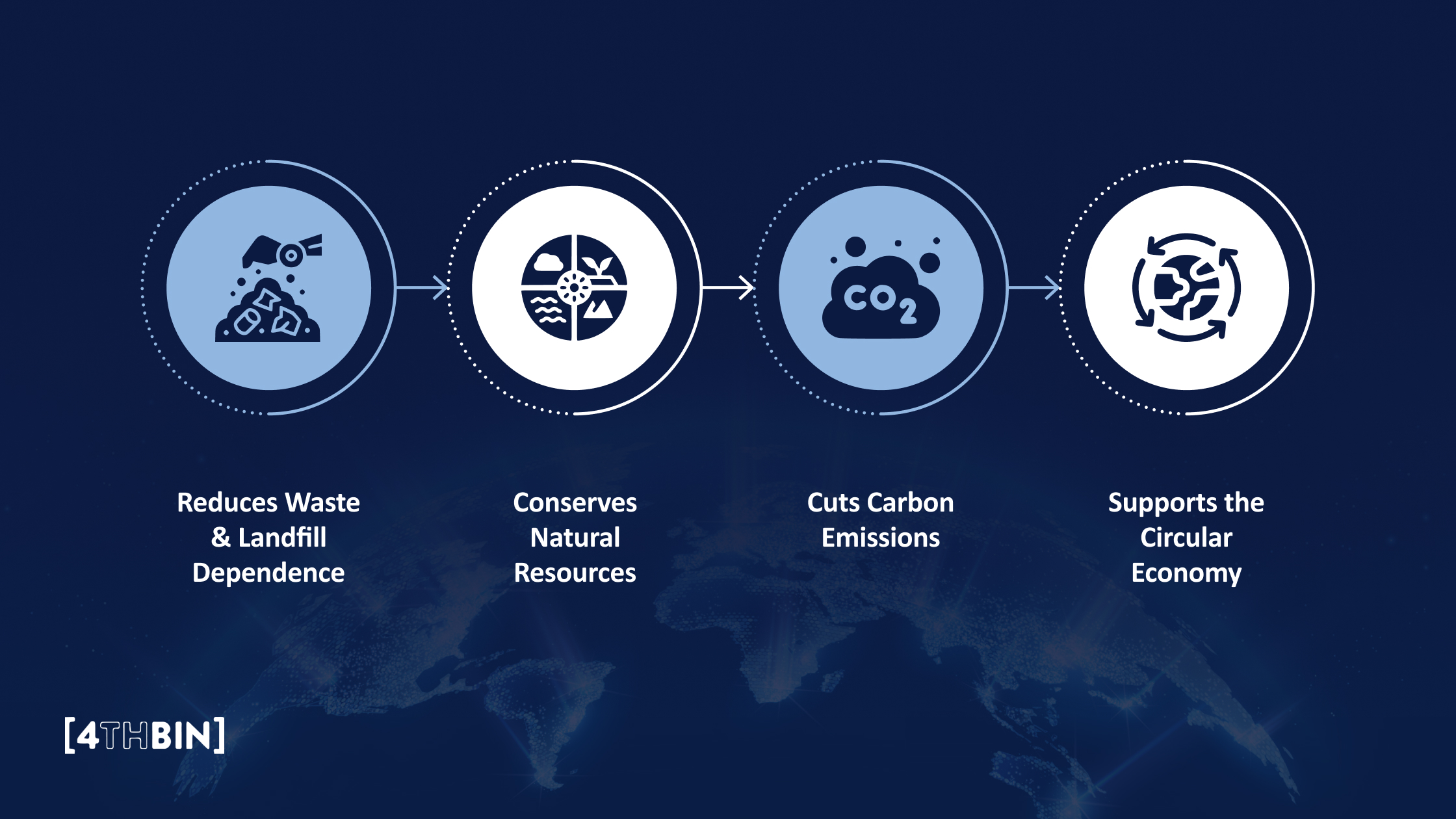
1. Reduces Waste & Landfill Dependence
Every year, millions of tons of recyclable materials, including plastic bottles, electronics, and paper, still end up in landfills, creating mounting waste management problems. Not only do these materials occupy valuable landfill space, but they also release harmful toxins into the soil and groundwater, including hazardous chemicals such as heavy metals, which can contaminate ecosystems for generations to come.
Closed-loop recycling helps prevent this by keeping valuable materials in circulation. By continuously recycling and reusing resources, closed-loop systems reduce landfill dependence, prevent pollution, and lower the environmental impact of waste disposal.
2. Conserves Natural Resources
The extraction of raw materials such as metals, minerals, and fossil fuels requires significant energy and can have a devastating impact on ecosystems. Mining can destroy habitats, lead to deforestation, and pollute nearby waterways, which have long-term consequences for biodiversity and climate health. When we recycle materials from existing products, we reduce the need to source new raw materials, thus lowering the environmental damage caused by extraction.
For example, recycling aluminum uses up to 95% less energy compared to extracting and refining it from bauxite ore. This not only conserves resources but also helps protect fragile ecosystems and maintain biodiversity, making closed-loop recycling a powerful tool in preserving the planet’s natural resources for future generations.
3. Cuts Carbon Emissions
The process of producing metals and plastics from virgin raw materials is highly energy-intensive, requiring significant amounts of electricity and fossil fuels, which release large amounts of greenhouse gases into the atmosphere. Closed-loop recycling, by contrast, uses far less energy since it reprocesses materials that are already refined, dramatically reducing the carbon footprint of production.
For example, recycling just one ton of aluminum saves about 14,000 kWh of electricity, which is enough to power an average U.S. home for five months. By lowering the energy demand, closed-loop recycling helps mitigate climate change by reducing the reliance on fossil fuels, while contributing to the global effort to cut carbon emissions and limit global warming.
4. Supports the Circular Economy
At the heart of closed-loop recycling is the concept of the circular economy, an economic system in which products are designed for durability, reuse, and recyclability. Rather than being discarded at the end of their life, products are continually remanufactured, refurbished, or recycled, keeping resources in circulation for as long as possible.
Unlike the traditional linear economy (take, make, dispose), the circular economy emphasizes sustainability. Products are developed with their end-of-life in mind, ensuring they can be easily disassembled, recycled, or repurposed for future use. Closed-loop systems encourage companies to rethink product lifecycle management, making them more efficient and resource-conscious.
Closed-Loop Recycling in Electronics
Electronic waste, also known as e-waste, is one of the fastest-growing waste streams globally. The UN estimates that more than 62 million tons of e-waste were generated globally in 2022, with less than 25% of it being recycled correctly.
That’s a problem, but also an opportunity. Electronics contain valuable materials like:
- Copper, silver, and gold – critical for wiring and circuitry.
- Rare earth elements – used in screens, batteries, and processors.
- High-quality plastics – suitable for reuse in casings and components.
When electronics are recycled through a closed-loop system:
- Data is destroyed securely, protecting users and businesses.
- Valuable metals and plastics are recovered and reintroduced into new devices.
- Hazardous materials, such as lead, mercury, and cadmium, are kept out of landfills and groundwater to prevent contamination.
In short, what appears to be “old junk” can actually fuel the technology of the future, if it’s recycled responsibly.
Closed-Loop vs. Open-Loop Recycling
|
|
|
|
|
|
|
|
|
|
|
|
|
|
|
|
While both methods have their place, closed-loop recycling is the most effective way to build a sustainable future.
How Closed-Loop Recycling Works in Practice
Dell’s Closed-Loop Plastics Program
Dell has implemented a closed-loop plastics supply chain: post-consumer plastics from their electronics are reclaimed and reintegrated into new products or components.
- Their take-back program operates in dozens of countries.
- They also use “ocean-bound plastic” (plastic collected near shores) in their packaging, further closing material loops.
Dell’s case shows that companies can commit to circularity even in complex, global electronics industries.
Closed-Loop WEEE Plastics in Electronics
Research has demonstrated the closed-loop recycling of plastics from WEEE (Waste Electrical and Electronic Equipment): plastics can be recaptured and reused in electronic housings or casings to the same quality standards.
TSMC’s Electronic-Grade Chemical Recycling Project
TSMC (Taiwan Semiconductor Manufacturing Company) has taken closed-loop recycling into its factory processes. They developed a system that transforms process waste chemicals into electronic-grade chemicals, which are then reused in chip manufacturing.
This isn’t exactly consumer electronics recycling, but it illustrates how industrial processes can re-circulate materials within their own supply chain, closing the loop even internally.
Royal Mint’s Precious Metals Recovery Plant (UK)
The Royal Mint in the UK has launched a plant to recycle circuit boards and extract precious metals (gold, silver, copper, palladium). Over time, the recycled metals will be reused in coins and jewelry lines.
This is a striking example of closed-loop thinking: high-value materials from electronics are re-entered into a new product life cycle (such as coins and jewelry) within a secure, traceable ecosystem.
Vodafone’s “One for One” Phone Program
Vodafone, in collaboration with “Closing the Loop,” runs a One-for-One initiative: for every mobile sold, an old device is collected and recycled. The materials are then reintroduced into the supply chain.
They partner with recycling networks in Africa and Europe to ensure traceability and responsible processing. This helps them bring e-waste back into the loop rather than letting it be discarded.
Challenges & Limitations in Scaling Closed-Loop Recycling
While the vision is compelling, several real-world challenges make closed-loop recycling difficult to implement at scale:
Material Degradation & Contamination
- Many materials degrade, mix with impurities, or lose performance over repeated cycles. This can limit the number of times they can be reused in the same product class.
- Plastic recycling is especially susceptible to contamination. Only certain plastics (e.g., PET bottles in some contexts) are reliably recycled in closed loops at an industrial scale.
Disassembly & Separation Complexity
- Electronic products are made with multiple materials (metals, plastics, ceramics, adhesives). Separating them cleanly is challenging and often expensive.
- Robotic disassembly is an active area of research: one study explores strategies to manipulate unpredictable electronic waste in industrial settings.
Infrastructure & Collection Logistics
Closed-loop systems require robust collection and reverse logistics, as well as efficient and cost-effective methods for collecting and recycling used products. In regions lacking infrastructure, material is lost before recycling.
Economic Viability
- Recycling must compete with the cost of virgin materials. If raw materials are cheap, recycled ones struggle to be cost-competitive without policy support or incentives.
- Initial investment in sorting, purification, and recycling facilities is high.
Policy, Standardization & Certification
- Clear regulations, standards, and certification (for material quality, handling, safety) are needed to build trust and scale.
- Without transparency, claims of “circularity” can slip into greenwashing.
How 4THBIN Helps Close the Loop on E-Waste
At 4THBIN, we’re committed to more than just disposing of devices; we aim to make them part of a sustainable lifecycle. Here’s how we support closed-loop principles:
- R2v3-Certified Recycling: Our processes follow recognized international standards that encompass environmental safety, traceability, and responsible handling.
- Guaranteed Data Destruction: Your data is destroyed before materials are processed, so no privacy risk.
- Material Recovery & Reintroduction: We strive to recover metals, plastics, and components that can be reused either in electronics or adjacent industries.
- Transparency & Reporting: You receive documentation and impact reports that show where materials are used and how much is diverted from waste streams.
- Approach to Circularity Advocacy: We advise partners and clients on designing electronics for easier recycling, including selecting materials and implementing modular design.
By working with 4THBIN, you ensure that your e-waste isn’t just forgotten; it’s being responsibly reintroduced into supply chains.
Close the Loop on E-Waste with 4THBIN
Closed-loop recycling isn’t just about reducing waste; it’s about rethinking how we use resources and ensuring nothing valuable goes to waste. Every old device has the potential to fuel new technology, conserve energy, and prevent harmful pollution.
At 4THBIN, we make it simple to recycle responsibly. With certified processes, guaranteed data destruction, and a proven track record, we help businesses and individuals keep electronics and the resources inside them circulating where they belong.
When you recycle with 4THBIN, you’re not just clearing space; you’re protecting your data, conserving resources, and contributing to the development of a more sustainable future.
Take the next step! Contact us to recycle your devices responsibly and help close the loop on e-waste.