What Is Extended Producer Responsibility (EPR)? A Complete Guide for 2026
Today, sustainability isn’t just a hallmark of innovative or green businesses; instead, it’s the foundation for doing business responsibly.
Across industries, producers are facing increasing pressure to account for the fate of their products after they leave the factory floor. With rising waste volumes, stricter global regulations, and shifting consumer expectations, companies are now being held accountable for the entire lifecycle of their products, from design to disposal.
That’s where Extended Producer Responsibility (EPR) comes in.
EPR is a policy approach that shifts responsibility for post-consumer waste from governments and consumers to producers themselves. It’s designed to ensure that manufacturers play a proactive role in preventing waste, reducing pollution, and driving a circular economy.
Forward-thinking organizations are already taking measurable steps toward this circular future. By partnering with certified e-recycling providers and integrating verified material recovery data into their ESG and EPR disclosures, they’re not only meeting compliance requirements, they’re proving that sustainability can be tracked, validated, and scaled.
Make 2026 the year you get EPR-ready.
Start by identifying which of your products fall under the new EPR regulations. Map compliance data, update design processes, and train your teams across sourcing, packaging, and reporting. If you operate in multiple regions, align with the most rigorous standard to stay ahead.
When it comes to electronics and IT assets, partner with experts who make compliance measurable, 4THBIN helps organizations meet EPR goals through certified e-recycling, secure data destruction, and verified recovery metrics that stand up to regulatory and investor review.
What Is Extended Producer Responsibility (EPR)?
Extended Producer Responsibility (EPR) is a policy framework that makes producers financially and operationally responsible for the environmental impact of their products throughout their lifecycle, including collection, recycling, and safe disposal.
In simple terms: if you make it, you’re responsible for what happens when it’s no longer helpful.
This extended producer responsibility definition helps shift the cost and environmental burden of waste management away from municipalities and taxpayers and toward the manufacturers who profit from those products.
The Broader Purpose
- Encourage eco-friendly product design and sustainable packaging.
- Promote reuse, recycling, and repairability.
- Minimize landfill waste and pollution.
- Build accountability and transparency across global supply chains.
EPR directly supports the transition to a circular economy, one where resources stay in use longer, waste is minimized, and materials are recovered rather than discarded.
How Does EPR Work?
EPR systems operate on a simple premise: producers must take responsibility for their products at the end of their life.
Here’s how most EPR extended producer responsibility laws function:
- Producers Register: Companies register with a Producer Responsibility Organization (PRO) or relevant authority.
- Reporting & Fees: Producers report materials used and pay extended producer responsibility fees based on recyclability, weight, and environmental impact.
- Collection & Recycling: The PRO or producer manages collection, logistics, and recycling operations.
- Verification: Companies submit evidence of recycling or reuse for compliance validation.
Who’s affected: Manufacturers, importers, distributors, and brand owners, particularly in the packaging, electronics, textiles, and battery industries, are subject to EPR requirements.
Why EPR Is Gaining Momentum in 2026
Three global shifts are accelerating the adoption of extended producer responsibility legislation:
The Waste Crisis
Global municipal waste is projected to reach 3.8 billion tons by 2050. In the U.S., e-waste alone accounts for more than 6.9 million tons annually, yet less than 20% is recycled correctly, a major driver behind modern extended producer responsibility laws.
Rising Regulatory Pressure
Governments are setting stricter standards for accountability:
- California’s SB 54 (2022): Mandates that producers ensure all packaging is either recyclable or compostable by 2032.
- Oregon & Colorado: Introduced similar extended producer responsibility regulations for packaging materials.
- EU PPWR (2025): Establishes digital tracking and recycled-content mandates.
Investor and Consumer Demand
ESG reporting and responsible manufacturing now influence investment and customer decisions. EPR data, particularly verified waste diversion and carbon reduction, plays a direct role in shaping a corporation's reputation and valuation.
As investors increasingly evaluate sustainability metrics, accurate ESG disclosures are becoming essential. Learn more about the reporting side of this evolution in our blog, What Is ESG Reporting? A Comprehensive Guide, that breaks down how companies communicate their environmental and social impact transparently.
How’s the Shift from Take–Make–Waste to Design–Use–Recover is Taking Place
EPR transforms the traditional linear production model into one centered on circular design, where sustainability begins at the blueprint.
Core Principles of Circular Design
- Design for Disassembly: Simplify recycling by enabling easy separation of components.
- Use Fewer, Cleaner Materials: Prioritize recyclable, non-toxic inputs.
- Enhance Durability and Repairability: Extend product life to reduce waste.
- Embrace Digital Product Passports: Enable transparency across product lifecycles.
Sectors Most Impacted by Extended Producer Responsibility
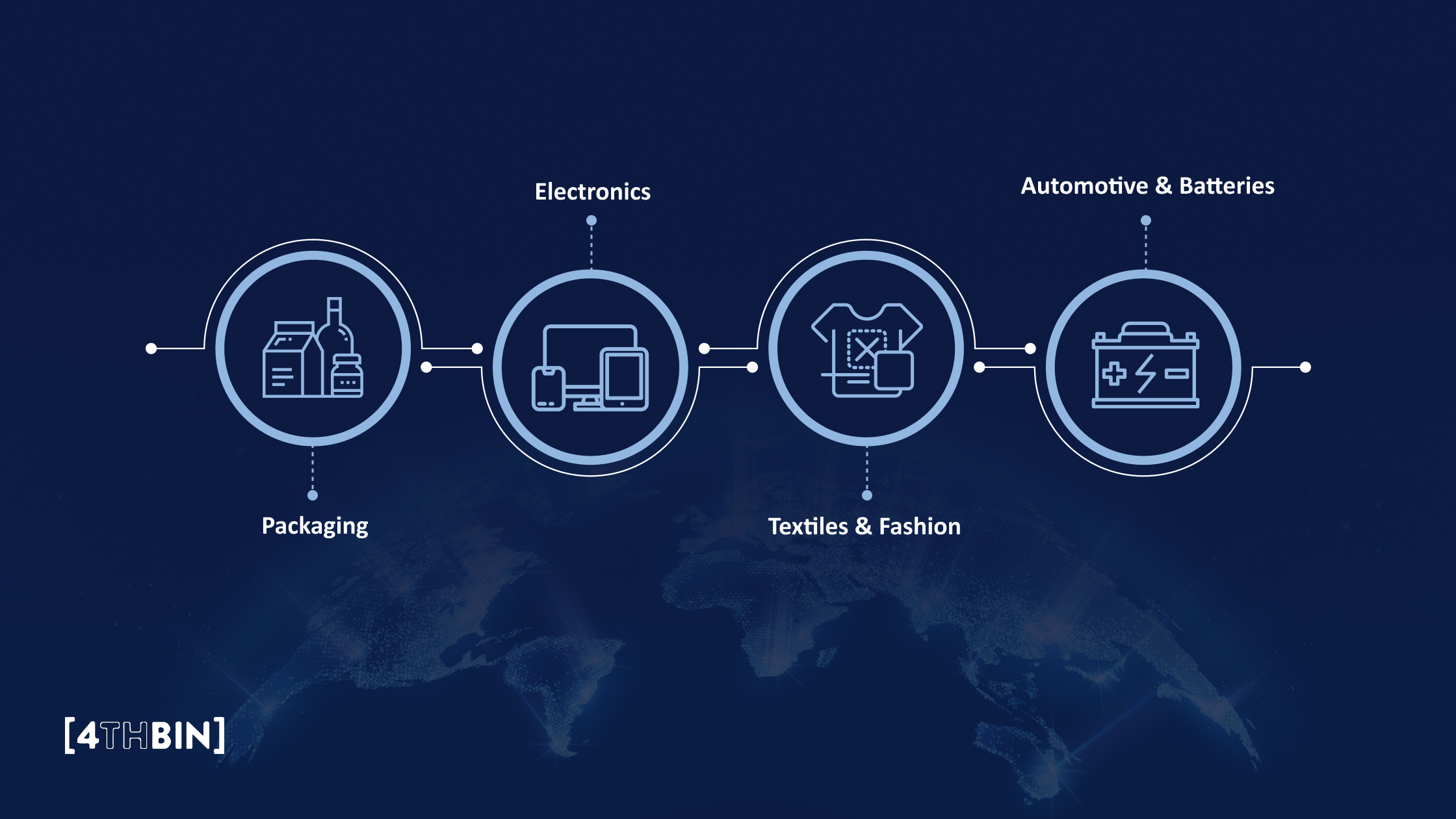
EPR (Extended Producer Responsibility) laws are reshaping how companies across various industries approach product design, lifecycle management, and end-of-life recovery. While every sector faces some level of accountability, a few stand out as primary focus areas in 2026.
Packaging
Packaging remains the most significant focus of extended producer responsibility legislation. Producers pay EPR fees based on the recyclability and environmental performance of their products. Lightweight materials, such as paper, aluminum, and glass, are cheaper to register, whereas single-use plastics incur higher costs.
To stay compliant, companies are redesigning packaging, reducing material usage, and using renewable or compostable alternatives.
Electronics
The electronics industry is one of the most tightly regulated under extended producer responsibility laws. With global e-waste surpassing 60 million metric tons, manufacturers must now take back and responsibly recycle old devices. Certified e-recycling partners, such as 4THBIN, help organizations manage this process efficiently.
Textiles & Fashion
Fast fashion faces growing extended producer responsibility regulations requiring take-back programs and recyclable textiles. Many brands now implement EPR plans to reduce landfill waste, use biodegradable fibers, and create circular “closed-loop” recycling systems.
Automotive & Batteries
EPR now applies to vehicle and battery manufacturers, especially EV producers. These extended producer responsibility laws ensure safe recovery and recycling of lithium-ion batteries, promoting innovation in sustainable materials and second-life energy storage.
Beyond compliance, these regulations are encouraging innovation in vehicle design, materials recovery, and battery second-life applications. For instance, recovered EV batteries are increasingly being repurposed for stationary energy storage, a key step toward a low-carbon, circular economy.
As these regulations expand, collaboration with certified recyclers and supply chain partners becomes essential. Companies that adopt responsible recovery practices now will not only comply with EPR laws but also secure their position in a cleaner, more resilient automotive future.
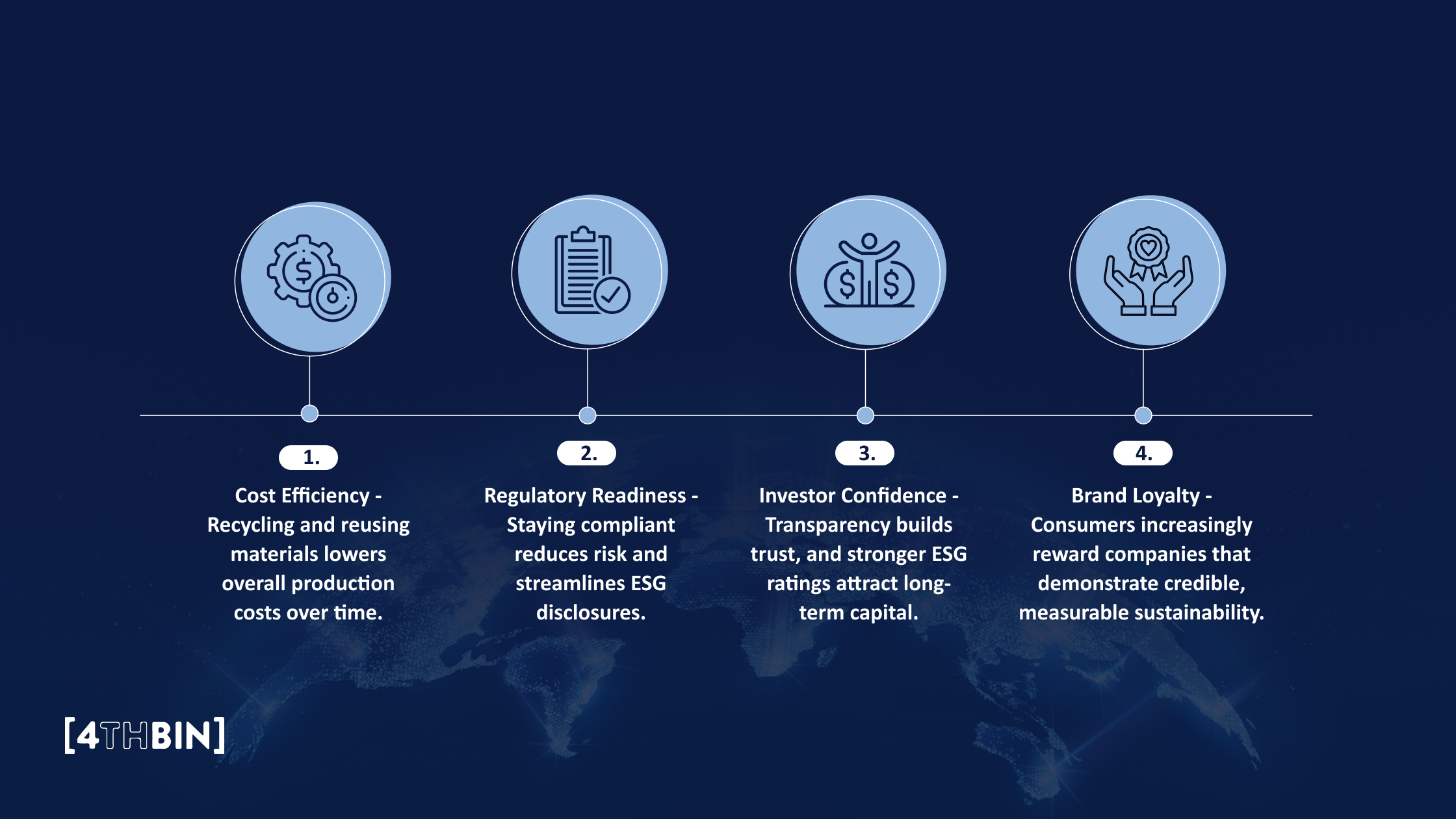
The Business Case for EPR Compliance
Complying with extended producer responsibility legislation is not just about avoiding penalties; it drives innovation and efficiency:
Overcoming the Challenges of Extended Producer Responsibility (EPR)
Implementing Extended Producer Responsibility (EPR) may sound straightforward in principle, but in practice, it can be complex. From navigating overlapping EPR laws and regulations to collecting accurate waste recovery data, many organizations find the process demanding, especially those managing large product portfolios or global supply chains.
The Common Challenges
Varying Regulations: In the U.S., extended producer responsibility laws differ by state, each with its own definitions, reporting rules, and compliance timelines. California, Oregon, Maine, and Colorado, for example, all have packaging EPR programs, but each uses different criteria for recyclable materials and reporting formats. For companies selling nationwide, keeping up with these nuances can become overwhelming quickly.
Data and Reporting Burdens: EPR compliance requires precise, verifiable data on materials, production volumes, and recovery rates. Tracking this information across multiple facilities, suppliers, and markets can be time-consuming, especially if data collection is still manual or siloed between departments.
Supplier Misalignment: Sustainability performance often depends on suppliers, but not all partners are at the same maturity level. When upstream vendors fail to meet recyclability or traceability standards, it creates compliance risks and reporting gaps down the chain.
Short-term Costs: Shifting to EPR-compliant materials or redesigning packaging for recyclability can initially lead to increased costs. While these investments often yield long-term benefits through efficiency gains and brand value, they can be challenging to justify in the short term, especially for small and mid-sized manufacturers.
How Can Businesses Turn These Challenges Into Opportunities
Despite these hurdles, organizations that take a proactive, data-driven approach can turn EPR extended producer responsibility compliance into a competitive advantage. Here’s how:
Automate Your Data & Reporting: Digital platforms and AI-powered systems can consolidate waste, recycling, and packaging data across business units, ensuring accuracy and reducing administrative effort. Automation not only simplifies EPR submissions but also strengthens ESG reporting and audit readiness.
Collaborate Through PROs: Joining Producer Responsibility Organizations (PROs) helps businesses share compliance responsibilities, reduce individual costs, and access standardized reporting tools. PROs also handle much of the logistics for collection and recycling, making compliance far more manageable.
Partner With Certified Experts Like 4THBIN: Working with trusted e-recycling and sustainability partners helps bridge the gap between policy and practice. Certified e-waste recycling companies like 4THBIN simplify EPR implementation by handling material recovery, recycling verification, and data assurance. Through secure IT asset disposition (ITAD), carbon impact reporting, and verified recycling metrics, 4THBIN helps companies demonstrate measurable progress on both EPR and ESG fronts.
The reality is that extended producer responsibility regulations will only expand in scope and rigor. Businesses that invest now in transparency, traceability, and trusted partnerships will find compliance smoother, and their sustainability performance stronger, in the years ahead.
Transform Your EPR Goals into Measurable Action with 4THBIN
EPR success depends on more than good intentions; it demands proof. At 4THBIN, we turn compliance into measurable impact by helping organizations manage technology assets securely and sustainably. As a certified e-recycler, we ensure every step of your IT lifecycle, from data center decommissioning to e-recycling, meets the highest environmental and data security standards.
Our certified data destruction services and IT asset disposition and recovery (ITAD) developed solutions are devised to reduce waste, recover value, and protect sensitive information throughout the process. For distributed teams, our RemoteReturn mail-back program provides a secure and convenient way to manage technology responsibly.
With over 10,000 clients, millions of pounds of e-waste recycled, and a flawless record of zero data breaches, 4THBIN combines sustainability, compliance, and security into a single, verifiable process.
Partner with us to make your Extended Producer Responsibility (EPR) goals tangible, traceable, and future-ready.