The Dirty Truth About E-Waste Recycling
Do you know the truth about the e-waste recycling industry?
Have you ever donated clothing to a thrift shop like AmVets or Salvation Army? If so, I’m sure you’ve felt the satisfaction, no matter how minor, of giving to help further a cause. Now, imagine if the clothing you donated to the poor was instead taken and sold off for minuscule profit rather than going where you were led to believe it was going. You would feel cheated and lied to, but, more importantly, the people who need the clothing are left out in the cold.
If the public were to find out a charity was turning donations for profit, there would be justifiable outrage…and yet that is exactly what’s occurring in the world of e-waste. The e-waste recycling industry has a major problem on its hands: recycling companies exporting e-waste to developing nations rather than recycling on their own.

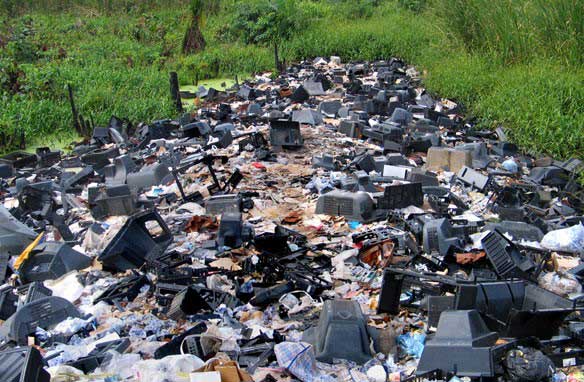
So how is it that when I take my old computer to an e-waste recycler, there is a possibility that it will end up in a junkyard in Hong Kong where it is scraped for pieces, exposing laborers to toxins and destroying local ecosystems? There are a few causes:
The Basel Convention
Primarily, this phenomenon occurs because there are no domestic laws inhibiting it. Regulation regarding e-waste began with the Basel Convention in 1992. The international treaty, designed to diminish the amount of hazardous waste moved between countries, especially less-developed countries, has been ratified by every signatory nation except two: The United States and Haiti.
2. Legislation
Domestic efforts to pass legislation have been futile. Currently, there are no federal laws prohibiting the e-waste exports. States do not have the jurisdiction to restrict international exports so state by state legislation carries little weight.
3. The Commodities Market
When the commodity market is bullish, the processing and recycling of e-waste presents a lucrative business opportunity. Not so in a bear market. For many companies, the current state of the commodity market means that exporting e-waste is far more profitable than domestically processing and recycling the materials.
4. Information Asymmetry
Finally, there’s a lack of coherence as to whether or not e-waste companies exporting their waste is even an issue. The UN says that anywhere between 10-40% of US e-waste is exported. Meanwhile, the International Trade Organization claimed that only 0.13% of US e-waste is exported. Contrary to these reports, Jim Puckett of the Basel Action Network conducted a tracking experiment and found that about ⅓ of the electronic devices they put trackers on and then delivered to e-waste recycling companies eventually ended up overseas.
None of these causes even address the scariest issue about this: there is very little you can do about it. You can campaign and lobby for new laws, but lawmakers in D.C. have been blocking legislation on this exact issue since the early 90s.
Reputable e-waste recyclers will, at the very least, be certified. Sometimes companies will attempt to circumvent their certification. There are going to be bad apples everywhere. But not every single e-waste company is dumping in foreign markets. That makes it vitally important for you to research and vet any e-waste company before partnering with them.
Here at 4THBIN, we are very aware of these issues and the problems within the systems at play. This is why we are so committed and passionate about ensuring ethical, responsible and efficient end-to-end recycling solutions for our clients’ electronics and e-waste. We never export, send to landfill or stockpile anything in our care. Frankly, our e-waste collection and electronics recycling is incomparable.
We care deeply about two core issues - protecting your sensitive e-waste resources while also protecting the environment. This is what fuels the work we do.
Interested in learning more about our work? Check out our responsible electronics recycling solutions