The Hidden Dangers of Improper E-Waste Disposal

Every year, businesses generate vast amounts of electronic waste, including obsolete computers, phones, servers, and other devices, each containing toxic materials and sensitive data. While many companies focus on upgrading their technology, the real risk often lies in how they manage their discarded devices.
A single discarded smartphone or laptop could leak dangerous chemicals into the soil and water, contributing to pollution and climate change. Worse still, your company’s sensitive data could be recovered from improperly disposed devices, leading to costly data breaches and reputational damage.
These risks are not just hypothetical; they already impact businesses worldwide.
| For instance, during a corporate IT refresh, one financial services firm discovered that several retired laptops stored in a warehouse still contained unencrypted client records. Without certified data destruction, those devices could have exposed thousands of sensitive financial files. Situations like this highlight why responsible e-waste disposal and secure data destruction are critical for modern businesses. |
The good news? There’s a solution.
Businesses can protect themselves and the planet by understanding the hidden dangers of improper e-waste disposal and adopting responsible practices.
This blog will discuss the environmental, health, legal, and economic risks of mishandling e-waste and, most importantly, what your business can do to turn these risks into opportunities for sustainability and security.
The Dangers of Improper E-Waste Disposal
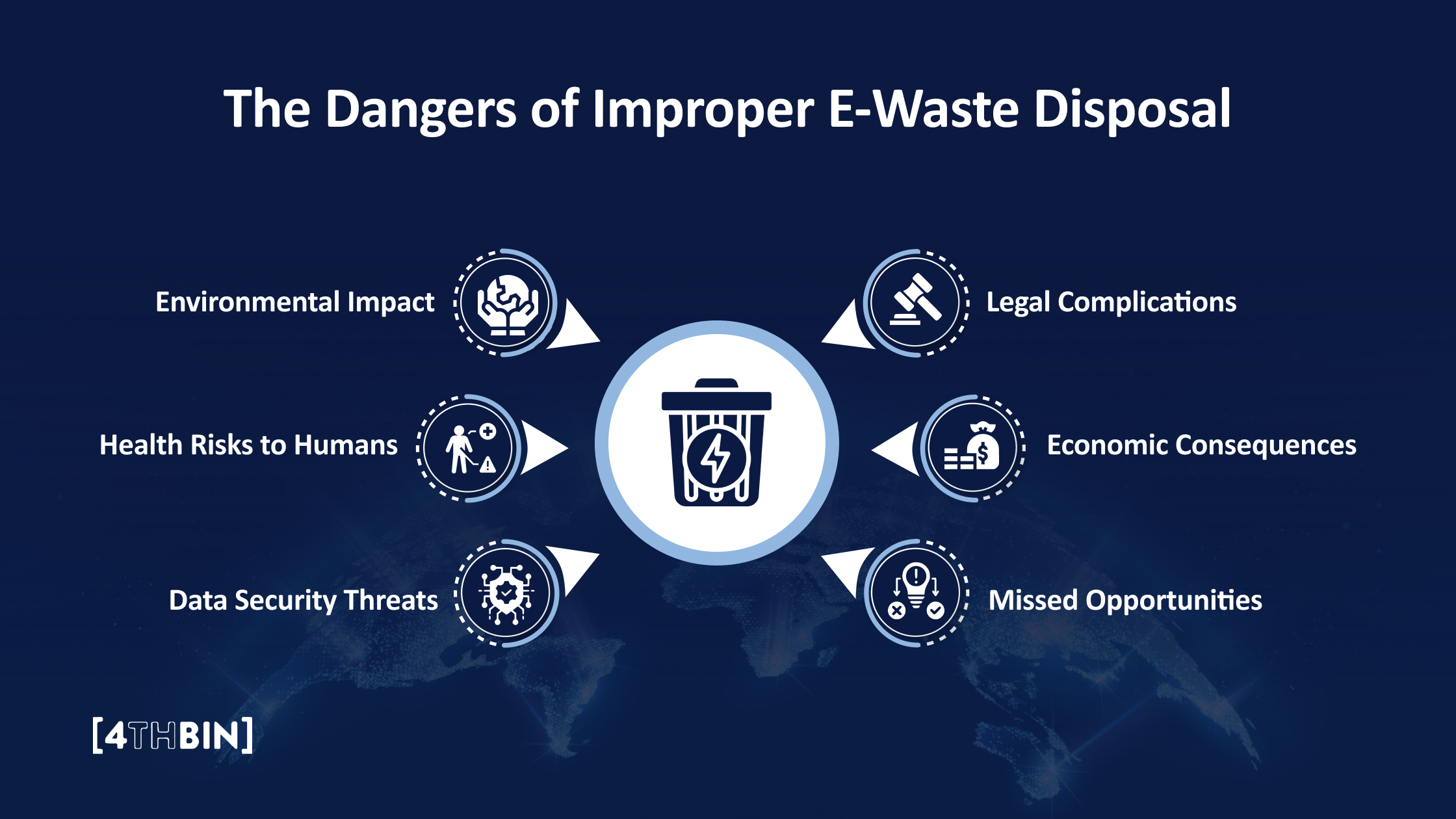
Businesses must be aware of the dangers posed by improper e-waste disposal. The impact goes beyond environmental harm; improper handling of electronics introduces severe risks to public health and data security. Here are a few hidden dangers of improper e-waste disposal for businesses:
Environmental Impact
According to the U.S. Environmental Protection Agency (EPA), electronic waste accounts for approximately 70% of the hazardous materials found in landfills.
When electronics are discarded improperly, they often end up in landfills or are incinerated, releasing harmful toxins into the environment. Computers, smartphones, and televisions contain chemicals like lead, mercury, and cadmium. As these materials break down, they leach into the soil and water, contaminating ecosystems and threatening plant and animal life.
Furthermore, incinerating e-waste releases greenhouse gases and toxic fumes that degrade air quality and contribute to climate change. According to the United Nations Global E-Waste Monitor 2024, the world generated 62 million metric tonnes of e-waste in 2022, yet only 22.3% was properly collected and recycled. As e-waste continues to grow rapidly, projected to reach 82 million tonnes by 2030, improper disposal will increasingly amplify environmental pollution and greenhouse gas emissions.
Health Risks to Humans
The health risks associated with improper e-waste disposal are severe, particularly for people in areas where e-waste is dismantled or processed without adequate safety measures. The toxins released during improper handling of e-waste, such as heavy metals and flame retardants, are hazardous to human health. Prolonged exposure to these chemicals can cause respiratory issues, skin irritations, neurological damage, and even cancer.
Children and workers in informal recycling sectors in developing countries are particularly vulnerable. Without protective gear, they risk exposure to over 1,000 harmful substances. Moreover, chemicals from improperly discarded e-waste can enter water sources, contaminating drinking water and food supplies and leading to widespread health problems in surrounding communities.
Data Security Threats
Improper e-waste disposal poses environmental and health risks and significantly threatens data security. Many electronic devices store sensitive information long after they’ve been used. Whether personal data on smartphones or confidential business information on computers, hackers or criminals can exploit improperly discarded electronics.
Even if a device no longer works, its data can often be retrieved. According to the National Institute of Standards and Technology (NIST), organizations must identify and protect data-bearing assets because unauthorized access or disclosure of sensitive information can lead to significant data breaches.
Personal identities, financial information, and corporate secrets are at risk without secure data destruction. Identity theft and data breaches are significant consequences of improperly wiping or destroying data before disposal.
A report from early 2023 revealed that several Australian government agencies and major corporations were improperly disposing of IT equipment without wiping sensitive data. These devices, containing personal, medical, and even critical infrastructure information, were sold secondhand, both locally and internationally.
Some devices even had spreadsheets containing customer credit card information, posing severe cybersecurity threats. Certified e-waste recycling companies, such as 4THBIN, provide solutions, including secure data destruction, ensuring that sensitive information does not fall into the wrong hands.
Legal Complications
Improper e-waste disposal can lead to serious legal issues. Many countries and states have enacted strict e-waste regulations governing the disposal and recycling of electronic waste. In some regions, businesses that fail to follow proper e-waste management protocols face significant fines and penalties.
In the U.S., the Environmental Protection Agency (EPA) and the Resource Conservation and Recovery Act (RCRA) enforce laws to reduce the environmental impact of e-waste and ensure safe disposal practices. Non-adherence to these laws and regulations can result in fines of up to $37,500 per day per violation.
Improper e-waste disposal can also cause reputational damage to businesses. Companies found in violation of environmental or data security regulations may face legal battles, loss of trust, and public backlash. Complying with local e-waste laws is not just about avoiding legal trouble; it’s also a matter of corporate responsibility.
Economic Consequences
Improper e-waste disposal isn’t just harmful, it’s also economically wasteful. Recycling one million laptops saves the energy equivalent of the electricity used by more than 3,500 U.S. homes in a year.
Electronic devices also contain valuable materials, including gold, silver, copper, and rare earth metals. Recycling one million cell phones recovers over 35,000 pounds of copper, 772 pounds of silver, 75 pounds of gold, and 33 pounds of palladium. These valuable resources are lost forever when e-waste is discarded rather than recycled. This drives up the cost of producing new electronics and increases the need for mining and raw material extraction, further depleting natural resources.
On a larger scale, failing to recycle e-waste represents a missed opportunity to create jobs in the recycling industry. Proper e-waste recycling facilities generate employment while reducing environmental harm. In the United States alone, the e-waste recycling industry supported 681,000 jobs and generated $37.8 billion in wages in 2012.
Every 1,000 tons of materials recycled creates an average of 1.17 jobs, highlighting the potential for job creation through better recycling efforts. The economic benefits of recycling e-waste far outweigh the costs of improper disposal, making it both financially and environmentally wise.
Missed Opportunities
Beyond the environmental and economic costs, improper e-waste disposal represents a major missed opportunity for the circular economy. The Global E-waste Monitor 2020 reports that the world generated 53.6 million metric tons of e-waste in 2019, yet only 17.4% was formally recycled. As a result, valuable materials such as gold, silver, copper, and platinum, worth over $57 billion annually, were largely lost rather than recovered and reused.
When electronic devices are properly recycled, their components can be reused in manufacturing new products, reducing the demand for new materials and minimizing the industry’s environmental impact.
For example, recycling e-waste in Minnesota could recover 78 million pounds of valuable materials, enough copper for 155,000 electric vehicles, and enough silver for 440,000 solar panels. Additionally, many electronics can be refurbished and reused, extending their lifespan and reducing overall waste.
Moreover, responsible e-waste disposal promotes sustainability and supports materials recovery and innovation in recycling technologies. By adopting better practices, individuals and businesses can help create a more sustainable electronics industry, reducing waste, saving resources, and minimizing environmental harm.
Best Practices of E-Waste Disposal for Businesses
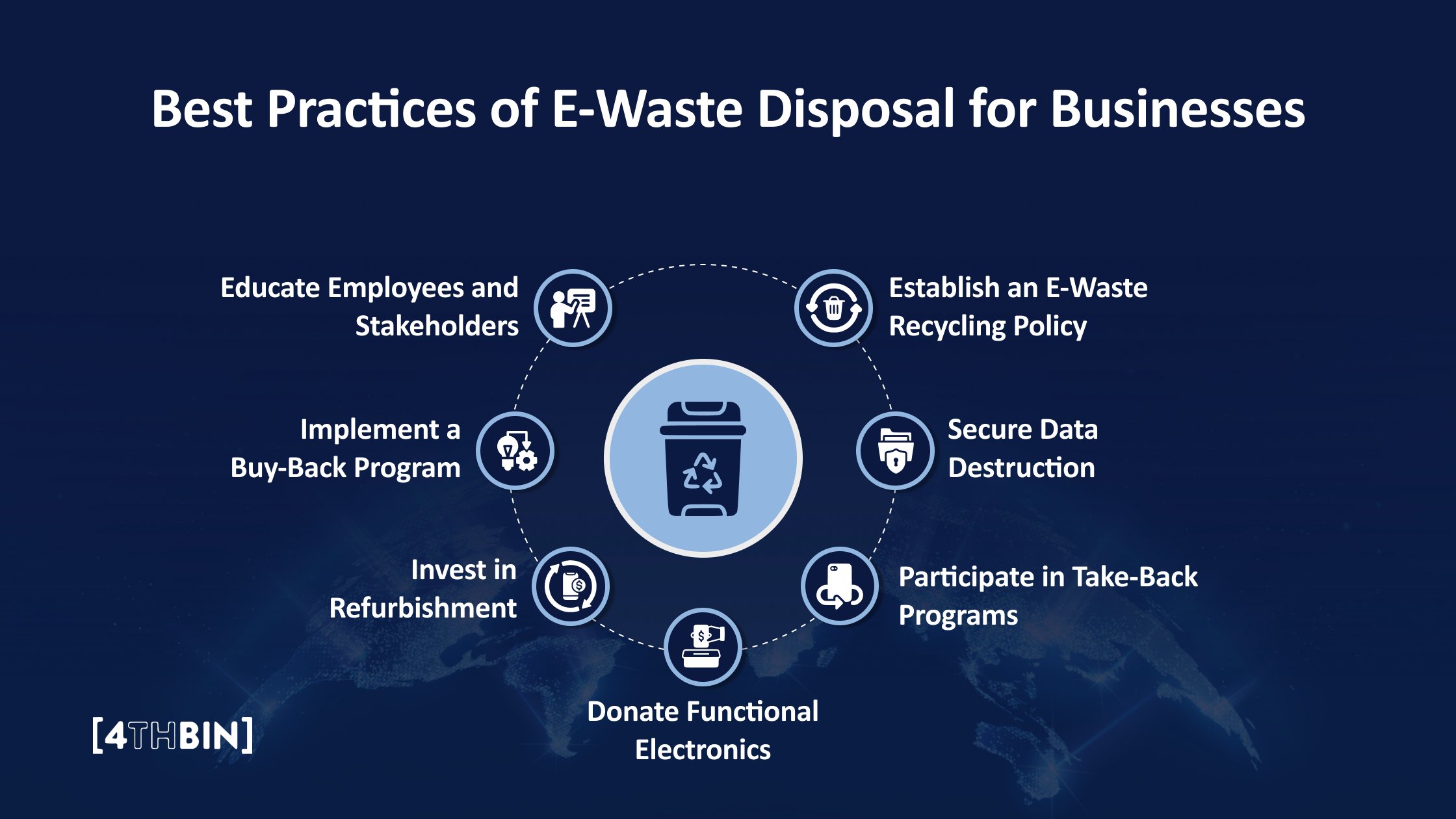
Businesses can adopt several best practices that reduce waste and contribute to environmental sustainability and cost efficiency. Here are
Establish an E-Waste Recycling Policy
Implementing a company-wide e-waste recycling policy is essential. Businesses should ensure that old electronics, such as computers, servers, and mobile devices, are responsibly disposed of through certified e-waste recyclers.
The policy should cover everything from collection and storage to transportation and the destruction of sensitive data on old devices. Businesses must partner with recyclers certified by e-Stewards or R2 (Responsible Recycling) standards to guarantee environmentally responsible electronic waste processing.
Read More: Top 10 Benefits of Electronics Recycling for Businesses
Secure Data Destruction
Before businesses dispose of electronic devices, ensuring that sensitive data is securely wiped or destroyed is critical to avoid data breaches. Data stored on hard drives, smartphones, and other digital devices can be accessed even after they are discarded, posing severe risks to corporate security, privacy, and regulatory compliance.
- Data Wiping Software
Use specialized software to overwrite all data on a device multiple times, making it unrecoverable. Many businesses opt for software solutions that automate the thorough wiping of data from devices, ensuring that sensitive information is entirely erased.
- Physical Destruction
Physical destruction is an alternative for highly sensitive data or devices that cannot be effectively wiped out. Hard drives, flash drives, and other data-storing components can be shredded, pulverized, or incinerated to ensure no one can access the information they once contained.
- Partnering with Certified Data Destruction Services
Collaborating with certified vendors, such as 4THBIN, that offer on-site or off-site data destruction services provides an added layer of security. These vendors provide certificates of destruction, confirming that data was permanently destroyed and devices were disposed of in an environmentally responsible manner.
Participate in Take-Back Programs
Many electronics manufacturers and retailers offer take-back programs for businesses. These programs accept old or non-functional devices for recycling or refurbishment. Participating in take-back initiatives ensures that devices are processed through approved recycling channels. These programs not only reduce waste but may also offer incentives like discounts on new equipment.
Donate Functional Electronics
Businesses can donate working electronic equipment to non-profits, schools, or other organizations. Refurbishing and donating devices extends their life cycle and helps close the digital divide, particularly for underfunded institutions that need technology. Companies offer secure donation services for businesses looking to contribute to social causes while responsibly managing e-waste.
Invest in Refurbishment
For non-critical upgrades, businesses can refurbish old electronics rather than purchase new ones. This involves upgrading existing systems to meet performance needs, extending the life of devices, and reducing the environmental footprint of manufacturing new equipment. Refurbished devices require fewer raw materials, conserve energy, and often deliver the same functionality at a lower cost.
Implement a Buy-Back Program
Businesses can partner with manufacturers that offer buy-back programs for used electronics. This ensures that obsolete equipment is returned to manufacturers for proper recycling or reuse, creating a circular system where materials are continually repurposed. Buy-back programs also allow companies to recover some of the investment in old electronics.
Educate Employees and Stakeholders
Raising employee awareness about proper e-waste disposal practices is crucial for success. Businesses should conduct regular training sessions and provide resources on securely handling and disposing of electronic equipment. Setting up dedicated e-waste bins in the office and ensuring easy access to certified recyclers will increase participation in sustainable practices.
Recognizing the importance of proper e-waste recycling and disposal is essential for safeguarding the environment and business operations. By implementing strict e-waste management protocols, partnering with certified recyclers, and ensuring secure data destruction, businesses can reduce risks while contributing to a more sustainable and safe future.
Turn E-Waste Risks into Opportunities with 4THBIN.
Improper e-waste disposal can expose your business to serious risks, including environmental hazards, data breaches, and regulatory fines. At 4THBIN, we provide trusted, certified e-recycling solutions that ensure your electronics are handled safely and responsibly. With over a decade of experience, we serve more than 10,000 businesses across the United States, from Fortune 100 companies to growing startups.
Our guiding principle is simple: no data should be left behind. Backed by our data security expertise, we provide certified data destruction services to safeguard organizations against the risks of sensitive data recovery from improperly discarded devices. Through our RemoteReturn program, direct mail-in services, and on-site collection, we offer flexible and reliable e-waste solutions tailored to your business needs while supporting your corporate sustainability goals.
Businesses can significantly reduce risk by following these essential e-waste management practices:
- Partner with certified recyclers such as R2 or e-Stewards providers
- Ensure secure data destruction before device disposal
- Maintain an IT asset inventory to track retired devices
- Use manufacturer take-back or buy-back programs
- Train employees on proper electronic waste handling procedures
Following these steps helps protect sensitive data, maintain regulatory compliance, and support environmentally responsible recycling.
Don’t Let E-Waste Threats Stay Hidden.
Contact Us
Frequently Asked Questions
1. Why is improper e-waste disposal dangerous for businesses?
Improper e-waste disposal can expose businesses to serious risks, including environmental pollution, data breaches, legal penalties, and financial losses. Electronic devices often contain toxic substances like lead, mercury, and cadmium, as well as sensitive corporate data. If these devices are discarded improperly, they can contaminate ecosystems or allow unauthorized individuals to recover confidential information.
2. Can data still be recovered from discarded electronics?
Yes. Even if a device is broken or no longer in use, data stored on hard drives, SSDs, or embedded memory can often be recovered. Without secure data wiping or physical destruction, sensitive information such as customer records, financial data, or intellectual property may be exposed. This is why certified data destruction is a critical step before recycling electronics.
3. What laws regulate e-waste disposal for businesses?
Many countries and states have strict regulations governing the disposal of electronic waste. In the United States, agencies such as the Environmental Protection Agency (EPA) enforce regulations under laws like the Resource Conservation and Recovery Act (RCRA). These regulations require businesses to handle, transport, and dispose of hazardous electronic materials responsibly to protect human health and the environment.
4. What are the best ways for businesses to dispose of e-waste responsibly?
Businesses can reduce risks by following several best practices, including:
- Partnering with certified recyclers such as R2 or e-Stewards providers
- Ensuring secure data destruction before disposal
- Participating in manufacturer take-back programs
- Refurbishing or donating working equipment when possible
- Implementing an internal e-waste recycling policy
These practices help protect sensitive data while supporting environmentally responsible recycling.
5. How can responsible e-waste recycling benefit businesses?
Responsible e-waste recycling helps businesses reduce environmental impact, recover valuable materials, comply with regulations, and strengthen their sustainability initiatives. Proper recycling can also support the circular economy by recovering precious metals and extending the lifecycle of electronic components through refurbishment and reuse.